
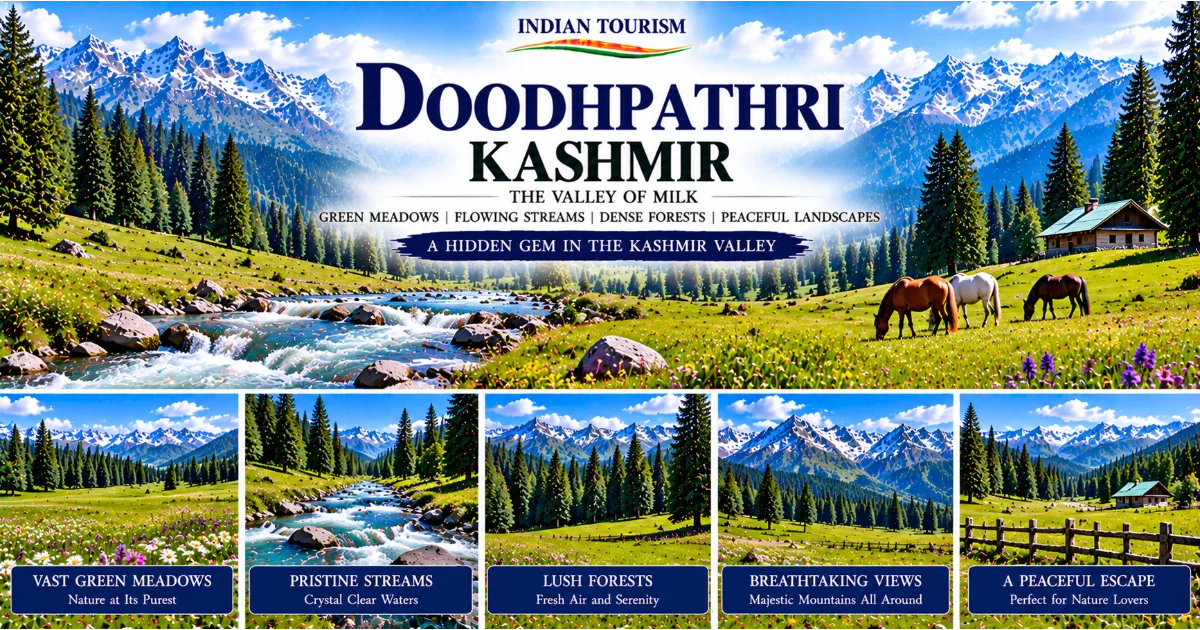
Discovering the Meadow Paradise of Doodhpathri
Kashmir is home to many beautiful destinations, from the famous lakes of Srinagar to the snow-covered slopes of Gulmarg and the river landscapes of Pahalgam. Yet some of the region's most memorable experiences can be found in places where open meadows, gentle hills and flowing streams create a quieter atmosphere. Doodhpathri, located in the Budgam district of Jammu and Kashmir, is one such destination.
The name Doodhpathri is commonly translated as the Valley of Milk. The destination is known for its broad grassy landscapes, surrounding forests, mountain views and streams that contribute to its peaceful character. During the warmer months, the meadows can become intensely green, offering a striking contrast with the darker forested slopes and distant mountain ridges.
Doodhpathri has become increasingly popular among visitors seeking a nature-focused excursion from Srinagar. Unlike a large town with numerous built attractions, its main appeal lies in the landscape itself. Travellers can enjoy the open scenery, take permitted walks, photograph the changing views and spend time appreciating the natural surroundings.
However, the experience depends on the season, weather, road conditions and local arrangements. Visitors should not assume that every route, meadow or outdoor activity is accessible throughout the year. Mountain weather can change quickly, and facilities may be more limited than in major tourist centres.
This guide explores Doodhpathri's natural landscape, seasonal beauty, outdoor activities, local surroundings and practical travel considerations. It also explains how to plan a responsible visit that respects the environment and supports the communities connected with the destination.
1. Where Is Doodhpathri Located?
Doodhpathri is located in the Budgam district of Kashmir, within the wider Himalayan landscape of Jammu and Kashmir. It is known primarily for its meadows and surrounding mountain scenery, making it an attractive destination for travellers who want to experience the countryside beyond Srinagar.
The route to Doodhpathri generally involves road travel from Srinagar towards the Budgam area and onward to the meadow region. The exact journey time depends on the starting point, traffic, road conditions and the chosen route.
Because the destination lies in a mountain environment, visitors should not rely solely on map estimates. Roads may become slower to navigate during rain, periods of heavy traffic or other local conditions. It is sensible to allow additional time and confirm the route shortly before departure.
Doodhpathri is often visited as a day excursion, but the amount of time needed depends on the visitor's interests. Travellers who simply want to enjoy the main scenery may need less time than those who prefer photography, walking or a more relaxed exploration.
Before travelling, visitors should confirm current access arrangements, opening conditions where applicable and the availability of local transport. Some routes and facilities may operate differently according to the season.
The destination's location makes it a useful addition to a broader Kashmir itinerary. It can offer a contrast to urban sightseeing in Srinagar and to the more developed tourist facilities found in some established hill stations.
Understanding the location also helps visitors plan realistically. Rather than attempting to combine too many distant destinations in one day, it is often better to dedicate sufficient time to enjoying Doodhpathri's landscape.
2. Why Is Doodhpathri Called the Valley of Milk?
The name Doodhpathri is commonly interpreted as the Valley of Milk. The name contributes to the destination's identity and is frequently associated with the appearance of flowing water and the region's pastoral landscape.
Local explanations of place names can vary, and visitors should distinguish traditional stories from verified historical accounts. The name itself is part of the cultural character of the destination, even when different explanations are repeated by guides or travel descriptions.
The landscape helps explain why the name has become memorable. Open grasslands, streams and surrounding hills create a setting that is often described through images of freshness, purity and natural beauty.
The name should not be taken as a literal description of the water. Streams remain natural water sources, and visitors should not assume that water is safe to drink without appropriate treatment.
For travellers, the name provides an easy introduction to the destination's atmosphere. Doodhpathri is associated with open scenery and a quieter experience of Kashmir, rather than with a dense concentration of commercial attractions.
Visitors can learn more about local place names by speaking with knowledgeable guides and residents. Such conversations may reveal how landscape features, traditional stories and community memory influence the names used for places.
As with many destinations in Kashmir, the name is only one part of the story. The real experience comes from observing the meadows, understanding the surrounding environment and appreciating the relationship between the landscape and the people who live nearby.
3. The Green Meadows of Doodhpathri
The meadows are the central attraction of Doodhpathri. Their open grassy areas provide wide views of the surrounding hills and create a landscape that feels different from the busy streets and waterfronts of major tourist centres.
During the warmer months, the grasslands can become lush and green. The appearance of the meadows varies according to rainfall, temperature, elevation and the timing of the growing season.
The open terrain creates opportunities for leisurely walks and photography where access is permitted. Visitors can enjoy the broad views without needing to undertake a demanding hike, although the ground may be uneven or wet in some places.
The meadows also have ecological and practical importance. Grasslands can support plant life, insects and other wildlife, while some areas may be connected with seasonal grazing or local land use. They should therefore not be treated as empty spaces where visitors can drive or camp without considering the consequences.
Uncontrolled vehicle movement can damage vegetation and compact soil. Litter can remain in the grass for long periods, and excessive disturbance can affect the natural character of the area.
Visitors should remain on authorised routes and avoid driving onto grassy slopes simply to obtain a better photograph. Walking carefully, carrying waste away and respecting any local instructions are simple ways to protect the environment.
The best way to enjoy Doodhpathri is to take time with the scenery. The meadows are not just a backdrop for photographs. They are living landscapes whose appearance and ecological value depend on seasonal processes and responsible management.
4. Streams and Waterways Around Doodhpathri
Water contributes to the visual character of Doodhpathri. Streams and flowing channels pass through the surrounding landscape, creating movement and sound that complement the quiet appearance of the meadows.
The relationship between water and grassland is important. Water supports vegetation and influences the condition of the surrounding soil, while the flow of streams changes according to rainfall, snowmelt and seasonal weather.
For visitors, streams can provide attractive photographic subjects. The contrast between moving water, green grass and distant hills creates opportunities for landscape images and close-up compositions.
However, streams should be approached with care. Water can be cold, currents may be stronger than they appear and banks can become slippery after rain. Children should be supervised closely near water, and visitors should follow local safety advice.
It is also important not to assume that natural water is safe to drink. Water may contain contaminants that are not visible to the eye, so travellers should use treated or otherwise reliably safe drinking water.
Visitors should avoid washing items in sensitive water areas or leaving rubbish near the banks. Plastic packaging and other waste can affect the environment and reduce the quality of the landscape for everyone.
The waterways of Doodhpathri should be appreciated as part of the wider ecosystem. Their value extends beyond their appearance in photographs, and protecting them helps maintain the natural character of the destination.
5. Forests and Mountain Slopes
The hills and forests surrounding Doodhpathri add depth to the landscape. The contrast between open grassland and wooded slopes creates changing patterns of colour, shade and texture.
Forested areas contribute to the wider ecosystem by supporting biodiversity, helping stabilise soil and influencing water movement. They also provide a visual frame for the meadows, making the destination attractive to photographers and nature enthusiasts.
Visitors can appreciate the forest scenery from permitted viewpoints and routes. Those interested in walking beyond the main visitor areas should seek local guidance about access, terrain and conditions.
Not every track through woodland is a designated tourist trail. Some routes may be unsuitable for casual visitors, particularly after rain or during periods of poor visibility. It is important to avoid entering unfamiliar forest areas without appropriate guidance.
The forest environment also requires careful behaviour. Visitors should not light fires in unauthorised areas, cut vegetation, disturb wildlife or leave food waste behind.
Weather conditions can vary between the meadow floor and higher slopes. Travellers should carry suitable clothing and avoid assuming that the temperature at the starting point will remain the same throughout an excursion.
The forests around Doodhpathri are part of the destination's natural heritage. Their protection is important not only for tourism but also for ecological stability and the surrounding landscape.
6. The Best Time to Visit Doodhpathri
Doodhpathri offers different experiences throughout the year. The most suitable time depends on the scenery visitors want to enjoy, their travel arrangements and current local conditions.
Spring: Fresh Growth and Changing Colours
Spring brings renewed vegetation and gradual changes across the meadows and surrounding slopes. The landscape begins to look greener as temperatures rise, although weather can remain unpredictable.
Visitors travelling during this period should check road conditions and local access information before departure. Rain and lingering cold can affect walking comfort and the condition of unpaved paths.
Spring may appeal to travellers who enjoy observing the transition from winter to warmer weather. However, the appearance of the meadows varies from year to year.
Summer: Green Meadows and Outdoor Exploration
Summer is often a popular period for visiting Doodhpathri because the grasslands may be particularly green and the surrounding landscape suitable for sightseeing.
The warmer months can be appropriate for relaxed walks, photography and family excursions. Visitors should still carry suitable clothing because mountain weather can change quickly.
Summer may also bring more visitors, so travel and transport arrangements should be planned with realistic expectations.
Autumn: Cooler Weather and Seasonal Atmosphere
Autumn brings cooler temperatures and changes in vegetation. The landscape may look different from its summer appearance, offering another perspective on the meadows and surrounding forests.
Visitors who prefer a quieter atmosphere may find this season appealing, although the exact experience depends on weather and local conditions.
Warm layers are useful, especially in the morning and evening.
Winter: Cold Conditions and Possible Snow
Winter can bring snowfall and difficult travel conditions. The appearance of the destination may change considerably, and access to some areas may be restricted or unsuitable.
Travellers should not assume that the meadows are easily accessible in winter. Road conditions, weather and the availability of local services should be confirmed before planning a visit.
For visitors seeking the familiar green-meadow experience, the warmer season is generally more practical. Regardless of the month, checking current conditions is more reliable than depending on a fixed seasonal description.
7. Photography Opportunities in Doodhpathri
Doodhpathri is well suited to landscape photography because its open meadows, streams and surrounding hills create a variety of compositions.
Wide-angle photographs can show the relationship between the grasslands and the distant slopes. Including a foreground element, such as grass or a natural feature, can help communicate depth and the scale of the landscape.
Close-up photography offers a different perspective. Visitors may focus on seasonal plants, water flowing over rocks or the textures created by grass and woodland.
Light changes the appearance of the destination throughout the day. Morning and late-afternoon conditions may produce softer shadows, while passing clouds can create patterns across the hills. Visitors should allow time to observe the scene rather than rushing to capture a single viewpoint.
Photography should always respect the environment. Travellers should avoid trampling sensitive vegetation, entering private property or crossing restricted areas for a better angle.
Visitors should also be considerate when photographing other people. Ask permission before taking close-up portraits, and respect requests not to be photographed.
Drone photography may be subject to aviation rules, security requirements or local restrictions. Travellers should verify all relevant permissions before attempting aerial photography.
A good photograph should communicate the character of Doodhpathri without encouraging harmful behaviour. The destination's beauty is best preserved when visitors remain on suitable routes and leave the landscape undisturbed.
8. Walking and Gentle Outdoor Activities
Doodhpathri can be enjoyable for travellers who prefer relaxed outdoor activities rather than strenuous adventure. Its open landscape allows visitors to appreciate the scenery through short walks and time spent at permitted viewpoints.
Walking can reveal details that are easy to miss from a vehicle. Visitors may notice changes in vegetation, the sound of nearby streams and the relationship between the grasslands and surrounding hills.
The suitability of a walk depends on ground conditions, weather and individual ability. Paths may become slippery after rain, and uneven terrain can make some areas difficult for visitors with mobility limitations.
Comfortable footwear is important. Travellers should also carry drinking water, suitable clothing and essential personal supplies.
Families with children should choose accessible areas and supervise them closely around streams and uneven ground. Visitors travelling with older family members should confirm whether the intended route involves steep sections or long distances.
Those wishing to explore beyond the main visitor areas should seek local guidance rather than entering unfamiliar terrain independently.
It is not necessary to undertake a long hike to enjoy Doodhpathri. A relaxed walk and enough time to observe the landscape can provide a rewarding experience.
The key is to choose activities that match the conditions and the group's abilities. Visitors should be willing to shorten or change their plans when the weather or ground conditions are unsuitable.
9. Doodhpathri for Families and Couples
Doodhpathri can be an attractive option for families and couples who enjoy natural scenery and relaxed sightseeing. Its open meadows and mountain views provide a setting for photography, quiet walks and time outdoors.
Families should plan according to the ages and needs of their children. Suitable clothing, drinking water and awareness of the terrain can make the visit more comfortable.
Children should remain under supervision near streams and on uneven ground. Visitors should also establish clear meeting points when travelling in a group, especially if the area is busy.
Couples may appreciate the destination's scenery and quieter atmosphere. Photography, short walks and time spent enjoying the landscape can form the basis of a relaxed excursion without requiring an elaborate activity schedule.
However, visitors should not assume that every part of the destination is equally accessible or private. Local rules, visitor management arrangements and seasonal conditions may influence where people can go.
Travellers should confirm available facilities before departure. The range of food, transport and other services may be more limited than in Srinagar.
Doodhpathri can be included in a broader holiday, but it is worth allowing enough time to enjoy it without rushing between distant locations.
The destination's appeal lies in its simplicity. Visitors can appreciate the scenery at their own pace while respecting the environment and the needs of other people using the area.
10. Local Communities and the Surrounding Region
Doodhpathri is part of a wider rural landscape in the Budgam district. The surrounding area includes settlements and agricultural land whose appearance and use are influenced by the seasons.
Local communities are an important part of the destination's identity. Roads, fields and natural areas exist alongside everyday activities, including agriculture, transport and household life.
Visitors should remember that scenic landscapes may include private land or areas used for local livelihoods. Travellers should not enter fields, orchards or residential properties without permission.
Where legitimate local services are available, visitors can support the regional economy by using local transport providers, purchasing goods from reputable sellers and choosing suitable community-run services.
However, tourism should not disrupt daily life. Visitors should avoid blocking roads, creating unnecessary noise or photographing people without consent.
The wider Budgam area has its own cultural and historical character, and knowledgeable local guides may be able to provide additional context about the region.
A respectful visit can help visitors understand that Doodhpathri is not merely a scenic attraction. It forms part of a living landscape in which people, agriculture and the natural environment are connected.
Supporting local businesses while respecting community preferences can contribute to a more balanced approach to tourism.
11. How to Reach Doodhpathri
Travellers generally reach Doodhpathri by road from Srinagar or other locations in the Kashmir Valley. The journey usually passes through the Budgam area before continuing towards the meadow destination.
The exact route and journey time depend on the starting point, traffic, weather and road conditions. Visitors should confirm the route before departure and allow extra time for possible delays.
Private taxis or arranged vehicles can provide flexibility for travellers who want to stop at suitable viewpoints. Local transport may also be available on some routes, but availability and schedules should be checked in advance.
Drivers should be familiar with the road conditions and follow local instructions. Visitors unfamiliar with mountain travel should avoid rushing and should not assume that a short distance on a map guarantees a quick journey.
Weather can affect road surfaces and visibility. Travellers should check current forecasts and access information, particularly during periods of heavy rain, snowfall or seasonal change.
It is sensible to begin the excursion early enough to allow time for sightseeing and the return journey. Visitors should avoid extending the trip so late that they must travel unfamiliar roads in poor visibility.
Before setting out, confirm whether any access restrictions or local arrangements apply. Conditions can change, and information from an older itinerary may no longer be accurate.
A flexible travel plan makes the experience more comfortable and reduces the risk of having to rush.
12. Facilities and What to Expect
Doodhpathri is primarily a nature destination, so visitors should not expect the same range of facilities available in a large tourist town.
The availability of food, toilets, accommodation, transport and other services can vary according to the location and season. Travellers should confirm essential arrangements before departure rather than assuming that every facility will be available.
Many visitors choose to visit as a day excursion from an established base. This can make it easier to access a wider range of accommodation and dining options, although it requires careful planning of the return journey.
Visitors should carry drinking water and any essential personal supplies. People travelling with children, older family members or those with specific accessibility needs should make additional arrangements.
Waste disposal can be limited in natural areas. Travellers should be prepared to carry their rubbish back to an appropriate disposal point.
Mobile connectivity may vary, so it is useful to keep important information available offline where practical. Visitors should also avoid relying entirely on online navigation.
The level of visitor services may change over time. Checking current information through reliable local sources is the best way to understand what will be available during a particular trip.
A successful visit depends on realistic expectations. Doodhpathri's primary attraction is the landscape, and a little preparation can help visitors enjoy it comfortably without placing unnecessary pressure on local facilities.
13. A Suggested One-Day Doodhpathri Itinerary
A one-day visit can be suitable for travellers who want to experience the main scenery without an overnight stay. The schedule should remain flexible according to weather, road conditions and the visitor's starting point.
Morning: Travel and Arrival
Begin the road journey after checking the route and current conditions. Allow sufficient time for traffic and the drive through the surrounding countryside.
On arrival, spend some time understanding the accessible areas and any local instructions. Avoid rushing immediately into a series of activities.
Late Morning: Meadow Exploration
Explore permitted meadow areas at a relaxed pace. Visitors can enjoy the open scenery, take photographs and undertake short walks suitable for their abilities.
Remain on authorised routes and avoid driving across grassland. Children should be supervised near streams and uneven ground.
Afternoon: Scenic Stops and Relaxed Exploration
Use the afternoon to appreciate different views of the landscape. If local guidance permits, choose suitable viewpoints or a gentle walk that allows time for photography and observation.
Visitors should avoid entering restricted forest areas or crossing private land without permission.
Return Journey
Allow sufficient time to return before conditions become difficult. Do not extend the excursion simply to fit another stop into the schedule.
This itinerary is a general framework, not a guarantee that particular areas or facilities will be available. Visitors should adapt the plan to current conditions and local advice.
14. Safety and Practical Travel Advice
Although Doodhpathri is often visited for relaxed sightseeing, the mountain environment requires sensible preparation.
Weather can change quickly, and temperatures may be lower than expected. Visitors should carry suitable clothing and check the forecast before departure.
Streams and wet ground create additional risks. Slippery banks and uneven surfaces should be approached cautiously, particularly when travelling with children or older family members.
Drivers should follow local instructions and allow enough time for the journey. Mountain roads can become slower to navigate during rain or heavy traffic.
Visitors should carry identification, essential personal medication and sufficient drinking water. Those with medical or accessibility needs should plan suitable transport and facilities in advance.
People who wish to undertake longer walks should seek local guidance about route conditions and duration. They should not enter unfamiliar terrain simply because it appears easy to cross.
Respect any restrictions placed around natural areas or visitor facilities. If a route is closed or conditions are unsafe, choose an alternative rather than attempting to bypass the rules.
Travellers should also keep waste with them until it can be disposed of properly.
A safe visit is one in which the itinerary can change according to the conditions. Enjoying the landscape should never depend on taking unnecessary risks.
15. Responsible Tourism and Environmental Protection
Doodhpathri's natural appeal depends on the health of its meadows, streams and surrounding forests. Tourism can create economic opportunities, but poorly managed visits can also place pressure on the environment.
Waste management is one of the simplest areas where visitors can make a difference. Plastic bottles, food packaging and other rubbish should never be left in grasslands or waterways.
Vehicle movement should remain on authorised routes. Driving across meadows can damage vegetation and compact the soil, especially when the ground is wet.
Visitors should avoid disturbing wildlife, collecting plants or removing natural materials. The landscape should be left as it was found.
Water resources should be protected from pollution. Visitors should not dispose of rubbish or wash items in sensitive streams.
Respect for local communities is equally important. Travellers should ask before photographing people, avoid entering private land and follow local instructions.
Where legitimate local businesses are available, supporting them can help distribute tourism income. Fair payment and courteous behaviour contribute to positive relationships between visitors and residents.
Content creators should also present the destination responsibly. Photographs and descriptions should not encourage people to ignore access restrictions or assume that every meadow is suitable for vehicles and unrestricted activities.
Responsible tourism is not simply a matter of keeping a place attractive for photographs. It helps protect an environment that supports biodiversity, local livelihoods and the long-term value of the destination.
Conclusion: Enjoying the Natural Beauty of Doodhpathri
Doodhpathri offers a refreshing way to experience Kashmir through its open meadows, flowing streams, surrounding forests and mountain views. Its landscape provides a contrast to the busier tourist centres of the region and appeals to visitors who enjoy relaxed sightseeing and time outdoors.
The destination changes with the seasons. Spring brings fresh growth, summer often offers greener meadows, autumn creates a different atmosphere, and winter can bring cold weather and difficult access.
A successful visit begins with realistic planning. Travellers should confirm transport arrangements, check current conditions, carry essential supplies and allow enough time for the journey.
The meadows and streams deserve particular care. Visitors should remain on authorised routes, avoid littering and respect the local environment. They should also remember that the surrounding region is a living landscape where communities maintain their homes and livelihoods.
Doodhpathri does not need a long list of commercial attractions to be rewarding. Its value lies in the scenery, the changing light, the sound of water and the opportunity to spend time in a natural setting.
By approaching the destination with patience, preparation and respect, travellers can enjoy its beauty while helping preserve the landscape for future generations.
#IndianTourism #JammuAndKashmir #Doodhpathri #KashmirTourism #ExploreKashmir #Budgam #ValleyOfMilk #KashmirMeadows #GreenMeadows #MountainLandscapes #NatureTourism #OffbeatKashmir #HiddenGemsOfKashmir #KashmirPhotography #FamilyTravel #HimalayanTravel #ResponsibleTourism #SustainableTravel #ExploreIndia #KashmirValley

