
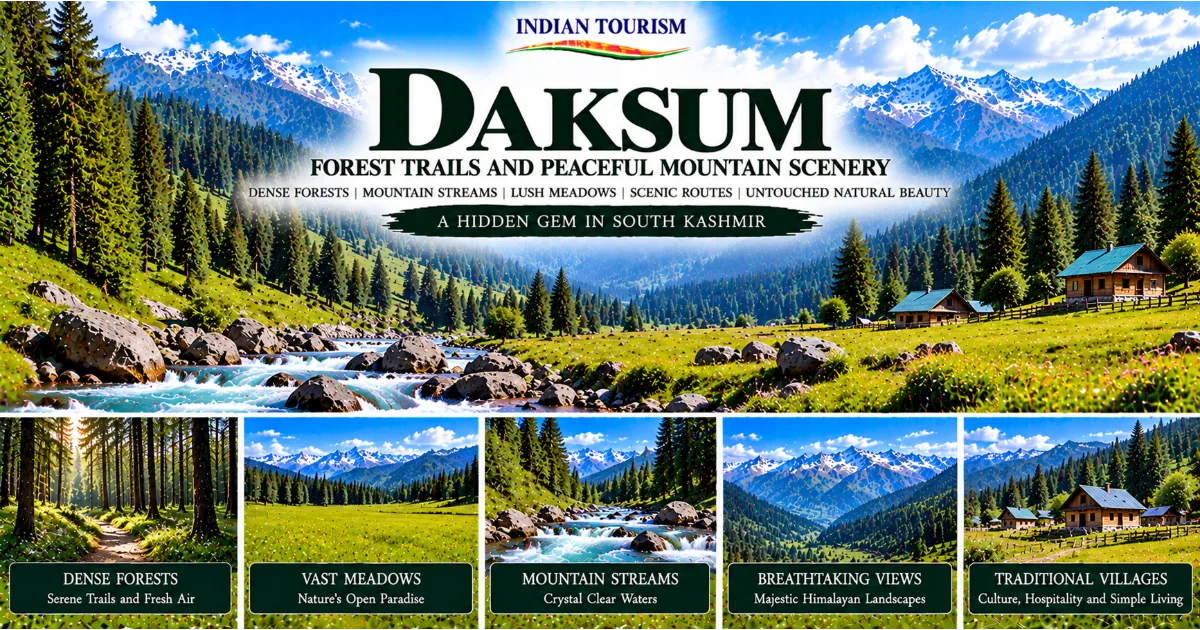
Discovering the Quiet Beauty of Daksum
Jammu and Kashmir is home to landscapes that range from magnificent lakes and flower-filled gardens to high mountain passes, alpine meadows and remote valleys. While destinations such as Srinagar, Gulmarg and Pahalgam attract visitors from across India and around the world, the region also contains quieter places where the beauty of the mountains can be experienced at a slower pace. Daksum, located in the Anantnag district of south Kashmir, is one such destination.
Surrounded by forested mountains and known for its peaceful natural setting, Daksum offers a refreshing escape for travellers who appreciate pine-covered slopes, fresh mountain air, winding roads and the sound of flowing water. The area lies along a scenic route through the southern Kashmir countryside, making the journey itself an important part of the experience. As the road moves away from busy settlements and into the mountains, the landscape gradually changes from cultivated fields and villages to woodland, streams and steep green slopes.
Daksum is particularly attractive to visitors who want to experience Kashmir beyond its most frequently photographed attractions. It does not depend on large monuments or a busy commercial centre to create its appeal. Instead, the destination invites visitors to enjoy the natural environment, take short walks, photograph the forest landscape and appreciate the relationship between mountains, water and vegetation.
The area is also an important reminder that natural tourism requires careful planning. Mountain weather can change quickly, roads may be affected by rainfall or other seasonal conditions, and facilities may be more limited than in major tourist towns. Travellers who prepare properly can enjoy a memorable visit while respecting the environment and the communities that live in the surrounding region.
This guide explores Daksum's landscape, best visiting season, travel arrangements, outdoor activities, local culture, accommodation considerations and responsible tourism practices. Whether you are planning a day trip, a longer journey through south Kashmir or a peaceful addition to a Jammu and Kashmir itinerary, Daksum offers a different way to appreciate the region's natural beauty.
1. Where Is Daksum Located?
Daksum is situated in the Anantnag district of Jammu and Kashmir, in the southern part of the Kashmir Valley. It lies in a mountain landscape associated with forested slopes, streams and routes that connect the valley's settlements with higher terrain.
The destination is often visited as part of a journey through south Kashmir. Travellers approaching from Anantnag move towards the countryside and mountain roads, where the built environment gradually gives way to forests and more open natural scenery.
Daksum's location makes it an appealing stop for people who are exploring the southern districts of Kashmir. It can be considered alongside other destinations in the wider region, including Kokernag, Verinag and areas around Pahalgam, although each place offers a different landscape and experience.
Visitors should plan their route according to the actual starting point, road conditions and the places they intend to visit. A map may show relatively short distances, but mountain roads can take longer to travel than expected. Weather, traffic, roadworks and temporary restrictions can also affect journey times.
Daksum is best understood as a natural destination rather than a large resort town. Its attractions are spread across the surrounding landscape, and visitors should not expect the same concentration of hotels, restaurants and organised entertainment found in major tourist centres.
This relatively quiet character is part of its appeal. Travellers can spend time appreciating the forest surroundings without needing to move constantly between commercial attractions.
2. Why Daksum Is Famous
Daksum is associated with the peaceful natural beauty of south Kashmir. Its forested setting, mountain scenery and access to the wider countryside make it attractive to people seeking an outdoor experience.
Dense Forests and Mountain Slopes
One of the most recognisable features of Daksum is its woodland landscape. Forested hills rise around the road and surrounding countryside, creating a setting that feels different from the open grasslands of Tosamaidan or the lake-centred scenery of Srinagar.
Trees form a natural canopy in many sections, while occasional openings provide views of the hills and valleys. The contrast between shaded woodland and brighter open areas gives the landscape visual variety throughout the day.
The forests are especially attractive during the warmer months, when vegetation is fresh and the surroundings appear green. In autumn, changes in colour and the softer light can create a different atmosphere. During colder periods, the same landscape may feel more rugged and remote.
Streams and the Sound of Water
Water is an important part of the wider mountain environment around Daksum. Depending on the location and season, visitors may encounter streams or flowing water along the route.
The sound of water moving over stones adds to the peaceful atmosphere. It also reminds visitors that mountain streams are part of a larger ecological system and may become stronger or more dangerous after heavy rain or snowmelt.
Not every stream is safe for bathing or drinking. Travellers should remain cautious around slippery rocks and avoid entering water when currents are strong.
Scenic Mountain Roads
The road journey to Daksum is itself an attraction. As travellers move through the southern Kashmir countryside, the surroundings change from populated areas to increasingly wooded terrain.
The route can provide opportunities for photography at safe stopping points. However, visitors should not stop in the middle of narrow roads or around blind bends. Mountain roads are used by residents and other vehicles, and careless stopping can create unnecessary risks.
A Quieter Alternative to Busy Destinations
Daksum appeals to travellers who prefer natural surroundings to crowded commercial areas. It may be a welcome change for visitors who have spent several days around Srinagar's busy attractions or the more developed tourist zones elsewhere in Kashmir.
Its appeal lies in simplicity. A walk through a suitable forest section, a break beside a permitted viewpoint or a slow drive through the mountains can form the centre of a satisfying visit.
3. Understanding the Natural Landscape of Daksum
Daksum lies within the broader Himalayan environment, where changes in elevation, rainfall, temperature and vegetation shape the landscape. Forests, streams, rocky slopes and open patches create a range of habitats within a relatively small area.
The Relationship Between Forest and Mountain
The forested slopes around Daksum are part of a wider mountain system. Trees grow according to local conditions, including elevation, soil, water availability and exposure to sunlight.
As visitors move along the route, the density of vegetation may change. Some areas feel enclosed by trees, while others open towards hillsides or valleys. These variations make the journey visually interesting even when there is no single landmark to visit.
The forest should not be viewed merely as scenery. It provides habitat for plants and animals, influences local water cycles and helps protect soil on mountain slopes. Damage to woodland can therefore affect the wider landscape.
Water, Soil and Seasonal Change
Rainfall and snowmelt influence the condition of the terrain around Daksum. Wet ground can make walking more difficult, while heavy rain may increase water levels in streams and create hazards near slopes or road edges.
Visitors should avoid crossing swollen streams or walking on unstable ground. A route that appears easy during dry weather may become slippery after rain.
The changing seasons also influence vegetation. Spring brings the gradual return of growth after winter, summer generally offers greener conditions, and autumn can introduce cooler temperatures and changing colours. Winter may bring snow, ice or restricted access depending on the location and weather.
The Importance of Ecological Balance
Forests and streams are connected. Vegetation helps protect soil, while healthy soil supports plant growth and contributes to the stability of the landscape. Water carries nutrients through the environment and provides habitat for different forms of life.
Tourism can put pressure on these systems when visitors leave rubbish, damage vegetation, drive outside permitted routes or disturb wildlife. Protecting the environment is therefore not separate from enjoying Daksum. It is essential to preserving the qualities that make the destination attractive.
4. Best Time to Visit Daksum
The best time to visit Daksum depends on your interests and the conditions prevailing during your intended travel dates. The landscape changes throughout the year, and the most suitable season for one activity may not be ideal for another.
Spring: Fresh Greenery and a Changing Landscape
Spring marks the transition from winter towards warmer weather. The surrounding vegetation begins to renew itself, and the countryside gradually becomes greener.
This period can appeal to travellers who enjoy the contrast between lingering signs of winter and the return of plant growth. However, road and walking conditions may vary depending on recent snowfall and rainfall.
Visitors should confirm access before travelling, particularly if they plan to explore forest paths or travel farther into the mountains.
Summer: A Comfortable Season for Nature Trips
Summer is generally a practical period for visitors interested in forest scenery, photography and relaxed outdoor exploration. Daytime conditions may be more comfortable for walking, and the surrounding vegetation is often at its greenest.
Even during summer, mountain weather can change quickly. Rain, cloud and cooler temperatures may arrive without much warning, so carrying a light jacket and rain protection is sensible.
Summer can also be a busier period for tourism across Kashmir. Travellers who prefer quieter surroundings may benefit from choosing weekdays or starting early, subject to local access and transport conditions.
Autumn: Cooler Air and Changing Colours
Autumn brings cooler temperatures and a different visual character to the landscape. Depending on local vegetation and the timing of seasonal change, forest colours may become more varied and the atmosphere may feel calmer.
This season can be rewarding for landscape photography and travellers who enjoy crisp air. Shorter daylight hours and colder mornings should be considered when planning the day.
Visitors should carry layers and avoid assuming that conditions in Anantnag or Srinagar will be identical to those at a higher elevation.
Winter: Snow, Cold and Access Considerations
Winter can create dramatic mountain scenery, but it also introduces additional challenges. Snow, ice, poor visibility and road restrictions may affect travel.
Daksum should not be treated as automatically accessible throughout winter. Confirm current road conditions and local guidance before setting out, and do not attempt to cross snow-covered or icy terrain without suitable equipment and experience.
For visitors whose main priority is an easy nature walk, warmer months are usually a more practical choice.
Recommended Period for Most Visitors
For a general visit focused on greenery, forest scenery and outdoor relaxation, late spring through early autumn is a useful broad planning window. The exact best period depends on weather, rainfall and road conditions in a particular year.
Before finalising your trip, check current access information and the local forecast. A flexible plan is more reliable than assuming that a specific month will always offer ideal conditions.
5. How to Reach Daksum
Daksum is most conveniently reached by road. Travellers can use Srinagar or another suitable location in the Kashmir Valley as their starting point and arrange onward transportation towards Anantnag and the surrounding mountain countryside.
By Air
Srinagar's Sheikh ul-Alam International Airport is the principal air gateway for many visitors travelling to the Kashmir Valley. From the airport, travellers can arrange a taxi or other suitable road transport for the onward journey.
Travel time depends on traffic, the route selected and current road conditions. It is sensible to avoid scheduling a very tight connection between an arriving flight and a long excursion into the mountains.
Visitors should also check whether their accommodation can help arrange a reliable driver familiar with the region.
By Rail
Depending on the origin of the journey and current railway services, travellers may use rail connections serving Jammu or the Kashmir Valley. The final part of the journey to Daksum requires road transportation.
Rail routes and operating arrangements can change. Confirm the latest services before booking and allow enough time for the onward road journey.
By Road from Srinagar
Road travel from Srinagar is a practical option for visitors who want to explore Daksum as part of a broader Kashmir itinerary. The route generally involves travelling towards the south Kashmir region and continuing through the countryside towards the destination.
The journey is not only a transfer between two points. The landscape gradually changes as the road moves through populated areas and into the mountains.
A private taxi or locally arranged vehicle can be useful because it allows flexibility for stops at appropriate viewpoints. However, any stops should be made only where they are safe and permitted.
By Road from Anantnag
Anantnag is a useful reference point for visitors exploring several destinations in south Kashmir. Travellers can arrange onward transport from the town, subject to the route and current local conditions.
Before leaving, confirm the driver's familiarity with the road and the expected return arrangements. If you plan to visit additional places on the same day, keep the itinerary realistic and avoid rushing between destinations.
Is Self-Driving a Good Option?
Self-driving can suit visitors who have experience with mountain roads and are comfortable responding to changing conditions. Roads may include bends, steep sections, narrow stretches and areas where visibility is limited.
Travellers unfamiliar with the region may find a local driver more convenient. Regardless of the choice, avoid driving after dark on unfamiliar mountain roads whenever possible.
6. Best Things to Do in Daksum
Daksum is most rewarding when approached as a destination for nature and landscape appreciation. Visitors do not need a long list of organised activities to enjoy the area.
Take a Relaxed Forest Walk
A walk through an appropriate forest section is one of the simplest ways to experience Daksum. The shade of trees, the changing light and the sounds of the natural environment can create a peaceful outdoor experience.
Choose a route that is permitted and suitable for your fitness level. Do not leave established paths to explore unknown sections of woodland, particularly when visibility is poor or the ground is wet.
If you are unfamiliar with the area, seek local guidance before attempting longer walks. The apparent simplicity of a forest trail does not guarantee that it is easy to navigate.
Enjoy the Mountain Views
The surrounding hills and forested slopes provide a scenic backdrop for a visit. Take time to observe how light changes across the landscape and how clouds move around the mountain ridges.
A relaxed stop at a safe viewpoint can be more rewarding than trying to photograph every bend in the road. Always remain aware of traffic and avoid standing near unstable edges.
Listen to the Forest
One of the pleasures of a quieter destination is the opportunity to pay attention to sounds that are often lost in busy urban settings. Wind moving through trees, birds calling and water flowing through the landscape can become part of the experience.
Visitors can appreciate these details by keeping noise low and spending a few minutes away from vehicle traffic where it is safe and permitted.
Avoid playing loud music or using sound systems in forest areas. Quiet behaviour helps preserve the experience for other visitors and reduces disturbance to wildlife.
Photograph the Changing Landscape
Daksum offers opportunities for landscape photography throughout the year. Wide compositions can capture the forested hills, while closer photographs can show tree bark, leaves, stones and seasonal plants.
Photographers should protect their equipment from rain and keep a safe distance from streams and steep slopes. A tripod should be placed only on stable ground and must not obstruct roads or paths.
The most successful photographs often come from observing the landscape patiently rather than moving quickly between viewpoints.
Enjoy a Peaceful Outdoor Break
A simple break in a suitable location can form part of a memorable visit. Choose a place where stopping is permitted and where you will not disturb residents, livestock or other travellers.
Carry your own food if necessary and take all packaging away. Avoid open fires unless a designated facility explicitly permits them.
Explore the Wider South Kashmir Countryside
Daksum can form part of a longer exploration of south Kashmir. Depending on the route and available time, visitors may consider nearby destinations such as Kokernag or Verinag, each of which has its own attractions.
Do not assume that every destination can be visited comfortably in a single day. Distances, traffic, access restrictions and time spent exploring can add up quickly. Select a few places and give each enough time.
7. Daksum and the Rural Life of South Kashmir
The landscape around Daksum is connected to the wider rural environment of south Kashmir. Villages, fields, orchards and mountain routes form part of the region's everyday life.
Tourists may see signs of agriculture and local work while travelling through the countryside. These are not merely decorative elements of the landscape. They represent livelihoods, seasonal routines and the practical relationship between people and the surrounding environment.
Agriculture and the Mountain Environment
Agricultural activity in the wider region reflects local soil conditions, climate and access to water. Fields and orchards may be visible along parts of the journey, depending on the route and season.
Visitors should respect cultivated land and avoid walking through crops or entering private property without permission. A photograph is never more important than a resident's right to use their land without disturbance.
Local Knowledge and Seasonal Patterns
People who live in mountain regions often have detailed knowledge of weather, road conditions and seasonal changes. Their understanding can be especially valuable for visitors unfamiliar with the area.
Travellers should listen to local advice about routes, rainfall and access. If a resident or driver advises against a particular road or walking area, take the warning seriously.
Supporting Rural Businesses
Tourism can create opportunities for drivers, guides, food providers and small businesses. Visitors can contribute by using legitimate local services and purchasing goods where available.
Spending locally can help distribute tourism benefits beyond major hotels and commercial centres. It can also encourage the development of services that meet the needs of both visitors and residents.
Respecting Community Life
A rural destination is a living place rather than a staged attraction. Ask before photographing people, avoid loud behaviour near homes and follow local guidance about access.
Simple courtesy helps ensure that tourism remains a positive experience for both visitors and the communities they encounter.
8. Forest Ecology and Biodiversity Around Daksum
The forests and mountain slopes around Daksum form part of a broader Himalayan ecological landscape. Forest vegetation, streams, soil and weather interact to create habitats for a range of plants and animals.
A visitor may not see much wildlife during a short visit, and sightings should never be guaranteed. The most responsible approach is to observe quietly and appreciate the ecosystem without trying to force an encounter.
Forest Vegetation
The area's wooded landscape is an important part of its identity. Different plants grow according to elevation, sunlight, moisture and soil conditions.
Visitors should avoid cutting branches, collecting plants or damaging young trees. Even small disturbances can accumulate when a destination receives repeated visits.
Waterways and Forest Health
Streams and other water sources are linked to the health of the surrounding landscape. Vegetation helps stabilise soil, while water supports plant and animal life.
Do not wash vehicles or utensils in streams, use detergents near water or dispose of food waste in waterways. Carry sufficient drinking water and treat natural sources as potentially unsafe unless their quality has been verified.
Wildlife Observation
Birds, insects and other animals contribute to the natural character of the area. Quiet observation is preferable to approaching or chasing wildlife.
Never feed wild animals, attempt to handle them or disturb nests. If an animal is encountered on a path, give it space and follow any relevant local guidance.
Why Conservation Matters
Forest damage can have consequences beyond the immediate area. Soil erosion, litter and pollution can affect water quality and habitat conditions. Uncontrolled vehicle movement can also damage vegetation and disturb wildlife.
Responsible tourism means using permitted routes, removing waste and avoiding activities that place unnecessary pressure on the environment.
9. Daksum for Families, Couples and Solo Travellers
Daksum can suit different kinds of travellers, but each group should plan around the natural setting and the level of available facilities.
Family Holidays
Families may appreciate the cooler mountain atmosphere and the opportunity to introduce children to forests and natural landscapes. A short walk, careful observation of plants and a relaxed break can provide a valuable outdoor experience.
Parents should supervise children closely near roads, streams, uneven ground and steep slopes. Do not allow children to approach livestock or wildlife without appropriate guidance.
Bring water, snacks, warm layers and basic first-aid supplies. Facilities may be limited, so plan for essential needs before leaving a larger settlement.
Couples Seeking a Quiet Escape
Couples may enjoy Daksum because it offers an alternative to crowded sightseeing areas. A scenic drive, a short forest walk and time spent appreciating the mountain surroundings can make a satisfying day.
Plan transportation and the return journey in advance. Avoid depending on finding a vehicle at the last moment, particularly if visiting during a quieter season.
Solo Travellers
Solo travellers can enjoy the landscape at their own pace, but should take additional precautions in less populated areas.
Share your itinerary with someone, keep your phone charged and check network availability. Avoid unfamiliar trails and do not set out on a long walk without understanding the route and current conditions.
A local guide may be useful for visitors who want to explore beyond the most accessible areas.
Nature Lovers
People who enjoy forests, changing weather and quiet scenery may find Daksum particularly rewarding. The destination is well suited to slow observation rather than a tightly scheduled series of activities.
Visitors who prefer shopping, nightlife or a wide selection of organised entertainment may find the area less suitable as a long independent stay. It can instead be included as part of a wider Kashmir itinerary.
10. How Long Should You Spend in Daksum?
The ideal duration depends on your starting point, transport arrangements and interest in exploring the surrounding region.
A Day Trip
A day trip can work for travellers who want to experience the forest scenery and return to their accommodation the same day. The schedule should allow enough time for the road journey, a relaxed walk and breaks along the route.
Avoid adding too many other destinations. A crowded schedule can turn a peaceful nature excursion into a rushed drive.
An Overnight Stay
An overnight stay in a suitable nearby location may be appealing to visitors who prefer a slower pace. Accommodation should be confirmed in advance, including details about meals, heating, sanitation and transport.
Do not assume that lodging is available directly beside every scenic area. A nearby town or village may be a more practical base.
Combining Daksum with Other Destinations
Visitors may combine Daksum with other attractions in south Kashmir, but should select stops according to geography and realistic travel times.
A sensible itinerary leaves room for weather changes and unexpected delays. If conditions worsen, reduce the number of stops rather than trying to complete the original plan at any cost.
11. Where to Stay When Visiting Daksum
Accommodation planning is important because Daksum is not a major urban centre. Visitors should research the options available for their dates and choose a base that fits the route and style of travel.
Staying in Srinagar
Srinagar offers a wider range of accommodation, restaurants and transport services. It can be a useful base for visitors who want to explore several destinations across Kashmir.
The disadvantage is the additional travel required to reach Daksum. An early departure and a realistic return time are important if the visit is planned as a day trip.
Staying Around Anantnag
Anantnag can be a practical base for exploring south Kashmir. Staying in the area may reduce travel time and make it easier to visit more than one nearby destination.
Check the exact location of the accommodation and the transport arrangements before booking. The suitability of a property depends on access, available services and your planned itinerary.
Local Guesthouses and Homestays
Where genuine local accommodation is available, a guesthouse or homestay may provide an opportunity to experience regional hospitality. Standards and services can vary, so confirm essential details in advance.
Ask about meals, hot water, heating, transport and payment arrangements. Respect the household's routines and follow any reasonable local customs.
Choosing Responsible Accommodation
Choose accommodation that manages waste appropriately, uses water carefully and treats staff and local residents fairly. Small decisions can help encourage tourism that benefits the region without creating unnecessary environmental pressure.
12. Food and Refreshments During Your Visit
Food planning is an important part of a mountain excursion. Visitors should not assume that every stop along the road will have an operating restaurant or shop.
Carry Essential Supplies
Bring enough drinking water and food for the planned visit. Choose items that can be carried easily and that produce minimal packaging waste.
Keep all wrappers and containers in your bag until they can be disposed of properly. Do not leave leftovers in the forest or feed them to animals.
Explore Kashmiri Cuisine
A wider trip through south Kashmir provides opportunities to experience regional cuisine. Depending on the establishment, visitors may find rice dishes, breads, vegetable preparations, meat dishes and traditional beverages.
Food traditions vary across households and communities. Ask about ingredients and preparation if you have dietary restrictions.
Support Local Food Providers
If local refreshment facilities are operating, buying from them can support small businesses. Be courteous, follow local rules and avoid assuming that services will be available outside their usual operating periods.
When facilities are limited, carrying supplies is more reliable than expecting residents to provide food or services for which they are not prepared.
13. Practical Travel Tips for Daksum
Preparation helps visitors enjoy Daksum safely and comfortably.
Confirm Current Road Conditions
Check local road conditions and access information before departure. Rainfall, snow, maintenance work and temporary restrictions may affect travel.
Do not rely only on old photographs or previously published itineraries. Conditions can change between seasons and even between days.
Wear Suitable Footwear
Comfortable walking shoes with a good grip are useful for forest paths and uneven ground. Avoid footwear that becomes slippery on wet surfaces.
Carry layers because mountain temperatures can be cooler than those in nearby towns. Rain protection is useful even when the forecast initially looks favourable.
Carry Water and Basic Supplies
Bring drinking water, snacks, sun protection, a small first-aid kit and any personal medication you need. A charged phone and power bank can also be useful.
Network coverage may vary. Make sure you have essential travel information available before leaving a well-connected area.
Be Careful Near Streams and Slopes
Wet rocks can be slippery, and water levels may rise after rain. Keep a safe distance from fast-moving water and avoid crossing streams when conditions are uncertain.
Do not approach unstable slopes or stand beneath areas where falling rocks may be a concern.
Plan the Return Journey
Allow enough daylight for the return drive and avoid unnecessary detours into unfamiliar areas. If weather deteriorates, shorten the visit and return to a safe location.
A flexible schedule is preferable to attempting every planned activity regardless of conditions.
14. Responsible Tourism in Daksum
The long-term appeal of Daksum depends on protecting its forests, waterways and rural surroundings. Responsible tourism is not merely a matter of keeping the destination visually attractive. It also supports ecological health and respectful relationships with local communities.
Carry Out All Waste
Plastic bottles, food wrappers and disposable containers can remain in the environment for years. Carry your waste back to a suitable disposal point.
Reusable bottles and containers can reduce the amount of rubbish produced during a trip. Never throw waste from a vehicle or leave it beside a stream.
Avoid Unauthorised Fires
Forest fires can cause extensive damage and may threaten nearby communities. Do not light fires in unauthorised locations or discard burning materials.
Use designated facilities only where they are permitted and safe. In dry conditions, even a small flame can create a serious hazard.
Respect Forest Paths and Wildlife
Stay on permitted routes and avoid damaging vegetation to reach a viewpoint. Do not disturb animals, nests or other signs of wildlife.
Keep noise levels low, especially in wooded areas. A quiet visitor has a better chance of noticing the natural environment without disturbing it.
Protect Water Sources
Avoid disposing of food waste, soap or other pollutants in streams. Do not wash vehicles in natural water sources.
Carry sufficient drinking water and do not assume that clear water is safe to drink without treatment.
Support Local Communities
Use legitimate local services where possible and respect the rights of residents. Ask permission before photographing people or entering private property.
Tourism is most sustainable when communities receive fair benefits and have a meaningful role in shaping how their surroundings are visited.
15. Daksum in a Wider Jammu and Kashmir Itinerary
Daksum can be included in a broader journey through south Kashmir, where visitors can experience several types of landscape and heritage.
Daksum and Kokernag
Kokernag is known for its springs and garden surroundings. Combining the two destinations may allow visitors to experience both forested mountain scenery and a water-centred landscape.
The order of travel should be chosen according to the starting point and current road conditions. Allow enough time at each place rather than treating the destinations as quick photo stops.
Daksum and Verinag
Verinag is associated with a historic spring and Mughal-era garden setting. It provides a different perspective on Kashmir's relationship with water, architecture and landscape design.
A combined trip can appeal to travellers interested in both natural scenery and heritage. Confirm opening arrangements and local access before finalising the itinerary.
Daksum and Pahalgam
Pahalgam is a well-known tourist destination with a broader range of visitor services and access to several scenic areas. Daksum can provide a quieter contrast within a wider trip, but the journey should be planned realistically.
Do not assume that every route between destinations will be equally quick or suitable in all seasons. Local advice is valuable when arranging mountain travel.
Creating a Balanced Itinerary
A good itinerary combines driving time with opportunities to stop, walk and enjoy the surroundings. Avoid planning long road journeys after a full day of outdoor activity.
Keep some flexibility for weather and access changes. A destination that cannot be reached safely should be postponed rather than forced into the schedule.
16. Photography Guide: Capturing the Beauty of Daksum
Daksum offers a variety of photographic subjects, from broad forest views to the details of mountain vegetation and flowing water.
Wide Landscape Photography
A wide-angle composition can show how the forested slopes relate to the road, valley and surrounding mountains. Try to include foreground details such as a path, tree trunks or stones to give the image a sense of depth.
Choose safe viewpoints and avoid stepping into traffic or onto unstable ground for a better angle.
Forest Details
Close-up photographs of leaves, bark, moss and seasonal plants can communicate the texture of the forest. Soft light beneath the trees may be more suitable for these subjects than direct midday sunlight.
Do not remove plants or disturb the ground to improve a photograph. The best images should leave the environment unchanged.
Water and Reflections
Where streams or water features are safely accessible, photographs can show movement, reflections and the relationship between water and woodland.
Keep equipment away from slippery edges and protect cameras from spray or rain. Never risk entering fast-moving water to obtain a particular composition.
Respectful Travel Photography
When people appear in a photograph, consider whether the image reveals private details or captures someone in an uncomfortable situation. Ask permission when appropriate and respect a refusal.
Responsible photography recognises that landscapes and communities are more important than collecting images.
17. Common Mistakes to Avoid When Visiting Daksum
A little planning can prevent common problems and make the trip more enjoyable.
Assuming Facilities Will Be Available
Visitors sometimes expect restaurants, toilets, shops and transport to be available at every scenic location. Daksum's natural setting means that facilities may be limited or seasonal.
Carry essential supplies and confirm accommodation and transport arrangements in advance.
Underestimating Mountain Weather
A sunny morning does not guarantee good weather throughout the day. Rain, cold wind and low visibility can affect the landscape quickly.
Carry suitable clothing and be willing to change plans if conditions deteriorate.
Planning Too Many Stops
Trying to combine Daksum with several distant destinations can reduce the time available to appreciate each place. It may also create pressure to drive too quickly.
Choose a manageable itinerary and prioritise safety over the number of locations visited.
Leaving Waste Behind
Even small amounts of litter can accumulate along roads and forest paths. Carry rubbish with you and use suitable disposal facilities.
Do not assume that someone else will collect waste after you leave.
Ignoring Local Advice
Residents and local drivers may know about road closures, weather changes or access restrictions that are not obvious to visitors. Take their advice seriously and avoid entering restricted areas.
18. Who Should Visit Daksum?
Daksum is especially suitable for travellers who appreciate forests, mountain roads, quiet surroundings and nature-focused experiences. It can appeal to families, couples, photographers and visitors who want to explore a less commercial side of Kashmir.
It may be less suitable for travellers who expect extensive shopping, nightlife or a large collection of organised attractions within walking distance. The main attraction is the natural environment, and visitors should plan according to that character.
Travellers with mobility limitations should assess the terrain and available facilities before visiting. Uneven ground, limited seating and the absence of fully accessible paths may make some areas difficult to explore.
Families with young children should plan carefully around road safety, streams and uneven surfaces. Solo travellers should share their itinerary and avoid unfamiliar trails without suitable guidance.
The destination is most rewarding for visitors who are prepared to slow down and enjoy the journey. Daksum is not a place that needs to be rushed through to be appreciated.
19. A Suggested One-Day Itinerary for Daksum
A one-day visit can work well when road access and weather conditions are suitable. The itinerary should remain flexible and should not depend on visiting every possible stop.
Morning: Travel Through South Kashmir
Leave your accommodation early after checking the road conditions. Carry water, snacks, suitable clothing and the essentials needed for the day.
Enjoy the countryside along the route, stopping only at safe and permitted places. Allow additional time for traffic or other delays.
Late Morning: Explore the Forest Setting
After reaching the destination, confirm any local instructions and choose a suitable area for a walk. Begin with a short route that matches your fitness level and the current ground conditions.
Spend time observing the forest, mountain slopes and surrounding scenery rather than attempting to cover a large area.
Midday: Take a Break
Rest at an appropriate location and eat the food you have brought or use an available local facility. Keep the area clean and avoid disturbing livestock or other visitors.
If weather conditions begin to deteriorate, shorten the outdoor portion of the visit.
Afternoon: Photography and Scenic Stops
Use the afternoon for landscape photography or another short walk within permitted areas. Observe the changing light and take time to appreciate the natural surroundings.
Do not venture farther into unfamiliar terrain simply to find a different viewpoint.
Late Afternoon: Return Safely
Begin the return journey with sufficient daylight remaining. Carry out all waste and ensure that everyone in your group has their belongings.
If you are combining Daksum with another destination, keep the additional stop optional and make sure the remaining journey is realistic.
20. Final Thoughts: Discover the Peaceful Side of Kashmir
Daksum is a reminder that the beauty of Jammu and Kashmir extends well beyond its most famous tourist attractions. Its forested slopes, mountain scenery and quiet rural surroundings provide a refreshing setting for visitors who appreciate nature and a slower pace of travel.
The destination is best experienced without a crowded schedule. A scenic drive, a short forest walk, careful landscape photography and time spent observing the surroundings can be enough to create a memorable day.
Its appeal also comes with responsibility. Forests, streams and rural roads require careful treatment, while local communities deserve respect and consideration. Visitors who plan ahead, follow local guidance and carry out their waste can help preserve the landscape for future travellers.
For anyone exploring south Kashmir, Daksum offers an opportunity to discover a quieter dimension of the region. It can complement visits to gardens, historic springs, lakes and established tourist towns by adding an experience centred on woodland and mountain scenery.
A thoughtful visit to Daksum is not about collecting the greatest number of photographs or travelling the farthest into the hills. It is about appreciating the natural environment, understanding the place within its wider landscape and leaving it as undisturbed as possible.
#IndianTourism #Daksum #KashmirTourism #JammuAndKashmir #SouthKashmir #ExploreKashmir #KashmirValley #ForestTrails #MountainScenery #NatureTourism #HiddenGemsOfKashmir #TravelIndia #ResponsibleTourism #IncredibleIndia #KashmirTravelGuide
