
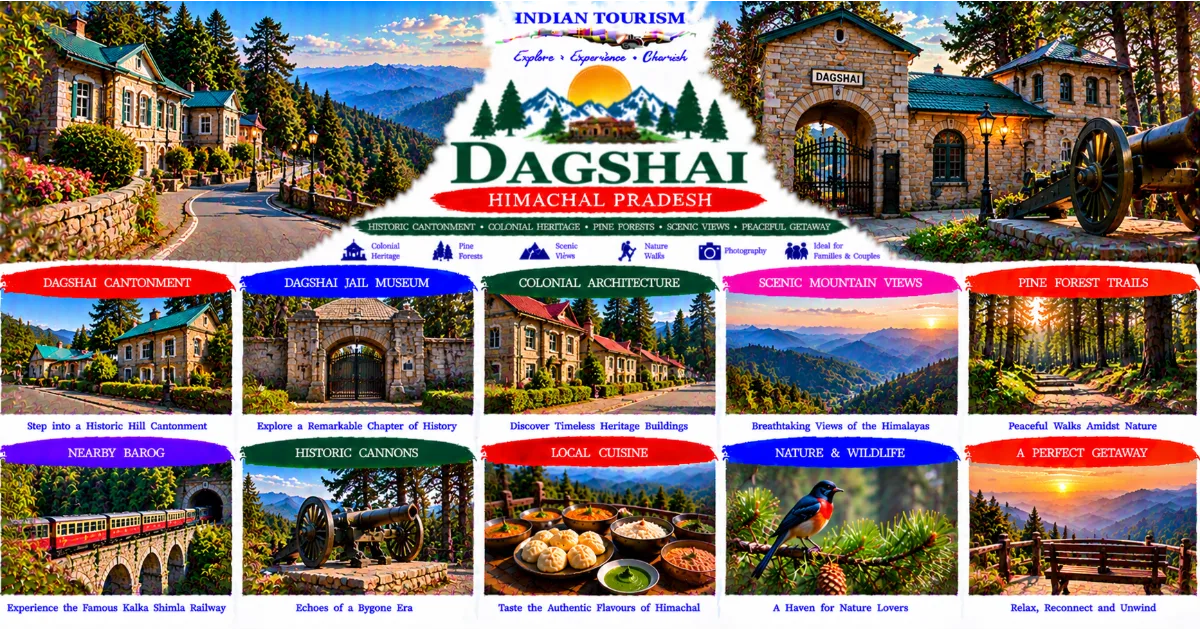
Discover the Quiet Heritage of Dagshai
Himachal Pradesh is famous for its mountain landscapes, pine forests, historic railway journeys and peaceful hill stations. While destinations such as Shimla, Manali and Kasauli attract travellers with their scenic beauty, the state also has lesser-known places where history and nature come together in a distinctive way. Dagshai, located in the Solan district, is one such destination. Known for its historic cantonment, old colonial-era buildings, quiet roads and elevated setting, Dagshai offers an experience that differs from the usual hill station holiday.
Dagshai is particularly interesting for travellers who enjoy history, architecture and places that preserve traces of an earlier period. Its identity is closely associated with the British-era military cantonment established in the nineteenth century. The settlement developed as part of the wider network of cantonments created during colonial rule, and elements of that history remain visible in its layout and surviving structures. For visitors interested in understanding how the Himalayan foothills developed during this period, Dagshai offers a valuable opportunity to explore a quieter side of the region.
The destination also appeals to nature lovers who prefer a relaxed atmosphere over crowded markets and commercial attractions. The surrounding hills, forested slopes and open views provide a pleasant setting for short walks and photography. Rather than presenting visitors with a long list of amusement activities, Dagshai invites them to appreciate its heritage, landscape and local character at a slower pace.
A trip to Dagshai can be planned as a short excursion from Barog or Solan, or as part of a longer journey through the hill settlements of Himachal Pradesh. Travellers can combine historical exploration with scenic drives, local food and visits to nearby destinations. With thoughtful planning, Dagshai can become a memorable stop for anyone interested in the relationship between history, architecture and mountain life.
Where Is Dagshai Located?
Dagshai is situated in Himachal Pradesh's Solan district, in the lower Himalayan foothills. Its elevated position provides a cooler environment than many parts of the northern Indian plains, especially during the summer months. The surrounding landscape consists of rolling hills, wooded slopes, winding roads and scattered settlements that reflect the region's mountain character.
The town lies within the broader Solan region, making it possible to combine a visit with destinations such as Barog, Solan and Kasauli. Its location is useful for travellers who want to explore smaller settlements rather than remain exclusively in the state's most famous tourist centres. However, visitors should check road distances and current conditions before arranging several destinations into a single day, as travel times in hilly terrain can be longer than expected.
Dagshai is not a large commercial hill station. Visitors should approach it as a historic settlement with a quieter atmosphere and a limited range of tourist facilities. This distinction is important when planning accommodation, meals and transport. Travellers who expect extensive shopping streets or numerous organised activities may find the destination understated, while those who appreciate historical surroundings and peaceful landscapes may find it especially rewarding.
The History of Dagshai
The Establishment of the Cantonment
Dagshai is widely associated with the establishment of a British military cantonment in 1847. The settlement's development reflected the strategic importance of the Himalayan foothills during British rule in India. Cantonments served as military stations where troops could be housed, trained and organised. Their location, infrastructure and surrounding roads were selected according to administrative and military requirements.
The establishment of Dagshai formed part of a wider pattern in which the British developed military and administrative centres across northern India. The hill environment offered climatic advantages during warmer months, while the cantonment's location supported the movement and organisation of military personnel in the region.
The settlement's history cannot be understood solely through its surviving buildings. It also reflects the larger political structure of colonial India, in which military installations played a role in maintaining British authority. A visit to Dagshai therefore provides an opportunity to consider both its physical heritage and the historical circumstances that shaped its development.
The Meaning and Origin of the Name
The name Dagshai has attracted different explanations over time. One commonly repeated local account connects it with the expression associated with a mark of punishment, traditionally described as a mark placed on a condemned person's forehead. This story is frequently repeated in popular accounts of the settlement's past.
As with many place-name traditions, visitors should distinguish between local narratives and independently documented historical evidence. Place names can develop through changes in language, oral tradition and administrative usage. Anyone interested in the detailed linguistic history of Dagshai can explore historical records and specialist accounts rather than relying on a single popular explanation.
Regardless of the exact origin of the name, the story forms part of the way the settlement is remembered and discussed. It also illustrates how local history often contains a mixture of documented events and narratives passed down through generations.
Dagshai During the Colonial Period
During British rule, Dagshai functioned as a military cantonment and developed an institutional character distinct from that of a traditional market town. Military buildings, roads and administrative facilities shaped its physical environment. The cantonment was part of a larger system of military settlements across the subcontinent.
The colonial period brought significant changes to the Himalayan foothills. Roads and transport links expanded, settlements developed new administrative roles, and military and civilian institutions influenced local economies. These developments affected the lives of residents in different ways, creating new opportunities while also reflecting the inequalities and political realities of colonial rule.
Dagshai's surviving architecture offers a visible connection to this period. Older structures, institutional buildings and the layout of the settlement can help visitors imagine how the cantonment functioned. However, not every old building is open to the public, and some properties may still have institutional, residential or restricted uses. Travellers should respect these boundaries.
Dagshai and the History of Punishment
Dagshai is also associated with stories about imprisonment and military discipline during the colonial period. Accounts of the settlement often refer to its former prison and the use of punishment within the cantonment system. These associations have contributed to its reputation as a place of historical interest.
The history of colonial military discipline should be approached with care. Popular descriptions can simplify complicated events, and particular stories may require verification through archival records. Visitors interested in this subject can use the settlement as a starting point for understanding how military justice, punishment and authority operated under British rule.
Historical tourism is most meaningful when it combines curiosity with careful interpretation. Dagshai's past includes the physical development of the cantonment as well as the experiences of people who lived and worked within the system. Considering these wider dimensions makes the visit more informative than simply viewing old buildings.
Top Attractions and Experiences in Dagshai
1. Dagshai Cantonment
The historic cantonment is the central reason many visitors come to Dagshai. Its layout, older structures and quiet atmosphere offer an opportunity to explore the settlement's military heritage. The buildings and roads reflect a different period of hill-town development, when cantonments were designed around the needs of military administration rather than modern tourism.
Visitors can appreciate the general character of the settlement through permitted public areas and roads. Walking slowly through the accessible parts of the town allows travellers to observe architectural details, building materials and the relationship between the settlement and its landscape.
Dagshai should not be treated as an open-air museum in which every building can be entered. Some areas may remain private or restricted, and military or institutional rules should always be followed. Before planning a detailed heritage walk, visitors should ask locally about accessible areas and any restrictions that apply.
2. Dagshai Jail Museum
The former prison associated with Dagshai is among the settlement's best-known historical attractions. It is often discussed in connection with the colonial history of the cantonment and the treatment of prisoners during the British period. The building has become a point of interest for visitors who want to explore the less familiar aspects of colonial history.
Access arrangements, opening hours and visitor permissions may change. Travellers should confirm whether the site is open to the public before making it the main purpose of their visit. It is also important to understand that historic buildings may undergo maintenance or operate under specific administrative conditions.
If access is available, visitors should approach the site respectfully. A former prison is not simply an architectural curiosity. It represents a place connected with confinement, discipline and the experiences of people who passed through the colonial justice system. Learning about its history can add depth to a visit and encourage reflection on the broader history of the period.
3. Historic Architecture and Old Buildings
Dagshai's older buildings are part of its distinctive character. The settlement developed under a military and administrative system, and its architecture reflects the functional requirements and building traditions of that period. Depending on the specific structure, visitors may notice stonework, sloping roofs, simple façades and layouts suited to the mountain environment.
Architectural exploration is especially rewarding for travellers who enjoy observing details rather than rushing between attractions. The position of buildings along roads, the use of local terrain and the relationship between structures and surrounding trees can reveal something about the way the settlement evolved.
Photography should be undertaken respectfully. Visitors should not enter private properties, photograph people without permission or assume that every historic building is publicly accessible. Some structures may be occupied or used for institutional purposes, and their continued use should take priority over sightseeing.
4. Scenic Views of the Himalayan Foothills
Dagshai's elevated setting offers opportunities to enjoy the surrounding hills and valleys. On clear days, the landscape may appear in layers of green and blue, while mist can create a quieter and more atmospheric scene. The views change with the season and the time of day, making the destination appealing to landscape photographers.
There may be informal places where visitors can pause and appreciate the scenery, but not every roadside location is safe for stopping. Drivers should use designated parking areas where available and avoid obstructing traffic. Visitors on foot should remain away from unprotected edges and steep slopes.
The best way to enjoy the landscape is to allow enough time rather than attempting to cover too many places. A relaxed walk, a quiet viewpoint and a little time to observe the hills can be more satisfying than a rushed itinerary.
5. Quiet Walks Through the Settlement
Dagshai is well suited to slow exploration of its accessible roads and surroundings. Walking allows visitors to notice details that may be missed from a vehicle, including old walls, trees, changes in elevation and the relationship between buildings and the landscape.
Walks should be planned around the weather and the condition of the route. Some roads may have traffic, steep sections or limited pedestrian space. Visitors should wear comfortable shoes, carry water and avoid unfamiliar paths after dark.
During the monsoon, surfaces can become slippery, and heavy rain may affect visibility and road safety. It is better to choose a shorter route in poor conditions than to continue simply to complete a planned walk.
6. Local Life and the Character of a Hill Settlement
Dagshai is also interesting because it remains a living settlement rather than an exclusively tourist-oriented destination. Residents continue their daily routines while visitors explore the historic surroundings. Observing the town respectfully can help travellers understand the relationship between heritage and contemporary life.
Small settlements often have fewer commercial facilities than major hill stations. Visitors should not expect every service to be available throughout the day. Planning meals and transport in advance can make the trip more comfortable, particularly for families and travellers without a private vehicle.
Respect for residents is essential. Keep noise low, avoid blocking entrances and ask permission before taking photographs of homes or people. Responsible behaviour helps preserve the peaceful atmosphere that makes Dagshai appealing.
Best Time to Visit Dagshai
Spring: March to April
Spring is a pleasant season for exploring Dagshai. The weather generally becomes more comfortable, and the surrounding landscape begins to show fresh growth. Conditions can be suitable for walking through accessible areas, viewing historic architecture and enjoying the surrounding hills.
Mornings and evenings may still be cool, so carrying a light jacket is sensible. Spring is also a useful time for visitors who want to avoid the strongest summer crowds found in some of the region's more popular destinations.
Summer: May to June
Summer is a popular period for travelling to the Himalayan foothills because temperatures in the plains can become very high. Dagshai's mountain setting may provide a more comfortable environment for a short break, although temperatures vary with the weather and elevation.
Visitors should plan transport and accommodation in advance, particularly during weekends and school holidays. A daytime visit can be combined with Barog or Solan, provided the itinerary allows sufficient time for road travel and exploration.
Monsoon: July to September
The monsoon brings lush greenery and atmospheric views to the hills. For photographers, the changing clouds and rain-washed landscape can create striking scenes. Travellers who enjoy quiet destinations may also appreciate the slower pace of the season.
However, the monsoon can bring difficult road conditions, slippery paths, falling rocks and landslides in parts of Himachal Pradesh. Visitors should check weather advisories, avoid unnecessary travel during heavy rainfall and follow local instructions. Outdoor walks should be shortened or cancelled when conditions are unsafe.
Autumn: October to November
Autumn is often a good season for exploring the historical and natural aspects of Dagshai. The weather may be clearer after the monsoon, improving the chances of enjoying long views across the surrounding hills. The comfortable conditions can also make heritage walks more pleasant.
Visitors should still carry an additional layer for cool mornings and evenings. The weather can change quickly in mountain areas, so a flexible plan remains useful.
Winter: December to February
Winter brings colder mornings and evenings, and the settlement may feel particularly quiet. Travellers who enjoy cool weather and a peaceful environment may find this season appealing. Snowfall should not be assumed in Dagshai itself, and conditions vary from year to year.
Warm clothing is essential, particularly for visitors who plan to spend time outdoors. Before travelling, check road conditions and confirm whether the historical sites you want to visit are accessible.
How to Reach Dagshai
By Road
Road travel is a practical way to reach Dagshai from the surrounding towns and cities. Travellers commonly approach through the Solan district and the wider Kalka region. The precise route depends on the starting point, traffic and road conditions.
Visitors driving themselves should be comfortable with hill roads, bends and changing gradients. It is important to drive slowly, maintain a safe distance and avoid unnecessary journeys after dark. During heavy rain, travel times can increase, and local advice should be followed.
Travellers using taxis should agree on the fare and pickup arrangements in advance. If the visit includes several stops, clarify whether the driver will wait at each location or charge separately for additional travel.
By Train
The nearest suitable railway connection depends on the route and the type of train service required. Kalka is a major railhead for travellers entering the Himalayan foothills, while the historic Kalka to Shimla railway provides a scenic journey through the region. Visitors should check the current rail network and onward road connections before selecting a route to Dagshai.
A train journey can be combined with road transport for the final part of the trip. However, visitors should allow enough time between connections, especially if their plan depends on a specific service or a pre-booked accommodation check-in.
By Air
Chandigarh Airport is a practical airport option for many travellers visiting the Solan district. From the airport, the journey continues by road. The total travel time depends on traffic, weather and the exact location of the accommodation.
Visitors arriving by air should arrange their onward transport before departure where possible. If the flight arrives late in the day, a pre-arranged taxi can make the final part of the journey easier.
Suggested Itineraries for Dagshai
One-Day Historical Excursion
A one-day visit is suitable for travellers staying in Barog, Solan or another nearby destination. Begin in the morning and explore the accessible parts of Dagshai's historic cantonment. Spend time observing the old buildings and understanding the settlement's military background.
If the former prison site is open to visitors, include it after confirming the access arrangements. Allow time for photographs and a short walk through permitted public areas. Enjoy lunch at a suitable local establishment or return to a larger nearby town if dining options are limited.
In the afternoon, spend time enjoying the surrounding hills before returning to your accommodation. Keep the itinerary flexible because access restrictions and road conditions may affect the order of activities.
Two-Day Dagshai and Barog Trip
A two-day trip allows travellers to explore both history and railway heritage. On the first day, focus on Dagshai's cantonment, historic buildings and scenic surroundings. Spend the evening in accommodation selected for convenient transport and comfortable access.
On the second day, travel towards Barog and explore its association with the Kalka to Shimla railway. If a suitable train service is available, consider incorporating a journey along part of the route. Otherwise, enjoy the station area from permitted public spaces and learn about the railway's engineering history.
This itinerary works well for couples, families and history enthusiasts who prefer a manageable schedule rather than a long list of stops.
Three-Day Solan Region Itinerary
A three-day trip can include Dagshai, Barog and Solan. Use the first day for Dagshai's history, the second for Barog's railway heritage and natural surroundings, and the third for Solan's markets, cultural sites and local food.
Travellers with additional time may consider another nearby destination, depending on road conditions and personal interests. The aim should be to explore a few places properly rather than spending most of the holiday travelling between them.
Exploring Nearby Destinations
Barog
Barog is a natural companion to Dagshai because it combines a quiet mountain environment with the heritage of the Kalka to Shimla railway. Visitors can explore the station area, learn about the historic tunnel and enjoy the surrounding forests.
The two destinations provide contrasting experiences. Dagshai is particularly associated with cantonment history, while Barog is closely connected with railway engineering and scenic train travel. Combining them gives visitors a broader view of the region's heritage.
Solan
Solan is one of the main towns in the district and offers a wider range of everyday services, shops and dining options. The town is associated with the Shoolini Mata Temple and is often called the Mushroom City of India because of its connection with mushroom cultivation.
A visit to Solan can complement Dagshai's historical character with a more active town environment. Travellers can explore local markets, sample regional food and learn about the district's contemporary economy.
Kasauli
Kasauli is known for its wooded setting, colonial-era atmosphere and walking routes. It is popular with visitors seeking a peaceful hill station experience. The destination may appeal to travellers who want to explore the region's architecture and natural landscape in greater detail.
Before combining Kasauli with Dagshai, check road distances and current conditions. The most convenient itinerary depends on where you are staying and whether you have private transport.
Barog and Solan as a Combined Excursion
Travellers who prefer not to change accommodation repeatedly can use one of the larger or more accessible nearby towns as a base. From there, they can plan separate excursions to Dagshai and Barog, allowing sufficient time for road travel.
This approach is especially useful for families and visitors who prefer to keep luggage in one place. It also provides flexibility if rain or other conditions require changes to the itinerary.
Local Food to Try During Your Visit
Dagshai is a relatively small settlement, so the range of restaurants and food outlets may be limited compared with larger towns. Visitors can enjoy simple meals in available local establishments or plan to eat in nearby Solan and other larger centres. Travellers staying in guesthouses should ask about meal availability before arrival.
Himachali Dham
Dham is a traditional celebratory meal associated with Himachal Pradesh. It is commonly served during weddings, festivals and community gatherings. The dishes vary by region, but meals often include rice, lentils and carefully prepared curries.
Visitors may not find a full traditional dham every day in Dagshai. Those interested in experiencing the meal should ask local hosts or restaurants in the wider region whether it is available.
Siddu
Siddu is a traditional Himachali food prepared from fermented wheat dough. It may be served with ghee or accompaniments that vary by region and household. Its distinctive texture and flavour make it a worthwhile choice for travellers interested in local cuisine.
Availability varies, especially in smaller settlements. Ask about the preparation and filling before ordering.
Chana Madra
Chana madra is a traditional dish commonly prepared with chickpeas in a yoghurt-based gravy and seasoned with regional spices. It is associated with the culinary traditions of Himachal Pradesh and can make a satisfying meal for visitors seeking regional flavours.
Different cooks use different recipes, so the taste and texture may vary. It is often best enjoyed as part of a meal with rice or bread.
Babru
Babru is a traditional Himachali snack made with dough filled with a spiced black gram mixture and then fried. It is a useful choice for travellers who want to sample a regional speciality rather than rely entirely on familiar snacks.
Visitors may have better opportunities to find it in larger nearby towns. Ask local residents for recommendations when exploring the region.
Simple Mountain Meals
Simple meals such as dal, rice, seasonal vegetables, roti and soups can be comforting after a day of walking. Hot beverages are also welcome during cooler weather. Visitors with dietary restrictions should explain their needs clearly and confirm ingredients where necessary.
Food hygiene should be a priority. Choose establishments that appear clean and handle food appropriately, particularly during warm or rainy weather.
Accommodation Options Near Dagshai
Staying in Dagshai
Accommodation within Dagshai and its immediate surroundings may be limited compared with larger tourist towns. Visitors should confirm availability, facilities and the exact location before booking. Some properties may be better suited to travellers with private transport because of their distance from public transport points.
When choosing a property, check whether meals are provided, whether hot water is available, what heating arrangements are offered in winter and whether the approach road is suitable for your vehicle. If you are travelling with older family members or young children, ask about stairs, slopes and the distance between parking and the room.
Staying in Barog
Barog can be a useful base for visitors interested in exploring Dagshai and the wider Solan region. Its railway heritage and forested setting make it an appealing destination in its own right. Staying in Barog may allow travellers to combine historical exploration with a peaceful mountain retreat.
Before booking, compare the actual travel distance to Dagshai rather than relying only on broad descriptions of the region. Confirm taxi availability if you do not have your own vehicle.
Staying in Solan
Solan offers a wider range of services than smaller settlements and may be more convenient for travellers who want access to shops, restaurants and transport. It can serve as a practical base for day trips to Dagshai and Barog.
The choice between Solan, Barog and Dagshai depends on the type of holiday you want. Solan offers greater convenience, Barog emphasises railway heritage and a quiet mountain setting, while Dagshai is especially appealing to travellers interested in history.
Dagshai for Different Types of Travellers
History Enthusiasts
Dagshai is particularly suited to visitors interested in colonial history, military settlements and the development of the Himalayan foothills. Its cantonment heritage and association with a former prison provide subjects for further exploration.
History enthusiasts should approach the destination with curiosity and a willingness to distinguish documented evidence from popular stories. A visit becomes more meaningful when the buildings are understood in their historical context.
Architecture Lovers
Visitors interested in architecture can observe the older structures and settlement layout. The relationship between buildings, roads and the hillside environment offers an opportunity to study how institutions adapted to mountain terrain.
Because some buildings may be private or restricted, visitors should limit their exploration to accessible areas and seek permission before photographing sensitive sites.
Nature Lovers
Dagshai's surroundings offer opportunities to appreciate forested slopes, changing weather and mountain views. Nature lovers may enjoy short walks and quiet observation rather than strenuous outdoor activities.
Visitors should follow safe routes, avoid damaging vegetation and take all rubbish away. During the monsoon, outdoor activities should be adjusted to the weather.
Couples and Weekend Travellers
Couples and weekend travellers may appreciate Dagshai as a peaceful stop within a larger hill-country itinerary. The destination is suitable for those who prefer history, scenery and quiet exploration over busy entertainment areas.
A stay in Barog or Solan can make it easier to combine Dagshai with other attractions without having to organise every detail around limited local services.
Families
Families can use the visit to introduce children to local history and heritage architecture. Parents should explain why restricted buildings and railway infrastructure must not be entered without permission. Walking routes should be selected according to children's ages and comfort levels.
A relaxed schedule with regular breaks and convenient meals will usually make the visit more enjoyable.
Photography Guide to Dagshai
Dagshai offers opportunities for architectural, landscape and documentary-style photography. Older buildings, stone walls, winding roads and the surrounding hills can create interesting compositions. The contrast between historic structures and the natural landscape gives photographers several ways to tell the story of the settlement.
Morning and late afternoon can provide soft light, while misty conditions may add atmosphere to the hills. However, weather can change quickly, and clear views are not guaranteed. A smartphone or a versatile camera is sufficient for most visitors.
Photographers should be particularly respectful of private property and institutional areas. Ask permission before photographing residents, avoid entering buildings without authorisation and do not use restricted locations merely to obtain a dramatic image. Safety should take priority around roads, slopes and any operational facilities.
Responsible Tourism in Dagshai
Responsible tourism is important in a small historic settlement where local life continues alongside visitor activity. Travellers should avoid littering, use waste bins where available and carry reusable bottles when practical. Waste should never be left in forests, roadside drains or around historic buildings.
Respect local residents and their privacy. Keep noise low, avoid blocking entrances and ask before photographing people or homes. If visiting a heritage site, follow its access rules and do not touch, remove or damage historic materials.
Visitors should also recognise that historic buildings can have ongoing uses. A structure that appears old may still be occupied, maintained or restricted for administrative reasons. Respecting these conditions helps protect the heritage and makes tourism more sustainable.
Weather awareness is equally important. Heavy rainfall can make roads and walking routes unsafe, while fog can reduce visibility. Travellers should adjust their plans according to local advice instead of taking unnecessary risks to complete an itinerary.
Practical Travel Tips for Dagshai
Before travelling, confirm the opening status of the sites you want to visit, especially the former prison or museum. Access arrangements can change, and it is better to verify them in advance than to assume that every attraction is always open.
Carry comfortable walking shoes, a light jacket and a waterproof layer. In winter, bring warmer clothing for the morning and evening. During the monsoon, avoid slippery trails and follow weather advisories.
Plan meals and transport ahead of time if you are visiting for only a few hours. Small settlements may have fewer services than major tourist towns, and public transport schedules may not suit every itinerary. Visitors travelling without a private vehicle should arrange their return journey before setting out.
Keep some flexibility in the schedule. Hill roads can be slow, and weather may affect visibility and travel times. It is usually better to explore a small number of places carefully than to rush through several destinations.
Is Dagshai Worth Visiting?
Dagshai is worth visiting for travellers who value history, architecture and peaceful mountain surroundings. It does not offer the extensive shopping streets or entertainment facilities associated with major hill stations. Instead, its attraction lies in the historical character of the cantonment, its association with colonial-era military life and the quiet landscape of the Solan district.
The destination is especially rewarding for visitors who enjoy learning about the past while observing how a historic settlement continues to function in the present. Its old buildings, roads and surrounding hills provide a setting for thoughtful exploration. The experience becomes even more varied when combined with Barog's railway heritage or Solan's cultural and commercial attractions.
A successful visit requires realistic expectations. Confirm access to historical sites, plan transport and allow enough time to explore without rushing. With these preparations, Dagshai can become an interesting and distinctive stop on a Himachal Pradesh journey.
Conclusion: Explore the Historical Side of Himachal Pradesh
Dagshai offers a different kind of mountain holiday, one shaped by history as much as by scenery. Its nineteenth-century cantonment heritage, surviving older structures and association with colonial-era punishment make it a destination of interest to travellers who want to understand more about the region's past. The surrounding hills and quiet atmosphere provide a natural setting for reflection and photography.
A visit can be combined with Barog, Solan and other nearby destinations to create a balanced itinerary of history, culture and nature. Travellers should confirm access arrangements, respect restricted areas and prepare for the changing conditions of mountain travel.
For those willing to look beyond the most famous tourist centres, Dagshai offers a chance to discover a lesser-known part of Himachal Pradesh. It reminds visitors that the history of a place is not always found in grand monuments. Sometimes, it survives in quiet streets, old buildings and the landscape that continues to surround them.
#IndianTourism #HimachalPradesh #Dagshai #DagshaiTourism #ExploreHimachal #HimachalTravel #SolanDistrict #HistoricalPlacesIndia #HeritageTourism #ColonialHistory #MountainGetaway #TravelIndia #ExploreIndia #ResponsibleTourism
