
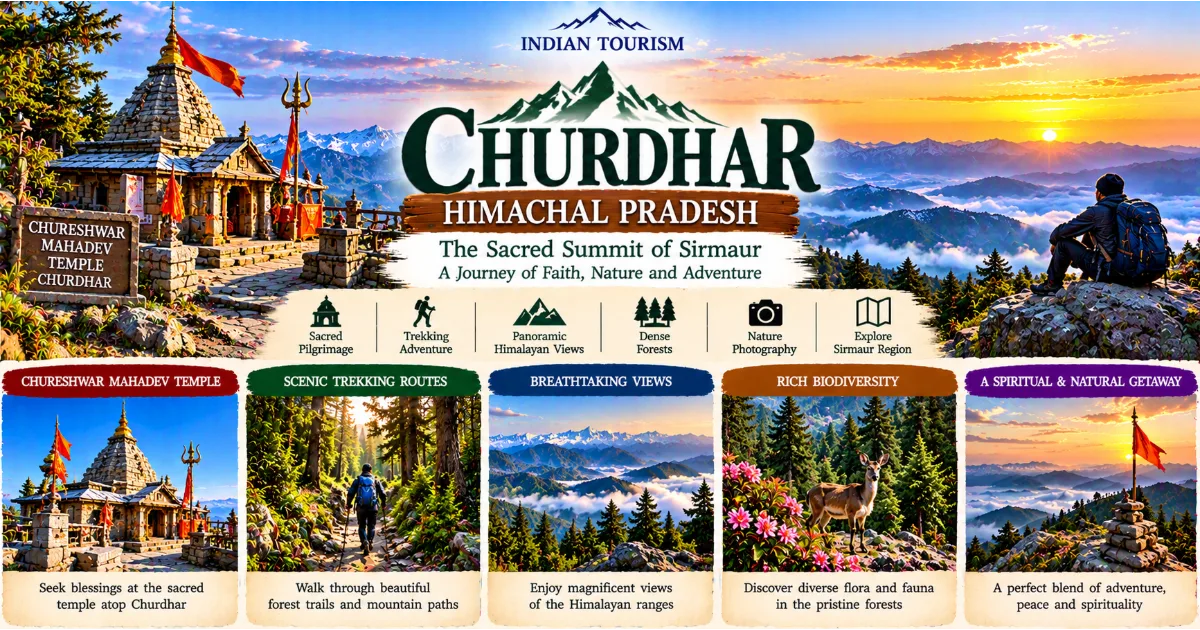
A Mountain Journey of Faith, Nature and Adventure
Himachal Pradesh offers countless opportunities for travellers who want to experience the Himalayas beyond the familiar attractions of busy hill stations. Among its most fascinating destinations is Churdhar, a prominent mountain in the Sirmaur district known for its religious significance, forested trekking routes and expansive views of the surrounding landscape. For pilgrims, the mountain is associated with the revered Chureshwar Mahadev tradition. For nature lovers, it offers a journey through forests, mountain paths and open slopes. For trekking enthusiasts, the ascent presents an opportunity to experience the physical challenge and quiet beauty of the Himalayan foothills.
Churdhar is not simply a destination to reach by vehicle, explore briefly and leave behind. The journey itself forms an important part of the experience. Travellers who undertake the trek encounter changing vegetation, mountain weather, quiet forest stretches and occasional openings that reveal the surrounding hills. The route demands preparation, patience and respect for the natural environment. Unlike a conventional sightseeing trip, a visit to Churdhar requires travellers to consider their fitness, the season, available daylight and current trail conditions.
The mountain is closely connected with local religious traditions and attracts devotees who visit the Chureshwar Mahadev Temple near the summit. The spiritual atmosphere gives the destination a special character, bringing together pilgrimage and outdoor exploration. The mountain's significance is also reflected in the stories and beliefs associated with the region, which form an important part of the cultural heritage of Sirmaur.
For visitors seeking a destination that combines adventure, natural scenery and spiritual meaning, Churdhar deserves consideration. However, its appeal comes with responsibilities. Mountain weather can change rapidly, trekking routes can become difficult during unfavourable conditions, and altitude can affect people differently. A successful visit depends on thoughtful planning rather than simply deciding to climb.
This guide explores Churdhar's location, cultural significance, trekking experience, seasonal conditions, travel preparation, nearby destinations and responsible tourism practices. It is intended to help travellers understand the mountain and approach the journey with both enthusiasm and caution.
Where Is Churdhar Located?
Churdhar is situated in the Sirmaur district of Himachal Pradesh, within the southern Himalayan region. The mountain rises above the surrounding forested hills and is a prominent geographical feature of the area. Its summit is commonly described as being around 3,600 metres above sea level, although travellers should consult reliable local information for precise elevation and route details.
The surrounding landscape includes forested slopes, rural settlements, cultivated areas and mountain ridges. This setting gives Churdhar a different character from destinations located in the lower foothills. The ascent involves a substantial change in elevation, and visitors may experience cooler temperatures, stronger winds and more demanding walking conditions as they climb.
Several trekking approaches are associated with Churdhar, including routes used by pilgrims and hikers travelling from the Sirmaur side. The suitability of a route depends on its current condition, the season and the visitor's experience. Some routes may be longer or steeper than others, and local guidance is important when selecting an approach.
Churdhar is often considered by travellers exploring the wider Sirmaur region, but it should not be treated as a casual addition to a packed sightseeing itinerary. A summit trek can require much of a day, and the journey may be better planned as a dedicated excursion with an overnight stay in a suitable nearby location.
Before travelling, confirm the current route, access arrangements, local transport options and any restrictions that may apply. Mountain access can change because of weather, trail damage, snow or other local conditions.
The Spiritual Significance of Churdhar
Chureshwar Mahadev and the Sacred Mountain
Churdhar holds an important place in the religious traditions of the surrounding region. The mountain is closely associated with Chureshwar Mahadev, a revered form of Lord Shiva in local worship. The temple near the summit attracts devotees who undertake the journey as an act of faith and devotion.
For many pilgrims, reaching the sacred site is about more than completing a physical climb. The journey represents dedication, perseverance and an opportunity to spend time in a place regarded as spiritually meaningful. The effort required to reach the mountain can become part of the devotional experience.
Religious traditions associated with mountains are common across the Himalayas. High places often inspire a sense of reverence because of their natural grandeur, distance from everyday settlements and connection with stories passed through generations. Churdhar's religious identity reflects this relationship between landscape, faith and community memory.
Visitors who are unfamiliar with the local traditions can learn about the mountain's significance by speaking respectfully with local guides and observing the customs associated with the temple. Religious heritage should be approached with sensitivity, particularly when a destination is both a place of worship and a popular trekking attraction.
Local Legends and Cultural Memory
The stories associated with Churdhar form part of the cultural heritage of Sirmaur. Like many sacred mountains, the site is connected with local beliefs and narratives that explain its religious importance. These traditions are preserved through worship, community gatherings and the experiences of pilgrims who return to the mountain.
Local legends may vary in detail, and visitors should recognise the difference between religious tradition and independently documented historical evidence. The value of a sacred story does not depend solely on whether every detail can be verified through modern historical methods. Such narratives can reveal how communities understand their landscape and express shared values.
For travellers, learning about local beliefs adds depth to the physical experience of the trek. The forest paths and summit views become part of a cultural landscape rather than simply a scenic route.
Visitors should avoid treating religious stories as entertainment detached from the people who preserve them. Listening carefully, asking thoughtful questions and respecting differing interpretations are good ways to learn about the region's heritage.
The Temple Experience
The Chureshwar Mahadev Temple is one of the principal reasons pilgrims travel to Churdhar. Its location near the summit creates a distinctive setting in which religious devotion and mountain scenery come together.
Visitors should remember that the temple is a place of worship. Appropriate clothing, respectful conduct and attention to local instructions help maintain the sanctity of the site. Photography should be undertaken only where permitted, and travellers should avoid disturbing worshippers or religious activities.
The weather near the summit may be much colder than conditions at the starting point. Visitors should carry warm clothing even if they begin the trek in comfortable temperatures. If the weather deteriorates, reaching the temple should never take priority over personal safety.
For many visitors, the combination of the long ascent, the spiritual purpose of the journey and the mountain environment makes the experience memorable. Those who approach the destination with patience and respect are more likely to appreciate its significance.
The Natural Landscape of Churdhar
Forests Along the Trekking Routes
The lower and middle sections of Churdhar's trekking routes pass through forested mountain terrain. Depending on the route and season, visitors may encounter a variety of trees, shrubs and other vegetation adapted to the local climate and elevation.
Forest walking creates a different experience from travelling through open mountain landscapes. Trees provide shade in some sections, while the forest floor can retain moisture after rain. Sunlight filters through the branches, and the sounds of birds and moving leaves can make the trail feel peaceful.
These forests are ecologically important. They provide habitats for wildlife, help protect soil and contribute to the movement and storage of water through the landscape. Mountain forests also play a role in regulating local environmental conditions, although their ecological functions depend on vegetation type, soil, rainfall and land management.
Visitors should remain on established trails and avoid damaging plants or disturbing wildlife. Picking flowers, breaking branches or leaving food waste can harm the environment and reduce the quality of the experience for others.
Mountain Ridges and Panoramic Views
As the route gains elevation, the surrounding landscape can open into wider views of ridges, valleys and distant mountain ranges. The exact visibility depends on the weather, atmospheric conditions and the route being followed.
Clear days can reveal layers of hills extending towards the horizon, while clouds and mist may create a more dramatic atmosphere. The contrast between forested slopes and exposed mountain terrain is one of the features that makes the ascent visually rewarding.
Photographers may find opportunities for wide landscape images, particularly where the trail passes through open sections. However, visitors should never move towards an exposed edge or unstable slope simply to obtain a better photograph.
Mountain views can change quickly. A clear morning may become cloudy within a short period, and visibility may decline as mist moves across the ridge. Travellers should remain aware of navigation and weather conditions even when the scenery is attractive.
Wildlife and Biodiversity
The broader forested landscape around Churdhar supports mountain wildlife and a variety of plant communities. The exact species encountered by visitors depends on the location, elevation, season and degree of human activity.
Wildlife is not guaranteed to appear during a trek. Animals often avoid busy trails, and many species are most active when fewer people are present. Visitors should therefore enjoy the possibility of observing nature without expecting a wildlife sighting.
The best way to experience wildlife is through quiet observation. Avoid chasing animals, feeding them or attempting to approach them for photographs. Keep a safe distance and follow any guidance provided by local authorities or experienced guides.
Biodiversity is an important part of the mountain's value. Protecting vegetation, reducing litter and avoiding unnecessary disturbance helps preserve habitats for future generations.
Understanding the Churdhar Trek
Why the Trek Requires Preparation
The Churdhar trek is physically demanding because it involves a substantial ascent through mountainous terrain. The challenge depends on the starting point, route length, elevation gain, trail condition and the fitness of the individual.
Even experienced walkers can find a mountain trek difficult when conditions are wet, cold or windy. The combination of uneven ground, changing elevation and limited daylight makes preparation essential.
Visitors should not assume that a route is easy simply because other people have completed it. Fitness levels differ, and the effect of altitude varies from person to person. A pace that feels comfortable for one hiker may be exhausting for another.
Before attempting the trek, assess your physical condition honestly. If you have concerns about your ability to manage a long ascent, seek medical advice where appropriate and consider a shorter outdoor activity instead.
A successful trek is not defined by reaching the summit at any cost. Turning back when conditions become unsafe is a responsible decision and an important part of mountain travel.
Choosing the Right Starting Point
Different approaches to Churdhar may be available depending on the side of the mountain from which visitors travel. The appropriate route depends on road access, local trail conditions, available guides and the amount of time the visitor can allocate.
Before choosing a starting point, obtain current information from local authorities, accommodation providers or experienced guides. Ask about the route's condition, approximate walking time, water availability, steep sections and any restrictions that may be in place.
Do not rely solely on older travel accounts or social media posts. Mountain trails can change because of rainfall, erosion, fallen trees, snow or maintenance work. Information that was accurate in a previous season may no longer apply.
Travellers unfamiliar with the area may benefit from hiring a reputable local guide. A guide can provide route knowledge and help visitors understand local customs, although a guide cannot eliminate the risks associated with poor weather or inadequate preparation.
Walking Pace and Rest Stops
A steady walking pace is usually more sustainable than attempting to climb quickly. The body needs time to adjust to the increasing physical effort, and frequent short breaks can help maintain energy.
Beginners should avoid comparing their speed with that of other hikers. The aim is to maintain a pace that allows comfortable movement without excessive breathlessness. If fatigue becomes severe, stop and reassess the situation.
Carry sufficient drinking water and snacks suitable for the duration of the trek. The amount required depends on the weather, exertion level and availability of safe refill points. Do not assume that water sources along the trail are safe to drink without appropriate treatment.
Rest breaks should be taken in safe locations away from narrow edges and unstable ground. Keep track of time, particularly when daylight is limited. The descent can also be demanding, so visitors should not use all their available energy on the climb.
Best Time to Visit Churdhar
Spring: A Season for Careful Trek Planning
Spring can bring fresh vegetation and changing colours to the lower forested sections of the mountain. Temperatures may become more comfortable for walking, but conditions near the summit can remain cold.
Visitors should confirm whether the chosen route is open and suitable for trekking. Snow, wet ground or lingering winter conditions may affect higher sections even when the weather at lower elevations feels pleasant.
Spring can be appealing to nature lovers and photographers because the landscape begins to change after winter. However, travellers should carry layered clothing, suitable footwear and protection against rain or wind.
The most important consideration is the actual condition of the trail, not simply the name of the season. Local advice should guide the final decision about whether to proceed.
Summer: A Popular Period for Outdoor Exploration
Summer can provide a practical window for trekking when routes are accessible and weather conditions are favourable. It may also be a busy period for pilgrimage and outdoor travel, particularly during holidays.
Visitors should start early enough to allow adequate time for both ascent and descent. Carry water, food, warm layers and rain protection because mountain weather can change even during the warmer months.
Do not assume that a warm forecast for the starting point means the summit will be comfortable. Higher elevations can be considerably colder, and wind can make conditions feel harsher.
Summer is often a suitable time for visitors who have prepared properly, but the route should still be assessed according to current local information.
Monsoon: Beautiful Scenery with Increased Risk
The monsoon brings greenery to the mountains, but it can also make trekking more hazardous. Rain can create slippery surfaces, muddy paths, reduced visibility and an increased risk of landslides in vulnerable areas.
Water flowing across the trail may conceal unstable ground, and mist can make route-finding more difficult. A trail that appears manageable in dry weather may become much more challenging after sustained rainfall.
Visitors should avoid undertaking the trek during severe weather or when local authorities advise against travel. If the forecast is uncertain, postponing the journey is often the safest option.
The attraction of a green landscape should never outweigh the importance of safety. Travellers can explore other suitable attractions in the region when mountain conditions are unfavourable.
Autumn: Clear Views and Cooler Air
Autumn can provide favourable conditions for mountain travel when the weather is stable and routes remain accessible. The air may be clearer after the monsoon, offering attractive views of the surrounding landscape.
Visitors should still prepare for cold temperatures near the summit and shorter daylight hours later in the season. An early start is important, but departure time should be based on current route advice rather than a fixed schedule.
Autumn can be a good period for photography and trekking, provided the visitor has the fitness, equipment and time required for the chosen route.
Winter: A Season for Experienced and Well-Prepared Visitors
Winter can bring severe cold and potentially snow or ice to higher sections of Churdhar. Conditions can make the trek considerably more difficult than during warmer months.
Visitors should not attempt a winter ascent without reliable information about access, weather, trail conditions and the equipment required. Appropriate winter clothing, footwear and route knowledge become especially important.
For many general travellers, postponing the summit trek until conditions are more suitable is the better decision. Those with extensive mountain experience should still follow local advice and avoid travelling when conditions are unsafe.
The mountain remains impressive in winter, but appreciating it from a safe location may be more appropriate than attempting an exposed route.
How to Reach Churdhar
By Road
Road travel is generally the first stage of a journey to Churdhar. Visitors travel towards the relevant part of Sirmaur district and then reach the starting point of their chosen trekking route.
The exact route depends on the point of origin and the approach selected. Travellers should confirm the road connection before booking transport, particularly if they are unfamiliar with the district.
Mountain roads can be narrow and winding, and travel times may be longer than expected. Rainfall, maintenance work and local traffic can affect the journey. Allow extra time and avoid relying on a tightly scheduled connection immediately after the drive.
A private vehicle can provide flexibility, while a taxi may be more convenient for travellers who prefer not to drive on unfamiliar roads. Confirm whether the driver can reach the intended trailhead and discuss the return arrangements in advance.
By Rail
Travellers coming from distant cities can consider a railway connection serving the wider region and continue by road towards the trekking area. The most convenient station depends on the route and the origin of the journey.
Rail travel can reduce the burden of a long drive, but the final road connection must be planned carefully. Visitors arriving late in the day may need to stay overnight before continuing to the trailhead.
Check train schedules and onward transport availability before departure. If the trek is planned for the following morning, staying close to the starting point can help ensure an early and unhurried start.
By Air
Visitors travelling from other parts of India can consider an airport with suitable connections to the wider Himachal region or neighbouring areas. The best option depends on flight availability and the road transfer required to reach the trekking route.
When comparing airports, consider the total journey time rather than the flight duration alone. The final road journey and any overnight stop may have a greater influence on the overall travel experience.
Confirm transport arrangements before arrival and allow sufficient time for mountain roads. If weather conditions are uncertain, flexible bookings can help reduce disruption.
Local Transport and Trail Access
The final approach to Churdhar requires particular attention because the summit is reached by trekking rather than ordinary road travel. Visitors must know where the chosen route begins and how to return safely.
Confirm the trailhead, local transport availability, route condition and expected walking duration before departure. If the route requires an overnight stay, arrange accommodation in advance and verify the location.
Travellers should avoid starting a long trek late in the day. Reaching the starting point is only one part of the journey; sufficient daylight must remain for the planned ascent or return.
What to Pack for the Churdhar Trek
Clothing for Changing Mountain Weather
Layered clothing is essential because temperatures can change significantly between the starting point and the summit. A comfortable base layer, an insulating layer and a wind-resistant outer layer can help visitors adapt to changing conditions.
Even during summer, the summit may be cold and windy. A waterproof jacket is useful when rain is possible, while warm gloves and a cap may be necessary in colder conditions.
Avoid cotton clothing as the only insulating layer during wet or cold conditions because it can remain damp and become uncomfortable. Choose clothing appropriate for the season and the expected length of the trek.
Footwear should provide a secure grip and adequate support. Ordinary casual shoes may not be suitable for uneven, muddy or rocky sections.
Water, Food and Personal Supplies
Carry sufficient drinking water for the expected duration of the journey. Water requirements depend on exertion, temperature and individual needs. If safe refill points are available, confirm their location in advance and use suitable treatment where necessary.
Pack snacks that are easy to carry and provide energy. Avoid carrying excessive packaging that may become litter along the trail.
Personal medicines, basic first-aid supplies, sunscreen and a small headlamp can be useful. A headlamp is particularly important if the return takes longer than expected, but it should not be treated as a reason to plan a late descent.
Keep essential items in a waterproof bag or protective cover. Rain can damage phones, documents and other equipment, especially when a hiker is exposed for several hours.
Navigation and Emergency Planning
Visitors should have a clear understanding of the chosen route before beginning the trek. Save relevant information for offline use where possible, but remember that digital navigation may be unreliable in areas with limited connectivity.
Tell a trusted person about your route and expected return time. If travelling with a guide, agree on the pace, rest stops and decision points before setting out.
Carry a charged phone and a power bank if appropriate, but do not depend entirely on mobile coverage. Know what to do if someone becomes injured or the weather changes unexpectedly.
The best emergency plan is one that reduces the chance of needing rescue in the first place. Adequate preparation, realistic timing and willingness to turn back are essential parts of responsible trekking.
Safety Guidelines for Churdhar
Assess Your Fitness Honestly
The Churdhar trek can be strenuous, particularly for people who are not accustomed to long uphill walks. The route may involve sustained climbing, uneven ground and changing weather conditions.
Visitors should consider their current fitness and any health conditions that could affect their ability to undertake the journey. If there is uncertainty about whether the trek is appropriate, seek professional medical advice before travelling.
Do not assume that youth alone guarantees fitness or that reaching the summit is necessary to make the trip worthwhile. A shorter walk or a visit to another local attraction can be a better choice for some travellers.
If you experience severe breathlessness, dizziness, chest discomfort, confusion or unusual weakness, stop and seek appropriate assistance. Do not ignore warning signs simply to continue towards the summit.
Respect Weather Warnings
Weather is one of the most important factors in mountain safety. Rain, strong winds, fog, snow and rapidly falling temperatures can transform a manageable trail into a hazardous route.
Check the forecast before leaving and obtain local information about the current conditions. If a storm is expected or visibility is deteriorating, reconsider the trek.
Avoid exposed sections during thunderstorms and do not cross swollen streams or unstable slopes. If the route becomes unsafe, turn back while there is still enough daylight to return.
Mountain safety depends on decisions made before conditions become critical. Travellers should never allow the time already invested in a climb to influence them into taking unnecessary risks.
Travel Responsibly with a Guide or Group
Less experienced hikers may benefit from travelling with a reputable local guide or a suitably prepared group. A guide can help with route knowledge, local customs and understanding the terrain.
However, group travel requires coordination. Members should agree on a pace that accommodates the slowest participant and should not separate without a clear plan.
Do not pressure anyone to continue when they are exhausted or uncomfortable. If a member of the group needs to turn back, the group should follow an agreed safety plan rather than leaving that person unsupported.
Good trekking practice prioritises the safety of everyone involved over the achievement of reaching a particular point.
Churdhar for Pilgrims and Spiritual Travellers
A Pilgrimage with a Physical Dimension
For devotees, the journey to Churdhar is connected with the desire to visit Chureshwar Mahadev and experience the sacred mountain. The physical effort involved can become part of the devotional meaning of the journey.
Pilgrims should still prepare as carefully as other trekkers. Religious motivation does not remove the risks associated with altitude, weather or fatigue. Choosing an appropriate season, carrying sufficient supplies and allowing adequate time are all compatible with a meaningful pilgrimage.
Visitors should avoid comparing their progress with others. The purpose of the journey is personal, and the experience should be approached according to one's own abilities.
If conditions become unsafe, turning back does not diminish the sincerity of a person's devotion. Responsible decisions protect both the individual and the people who might otherwise be required to provide assistance.
Respecting the Temple and Other Visitors
The temple area should be treated with care and respect. Follow the instructions of local staff, observe any rules about footwear and photography, and avoid disturbing people who are praying.
Mountain temples may have limited space and facilities. Visitors should keep pathways clear, avoid unnecessary noise and dispose of waste properly.
If religious gatherings increase the number of visitors, patience becomes especially important. Crowded conditions can slow movement and create pressure on local services.
A respectful pilgrimage contributes to a positive experience for everyone. The mountain's religious significance is best honoured through considerate behaviour and care for the surrounding environment.
Churdhar for Nature Lovers and Photographers
Photographing the Mountain Landscape
Churdhar offers opportunities for landscape photography, especially when visibility is good and the route passes through open sections. The contrast between forests, ridges and distant mountains can create a sense of depth in photographs.
Early morning and late afternoon may provide attractive light, but the best conditions depend on weather and the position of the sun. Clouds can add texture to the sky, while mist may create a softer atmosphere.
Photographers should keep their equipment manageable and avoid carrying unnecessary weight on a demanding trek. A heavy bag can increase fatigue and make uneven sections more difficult.
Safety must remain the priority. Do not step off the trail towards a cliff edge, unstable rock or steep slope for a photograph. A memorable image is never worth risking a serious injury.
Observing Plants and Birds
The mountain's changing vegetation offers opportunities to observe plant communities at different elevations. Visitors may notice differences in tree cover, shrubs and ground vegetation as the route climbs.
Birdwatching can also be rewarding for people who move quietly and pay attention to the surrounding environment. However, sightings depend on season, weather and the level of disturbance.
A small pair of binoculars can be useful, but visitors should avoid playing recorded bird calls or approaching nests. Wildlife observation should minimise interference with natural behaviour.
The most meaningful nature experiences often come from careful attention rather than the number of species identified. A quiet pause to listen to the forest can be as rewarding as a photograph or a checklist.
Nearby Attractions in Sirmaur
Habban Valley
Habban Valley offers a quieter rural experience in the Sirmaur region, with forested slopes, village surroundings and opportunities for slow travel. It provides a contrast to the physical challenge of the Churdhar trek.
Travellers can explore suitable walking routes, observe local life and enjoy the mountain environment at a more relaxed pace. A stay in the area may be particularly appealing to visitors who want to spend time in nature without undertaking a demanding summit ascent.
Combining the two destinations requires careful planning because travel times and road conditions can vary. Visitors may prefer to allocate separate days rather than attempting to fit both experiences into a rushed itinerary.
Nahan
Nahan is a historic town in Sirmaur that offers local markets, cultural heritage and a different atmosphere from the mountain trekking environment. It can serve as a practical base for exploring the district, depending on the route selected.
Visitors can spend time walking through the town, learning about its history and observing everyday life. It may also provide opportunities to arrange transport or obtain supplies before continuing towards other destinations.
If the main purpose of the trip is Churdhar, avoid planning an extensive town visit on the same day as a demanding trek. Allow time for rest and recovery before travelling onwards.
Renuka Lake
Renuka Lake is one of the notable natural and religious attractions in Sirmaur. Surrounded by hills and vegetation, it provides a setting for a more relaxed visit.
The lake is associated with local religious traditions and attracts visitors interested in both nature and culture. It can offer a pleasant contrast to the long ascent and physical effort involved in trekking Churdhar.
Visitors should check the road journey and available time before including the lake in their itinerary. A separate day may be more comfortable, particularly for families or travellers who prefer not to rush.
Paonta Sahib
Paonta Sahib is an important Sikh pilgrimage destination associated with Guru Gobind Singh Ji. The town is known for Gurudwara Paonta Sahib, the tradition of langar and its position beside the Yamuna River.
A visit can provide insight into Sikh history and the values of community service and hospitality. It offers a cultural experience that differs from the natural and trekking focus of Churdhar.
Because travel between these locations may require a substantial road journey, visitors should plan the route carefully. A multi-day itinerary is more suitable for travellers who want to explore both destinations in a meaningful way.
Accommodation and Trip Planning
Where to Stay Before the Trek
The best accommodation depends on the route selected and the amount of time available. Visitors may choose a suitable nearby town or village as a base before travelling to the trailhead.
Confirm the accommodation's distance from the starting point, transport arrangements and expected travel time. If an early start is required, staying closer to the trail can reduce morning pressure.
Facilities may vary, particularly in rural locations. Ask about food availability, hot water, heating, bedding, electricity and mobile connectivity before booking.
During busy pilgrimage periods or favourable trekking seasons, accommodation may be in higher demand. Booking ahead can help avoid last-minute uncertainty.
Why an Overnight Stay Can Help
An overnight stay can make the journey more manageable by allowing visitors to reach the trailhead early and return without rushing. It also provides flexibility if the road journey takes longer than expected.
For a demanding trek, adequate rest before and after the ascent is important. Travellers who attempt to complete a long drive and a full mountain trek in one continuous day may begin the climb already fatigued.
An overnight plan should include sufficient time for meals, rest and preparation. If the weather changes or the route becomes difficult, having a flexible schedule can make it easier to delay the trek or select an alternative activity.
Travelling with Children and Older Adults
Families should assess the demands of the trek carefully before deciding whether children or older adults should participate. The route may be unsuitable for some travellers because of its length, steepness or changing conditions.
Anyone who is not comfortable with sustained uphill walking can still enjoy the wider Sirmaur region through easier sightseeing and nature-based activities. There is no need to attempt the summit to have a rewarding trip.
If travelling with a group of mixed abilities, choose activities that allow everyone to participate safely. The most successful family journey is one that respects individual needs rather than placing pressure on every member to complete the same route.
Responsible Tourism on Churdhar
Protecting the Forest and Trail
Mountain trails can suffer damage from erosion, litter and excessive off-route movement. Visitors should remain on established paths and avoid creating shortcuts across steep slopes.
Carry all rubbish back to suitable disposal points. Even biodegradable waste can affect wildlife and the appearance of the trail, so food scraps should not be left behind.
Avoid damaging plants or collecting natural objects. Forests and mountain ecosystems support a range of organisms, and even small disturbances can have cumulative effects when repeated by many visitors.
Respect any access restrictions and follow instructions issued by local authorities or site managers. Responsible behaviour helps preserve the mountain for future pilgrims and trekkers.
Managing Waste and Water
Waste management can be challenging in remote mountain areas. Visitors should minimise disposable packaging and carry reusable containers where practical.
Use designated toilets where available and follow local guidance when facilities are limited. Do not contaminate streams or other water sources with rubbish, soap or human waste.
Water should be used carefully, particularly in places where supplies must be transported or shared by residents and visitors. Avoid wasting water at accommodation and follow any local conservation measures.
These practices may seem small, but they contribute to protecting the natural systems on which mountain communities depend.
Respecting Local Communities
Churdhar's cultural significance is closely connected with the people who preserve its traditions and maintain access to the mountain. Visitors should treat local residents, guides, volunteers and service providers with courtesy.
Pay agreed fares, ask before photographing individuals and avoid entering private property without permission. During religious gatherings, be patient and follow the instructions of those responsible for managing the site.
Supporting legitimate local services can help distribute tourism benefits within the region. Hiring a knowledgeable local guide, using suitable accommodation and purchasing locally available goods can contribute to livelihoods while improving the visitor experience.
Responsible tourism recognises that the mountain is not simply an attraction. It is part of a living cultural and ecological landscape that deserves care.
Suggested Two-Day Churdhar Itinerary
Day One: Arrival and Preparation
Travel towards the selected starting area and reach your accommodation during daylight. After checking in, confirm the current route conditions with a reliable local source or guide.
Use the afternoon to organise equipment, prepare food and water, check the weather forecast and understand the expected duration of the trek. Avoid exhausting activities before the ascent.
Eat a suitable meal and rest early. A good night's sleep can make the following morning easier and reduce the risk of beginning the trek while fatigued.
If the weather forecast is unfavourable, reconsider the plan rather than assuming that conditions will improve automatically.
Day Two: Trekking and Return
Begin early according to local advice and the conditions of the chosen route. Check that everyone in the group has suitable clothing, water, food, navigation information and emergency supplies.
Maintain a steady pace, take breaks when needed and monitor both the weather and the time. If visibility declines, the trail becomes unsafe or a member of the group experiences concerning symptoms, reassess the plan.
Do not continue simply because the summit is close. A safe return is part of completing the journey successfully.
After returning, allow time for food, hydration and rest before beginning a long onward drive. If the trek takes longer than expected, staying another night may be safer than travelling while exhausted.
Who Should Visit Churdhar?
Churdhar is especially suitable for travellers who enjoy trekking, mountain scenery and destinations with religious significance. People who are comfortable with sustained uphill walking and prepared for changing weather may find the journey particularly rewarding.
Pilgrims can appreciate the association with Chureshwar Mahadev, while nature lovers may value the forests, open ridges and opportunities for observing the mountain environment. Photographers can enjoy the changing landscape, provided they maintain safe practices.
The destination may not be suitable for people seeking a simple road-access sightseeing stop or those who are unable to undertake a demanding walk. In such cases, other attractions in Sirmaur may provide a more comfortable alternative.
Visitors should choose the journey according to their fitness, experience and available time. Churdhar's value does not depend on every traveller reaching the summit. A safe and thoughtful experience is more important than completing a particular distance.
Conclusion: Experience the Sacred Heights of Sirmaur
Churdhar stands out as one of the most distinctive destinations in Himachal Pradesh because it combines mountain scenery, religious heritage and the challenge of trekking. Its association with Chureshwar Mahadev gives the summit spiritual significance, while the forests and mountain ridges create a rewarding setting for visitors who appreciate the outdoors.
The journey requires more preparation than a conventional hill station visit. Travellers should select a suitable route, confirm current conditions, carry appropriate clothing and supplies, and allow enough time for both ascent and descent. Weather, fitness and daylight must guide decisions throughout the trip.
For those who approach it responsibly, Churdhar can provide a memorable experience of the Himalayas. It offers an opportunity to slow down, appreciate the natural world and understand how mountains can hold both ecological and spiritual importance.
Whether you visit as a pilgrim, a trekker or a nature enthusiast, respect for the mountain should remain central to the journey. Protect the forests, follow local guidance and remember that reaching the summit is never more important than returning safely.
Churdhar is a reminder that some of Himachal Pradesh's most meaningful destinations are experienced step by step, through patience, preparation and a genuine appreciation for the landscape.
#IndianTourism #HimachalPradesh #Churdhar #Sirmaur #ChureshwarMahadev #ChurdharTrek #HimachalTrekking #MountainTravel #HimalayanTrekking #SpiritualTourism #NatureTravel #ExploreHimachal #ResponsibleTourism #AdventureTravel #DiscoverIndia
