
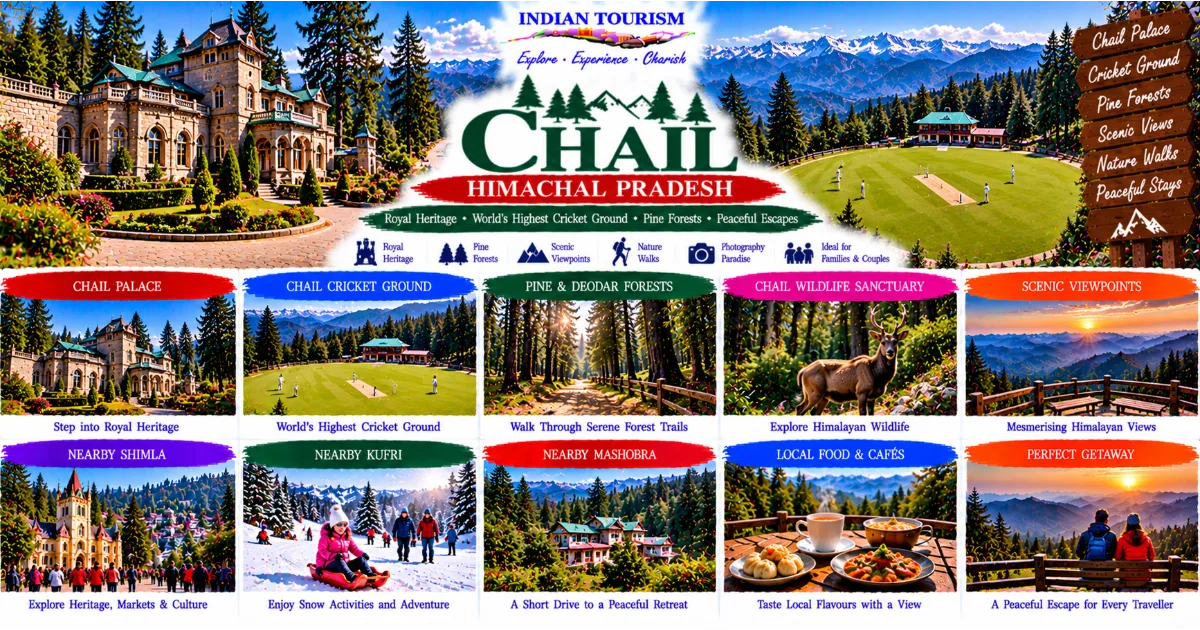
Discovering Chail, a Peaceful Hill Destination in Himachal Pradesh
Chail is a picturesque hill destination in Himachal Pradesh, known for its historic palace, forest-covered mountains, scenic roads and peaceful atmosphere. Located in the Solan district, this charming destination offers a different experience from the busier streets of Shimla and the activity-focused tourist areas of Kufri. Chail attracts travellers who want to enjoy mountain scenery, explore historical landmarks, take leisurely walks and experience a quieter side of the western Himalayas.
The destination is particularly famous for Chail Palace, a former royal residence associated with the Maharaja of Patiala, and the Chail Cricket Ground, widely recognised for its remarkable mountain setting and high elevation. These attractions give Chail a distinctive identity that combines royal history, sporting heritage and natural beauty.
Beyond its well-known landmarks, Chail is surrounded by pine and deodar forests, rolling hills and small settlements. The winding roads that connect the area with nearby destinations provide opportunities to enjoy the changing landscape. Visitors can spend time exploring accessible public areas, photographing the mountains, learning about local history and enjoying the slower rhythm of life in the hills.
Chail is also suitable for travellers who want a relaxed holiday rather than a demanding sightseeing schedule. Couples may appreciate its peaceful surroundings, families can explore its historical attractions and natural scenery, and photographers can find subjects in its forests, architecture and mountain views. Travellers who enjoy road journeys may also appreciate the routes connecting Chail with Kufri, Mashobra, Kandaghat and Shimla.
The destination changes with the seasons. Spring brings fresh vegetation, summer attracts visitors seeking cooler weather, the monsoon creates greener landscapes but can affect road conditions, autumn may provide pleasant sightseeing weather, and winter brings colder temperatures with the possibility of occasional snowfall. Snow is not guaranteed on a particular date, so visitors should check current forecasts before travelling.
This guide explores Chail's history, major attractions, outdoor experiences, nearby destinations, local food, accommodation and practical travel arrangements. It will help you plan a comfortable and rewarding visit while respecting the environment and communities that make this part of Himachal Pradesh special.
Understanding Chail's Location and Landscape
Chail is located in the Solan district of Himachal Pradesh, within the forested hills of the western Himalayas. Its elevated setting and winding approach roads contribute to the cool mountain atmosphere and scenic character that attract visitors throughout the year.
The landscape consists of wooded slopes, mountain ridges, valleys and settlements spread across the hills. Pine and deodar trees cover many areas, while clearings and roadside viewpoints can provide glimpses of the surrounding mountains. The natural environment is an important part of Chail's identity, and visitors often choose it because they prefer a quieter destination surrounded by forests.
Unlike a large commercial hill station, Chail does not concentrate all its attractions in one compact centre. The palace, cricket ground, accommodation properties and other places of interest are spread across the surrounding area. Visitors should therefore plan transport and allow sufficient time for moving between locations.
The terrain is hilly, and roads may include sharp bends, steep stretches and uneven surfaces. Walking distances can be deceptive because a short route on a map may involve considerable changes in elevation. Travellers should choose walking routes according to their fitness and the weather.
Chail's natural surroundings are also closely connected with local livelihoods. Forests, agricultural areas, residential properties and tourism businesses occupy parts of the same landscape. Visitors should respect private land and avoid entering farms or homes without permission.
Weather conditions can change quickly in the hills. Rain may make paths slippery, fog can reduce visibility, and winter mornings and evenings can be very cold. Travellers should carry suitable clothing and check current road conditions before setting out.
Chail is best appreciated at a relaxed pace. Rather than trying to visit every nearby attraction in a single day, visitors can focus on its royal heritage, forest scenery and peaceful atmosphere.
Chail Palace: Exploring the Destination's Royal Heritage
Chail Palace is one of the most important attractions in the area and a major reason many travellers include Chail in their Himachal Pradesh itinerary. The palace is associated with the Maharaja of Patiala and reflects the royal history that helped shape the destination.
The story of Chail is commonly linked with Maharaja Bhupinder Singh of Patiala, who developed the area as a retreat after a dispute with the British colonial establishment. The royal connection contributed to Chail's development as a distinctive hill destination. The palace and its grounds remain reminders of that period, although the wider history includes several political and social influences.
The palace setting combines architectural features with forested surroundings. Its buildings, grounds and mountain atmosphere create a different experience from the commercial streets and crowded viewpoints found in some other hill stations.
Visitors should confirm current access arrangements, opening hours and applicable charges before planning a visit. Some parts of the property may operate as accommodation or have restricted access, so travellers should not assume that every building or room is open for public sightseeing.
Those who visit should allow time to appreciate the grounds and the historical character of the property. The experience is not limited to architecture alone. The setting helps visitors understand how royal retreats became part of the tourism landscape of Himachal Pradesh.
Photography rules may differ between public areas and operating accommodation facilities. Visitors should follow posted instructions and ask permission before photographing private spaces, staff or other guests.
The palace can be especially interesting for travellers who enjoy history, architecture and heritage tourism. It adds cultural depth to a destination otherwise associated mainly with forests and mountain scenery.
A visit to Chail Palace also provides an opportunity to reflect on the changing role of royal properties in modern tourism. Historic buildings can preserve aspects of regional heritage while also serving contemporary purposes, provided their historical significance and surroundings are respected.
Chail Cricket Ground: A Remarkable Sporting Landmark
Chail Cricket Ground is another famous attraction associated with the destination. Located in a forested mountain setting, it is widely described as one of the highest cricket grounds in the world. Its elevation and surroundings distinguish it from cricket grounds situated in cities and lowland regions.
The ground is associated with the sporting history of Chail and is often linked to Maharaja Bhupinder Singh of Patiala. The royal patronage that influenced the development of the area also contributed to its recreational facilities.
For cricket enthusiasts, the ground is an interesting example of how sport can become part of a destination's identity. Visitors who do not follow cricket may still appreciate the setting, which combines an open playing field with surrounding trees and mountain scenery.
Access to the ground can be subject to restrictions, particularly because the site may be used for institutional or sporting purposes. Travellers should confirm current visitor access before making it a fixed part of their itinerary. A view from an accessible public area may be possible, but entry onto the playing surface should never be assumed.
Visitors should respect any signs, security arrangements and local instructions. The ground is not simply a photo location, and access rules exist to protect the facility and its users.
Photography can be rewarding when the surroundings are visible, particularly in clear weather. Visitors should use permitted viewing locations and avoid obstructing access roads or nearby activities.
The cricket ground adds a distinctive sporting dimension to Chail's heritage. It demonstrates that the destination's identity is shaped by more than royal architecture and natural scenery. Its connection with sport makes it an unusual stop for travellers exploring the history of recreation in the Himalayan hills.
The Forests of Chail: Pine, Deodar and Mountain Scenery
The forests around Chail are among its most appealing natural features. Pine and deodar trees cover many of the surrounding slopes, creating a landscape that feels peaceful and distinctly Himalayan.
Deodar, often called Himalayan cedar, is strongly associated with the western Himalayas. Its tall trunks and broad canopy contribute to the appearance of the forest, while pine trees add another layer of texture to the landscape. Vegetation varies according to elevation, exposure and seasonal conditions.
Visitors can appreciate the forest scenery from suitable public roads, permitted walking routes and accommodation properties with views of the hills. Some may prefer a short walk beneath the trees, while others may simply enjoy the landscape from a quiet place to rest.
Forests are more than scenic backdrops. They provide habitat for wildlife, contribute to soil protection and support the wider environmental health of mountain ecosystems. Their preservation matters to local communities as well as to tourism.
Travellers should remain on established public paths and avoid entering restricted forest areas. Not every track through the woods is a designated walking route, and some may cross private land or become unsafe during particular weather conditions.
The atmosphere changes with the seasons. Spring brings fresh growth, summer offers greener surroundings, autumn can bring cooler weather and winter may produce frost or occasional snowfall in suitable conditions.
Visitors should avoid disturbing wildlife, damaging plants or collecting natural materials. Food waste and plastic packaging should never be left along forest paths or roadsides.
Fire safety is especially important in wooded areas. Visitors should never start unauthorised fires or discard burning materials. Any local restrictions concerning camping, smoking or open flames should be followed.
Chail's forests are central to its appeal. Responsible tourism helps protect these landscapes and preserves the peaceful environment that attracts visitors.
Chail Wildlife Sanctuary: Understanding the Natural Environment
Chail Wildlife Sanctuary is an important natural attraction associated with the region. It provides an opportunity to learn about the biodiversity of the western Himalayan hills and the role protected areas play in conserving wildlife and forest ecosystems.
The sanctuary includes forested landscapes and habitats that support different forms of plant and animal life. The exact species encountered by visitors depend on habitat, season, weather and chance. Wildlife sightings are unpredictable, and travellers should not expect to see particular animals during every visit.
Visitors interested in exploring the sanctuary should confirm current access rules, permitted routes and any entry requirements before travelling. Forest department regulations and local conditions may affect where visitors can go and what activities are allowed.
Nature observation should be undertaken quietly and responsibly. Visitors should avoid feeding animals, making excessive noise or approaching wildlife. Animals need space, and attempts to attract them can alter their behaviour and create risks.
Birdwatching may appeal to visitors who enjoy observing the forest environment. Binoculars can be useful for watching birds from a distance, while a field guide can help travellers learn about the species found in the region.
Walking routes should be chosen according to fitness and current conditions. Rain can make surfaces slippery, and fog may reduce visibility. Visitors unfamiliar with the area may benefit from local guidance where permitted.
Littering can harm wildlife and reduce the quality of the natural environment. Visitors should carry their rubbish until proper disposal facilities are available and avoid leaving food scraps in the forest.
The sanctuary offers a valuable opportunity to understand Chail beyond its royal and sporting attractions. It reminds visitors that the surrounding forests are living ecosystems that deserve protection.
Nature Walks and Outdoor Exploration Around Chail
Chail is well suited to travellers who enjoy gentle outdoor exploration. Its forested hills, winding roads and quieter surroundings provide opportunities for walking, photography and observing the mountain environment.
The suitability of a walking route depends on the terrain, weather and access arrangements. Visitors should ask their accommodation hosts or local guides about public paths and choose routes appropriate for their fitness level.
Comfortable footwear with a good grip is recommended. Paths may include slopes, uneven ground and exposed roots, while rain can make the surface slippery. Travellers should carry drinking water and clothing suitable for changing temperatures.
Visitors planning longer walks should inform someone about their intended route and expected return time. Travellers unfamiliar with the area should avoid entering unmarked forest paths without suitable guidance.
Nature walks can be rewarding even when they are short. Visitors may notice bird calls, changes in vegetation, sunlight filtering through the trees and the relationship between forest areas and nearby settlements.
Families should choose routes carefully and supervise children near roads, steep slopes and uneven ground. Visitors with mobility limitations should check the gradients and surfaces before beginning a walk.
The weather should guide outdoor plans. During heavy rain, fog or winter conditions, a shorter walk or a visit to an accessible attraction may be more appropriate than an unfamiliar trail.
Visitors should avoid disturbing wildlife and should never leave waste behind. Quiet observation and responsible movement through the forest help protect the environment.
Chail's outdoor experiences are best approached without pressure to cover a particular distance. A comfortable walk, time to appreciate the trees and a few scenic stops can provide a memorable experience.
Scenic Drives and Mountain Viewpoints
Scenic drives are a popular way to experience Chail and the surrounding hills. Roads connect the destination with nearby settlements, forests and other tourist areas, providing changing views throughout the journey.
The landscape includes wooded slopes, open ridges, valleys and scattered buildings. Clear weather may provide broad views across the mountains, while mist and cloud can create a quieter atmosphere. Travellers should understand that distant views depend on visibility and are not guaranteed on every visit.
Morning and late afternoon can offer pleasant light for photography, depending on the season and weather. Visitors may enjoy observing the way the sun illuminates the forest and changes the appearance of the hills.
Mountain roads require careful driving. Sharp bends, narrow stretches, rain and fog can make travel challenging, especially for drivers unfamiliar with the region. Visitors should allow extra time and avoid rushing between destinations.
Stopping for photographs should only take place at safe and permitted locations. Vehicles should never be stopped on sharp bends or in places where they obstruct traffic. Visitors should not stand in the roadway or approach exposed edges for a better view.
Taxis can provide flexibility for travellers who do not want to drive. Visitors should agree on fares, waiting charges and planned stops before beginning an excursion.
Scenic drives can be an enjoyable part of the Chail experience, but they should be planned around safety and realistic travel times. A few well-chosen stops can be more rewarding than a long itinerary with little time to appreciate the landscape.
Nearby Kufri: Mountain Recreation and Seasonal Snow
Kufri is one of the best-known destinations in the wider Shimla region and can be combined with Chail for a broader mountain holiday. It attracts visitors interested in forest scenery, mountain viewpoints and seasonal recreational activities.
The atmosphere in Kufri can be busier than in Chail, particularly during weekends, school holidays and winter periods. Visitors should allow extra time for traffic and queues at popular attractions.
Winter visitors may find snow-related activities when suitable snowfall occurs. However, snow is not guaranteed on any particular date, and activity availability depends on weather conditions and local operations.
Visitors should confirm prices and safety arrangements before paying for recreational activities. Some services may involve separate charges for transport, equipment or particular routes.
Kufri offers a different experience from Chail. While Chail is often chosen for its royal heritage and quieter forest environment, Kufri has a more developed tourism atmosphere around seasonal activities and popular viewpoints.
Combining the two destinations provides variety, but travellers should consider the road journey and avoid trying to visit too many places in one day. Weather and traffic can affect travel times.
Visitors should follow local rules, avoid littering and treat forest areas responsibly. Responsible behaviour helps preserve the natural environment that makes both destinations attractive.
Nearby Shimla: Colonial Heritage and Cultural Attractions
Shimla is the major urban centre in the wider region and offers a wide range of historical, cultural and commercial attractions. Its colonial architecture, shopping streets and public spaces provide a contrast to Chail's quieter surroundings.
The Ridge is one of Shimla's best-known public spaces, offering views of the surrounding hills and access to nearby landmarks. Mall Road is popular for shopping, cafés, restaurants and leisurely walks.
Christ Church is a prominent architectural landmark, while the Gaiety Heritage Cultural Complex offers insight into Shimla's cultural history. The Viceregal Lodge, associated with the Indian Institute of Advanced Study, is another notable heritage attraction, subject to current visiting arrangements.
Jakhoo Temple is situated on an elevated location above the city and attracts devotees and visitors. Travellers should consider the route and physical demands before planning the visit, particularly when travelling with children or older relatives.
Shimla also offers a wider choice of restaurants, shops and transport services. Visitors may find it useful to spend a day exploring the city before returning to the quieter setting of Chail.
Traffic can become heavy during peak holiday periods, so travellers should allow sufficient time for the road journey. A flexible schedule can make the visit more comfortable.
Combining Chail and Shimla offers a balanced experience of the region. Chail provides royal heritage and forests, while Shimla adds colonial architecture, urban culture and shopping.
Nearby Mashobra: Orchards and Quiet Forest Retreats
Mashobra is another destination in the Shimla district that can be included in a wider exploration of the region. It is known for forested hills, apple orchards, scenic roads and accommodation options that appeal to travellers seeking a peaceful stay.
Visitors can appreciate the forest landscape and explore suitable public walking routes. The agricultural surroundings provide another perspective on the local economy, particularly during seasons when orchards are active.
Craignano is associated with the Mashobra area and may interest visitors who enjoy historic settings and landscaped surroundings. Access arrangements should be confirmed before including it in a fixed itinerary.
Apple orchards are private agricultural properties, and visitors should ask permission before entering or photographing workers. The appearance of the orchards changes throughout the year, so the experience depends on the season.
Mashobra can provide a useful contrast with Chail. Both destinations offer forest scenery and a quieter atmosphere, but each has its own landmarks and local character.
Travellers should check road conditions and allow realistic travel times between the destinations. Mountain roads can be affected by rain, fog and traffic, particularly during holidays.
Combining Chail with Mashobra can suit visitors who want a longer holiday focused on forests, scenic drives and relaxed exploration rather than a packed schedule of major attractions.
Best Time to Visit Chail
Chail can be visited in different seasons, and the best time depends on whether travellers prefer pleasant weather, green landscapes, photography or the possibility of winter snow.
Spring brings fresh vegetation and can be a pleasant time for sightseeing and nature walks. Temperatures may be comfortable during the day, although mornings and evenings can remain cool.
Summer attracts visitors seeking relief from the heat of the plains. The forested surroundings and mountain air make Chail an appealing destination for family holidays and weekend trips. Visitor numbers may increase during school holidays, so booking accommodation in advance can be useful.
The monsoon brings greener scenery but also creates travel challenges. Heavy rain may make walking paths slippery, reduce visibility and affect mountain roads. Visitors should check current weather and road advisories before setting out.
Autumn often offers cooler temperatures and opportunities for scenic drives and outdoor exploration. It may appeal to travellers who prefer a quieter experience without depending on snow-related activities.
Winter brings colder conditions, particularly in the mornings and evenings. Frost and occasional snowfall are possible when weather conditions are suitable, but snow is not guaranteed on a specific date. Travellers should carry warm clothing and confirm heating arrangements at their accommodation.
The best season depends on personal interests and preparation. Checking the current forecast shortly before departure is more reliable than relying on assumptions about seasonal conditions.
How to Reach Chail
Chail is generally reached by road from Shimla, Solan and other destinations in northern India. The most suitable route depends on the starting point, transport preference and current road conditions.
By Road
Road travel is the main way to reach Chail. Visitors can use taxis, private vehicles or available bus connections from nearby towns, depending on the route and service schedule.
The roads pass through hilly terrain and may include sharp bends and steep sections. Journey times can vary because of traffic, rain, fog and other local conditions.
Travellers using private vehicles should confirm the route and parking arrangements at their accommodation. Drivers unfamiliar with mountain roads should proceed carefully and avoid rushing.
By Rail
Chail does not have its own railway station. Travellers arriving by train can use rail connections serving the wider region and continue by road.
Kandaghat and other rail-connected locations may be relevant depending on the route and available services. The historic Kalka-Shimla railway is also a scenic option for travellers exploring the wider region, but visitors must plan a road transfer for the final journey to Chail.
Train schedules and ticket availability should be checked before departure. Travellers should confirm the onward transport connection rather than assuming that a convenient taxi will always be available on arrival.
By Air
Visitors may consider airports serving the Shimla or Chandigarh region, depending on current flight availability and their starting point. An onward road journey is required to reach Chail.
Flight schedules and route availability can change, so travellers should verify current services before booking. The full journey time should include the road transfer through the hills.
Getting Around Chail
Chail's attractions and accommodation properties are spread across a hilly area, making transport planning important. Visitors should not assume that every landmark is within comfortable walking distance of the main accommodation area.
Taxis and private vehicles provide flexibility for visiting the palace, cricket ground and nearby destinations. Visitors should agree on fares, waiting charges and return arrangements before beginning an excursion.
Walking is suitable for selected routes, but the terrain can be steep and uneven. Travellers should check the distance, surface conditions and weather before setting out.
Visitors planning to see Chail Palace or the cricket ground should confirm current access arrangements. Some areas may have restrictions, and visitors should follow posted signs and local instructions.
Accommodation hosts can often provide advice about local transport and nearby attractions. Local guidance can be particularly useful when weather or road conditions change.
Families and travellers with mobility limitations should consider slopes, steps, parking distances and accessibility before choosing activities.
A flexible itinerary is helpful because mountain weather and traffic may affect travel times. Grouping nearby attractions together can reduce unnecessary journeys and leave more time to enjoy the destination.
Where to Stay in Chail
Accommodation in Chail includes hotels, guesthouses, resorts, cottages and homestays. The best option depends on budget, comfort preferences, transport arrangements and whether visitors want a secluded retreat or a convenient base for sightseeing.
Some properties are located among the surrounding forests and offer mountain views, while others may be closer to roads and local services. Visitors should confirm the exact location and whether the advertised views are available from the selected room.
Travellers interested in royal heritage may wish to explore accommodation associated with Chail Palace, subject to current availability and booking arrangements. Other visitors may prefer a smaller property or homestay that offers a quieter and more personal experience.
Winter visitors should ask about heating, hot water and road access during cold weather. Facilities vary between properties, so it is important to confirm what is included in the quoted price.
Meal arrangements should also be checked. Some properties offer on-site dining, while others may require guests to arrange meals in advance. Visitors staying away from the main road should consider how they will reach restaurants and shops.
Homestays can provide opportunities to learn about local food and everyday life. Guests should communicate arrival times and dietary requirements clearly.
Booking ahead is advisable during popular holidays and weekends. Visitors should review cancellation policies, parking arrangements and any additional charges before confirming a reservation.
The right accommodation can make a major difference to a Chail holiday. Choosing a property that matches the planned activities and transport needs helps visitors enjoy the destination without unnecessary inconvenience.
Food and Local Dining in Chail
Food options in Chail vary according to the accommodation and the businesses operating nearby. Visitors may find hotel restaurants, small eateries and cafés serving familiar Indian meals, snacks and hot beverages.
Travellers interested in regional Himachali cuisine can ask about traditional dishes available locally. Siddu, a wheat-based preparation associated with parts of Himachal Pradesh, is one dish worth asking about. Dham is a festive meal tradition found in different regional forms, although availability varies and not every restaurant serves it.
The wider region offers a mixture of local and North Indian cuisine. Visitors may find simple meals that are particularly welcome after a day exploring the hills.
Travellers should check menu prices before ordering and communicate dietary restrictions or food allergies clearly. Those planning longer excursions should carry drinking water and suitable snacks if food outlets may be limited along the route.
Homestays may offer home-cooked meals and an opportunity to learn about local ingredients. Visitors can ask hosts about regional preparations and seasonal food traditions.
Food packaging should be disposed of responsibly. Visitors should never leave rubbish at scenic viewpoints, forest paths or roadside stops.
Dining in Chail is best approached as part of the overall mountain experience. A relaxed meal after sightseeing can complement the peaceful atmosphere and provide time to rest before the next day's journey.
Shopping and Local Products
Chail is primarily known for its palace, cricket ground and forest scenery rather than extensive shopping. Visitors may find small shops selling everyday goods, snacks and selected souvenirs, while a wider range of products is generally available in Shimla and Solan.
Travellers interested in regional products can look for woollen clothing, caps, scarves and local handicrafts in the wider area. Product quality and origin vary, so buyers should ask about materials and workmanship before making expensive purchases.
Seasonal produce may be available in nearby markets, depending on the time of year. Visitors should check freshness and packaging when buying food products to carry home.
Responsible shopping means supporting legitimate local businesses and paying fairly for genuine products. Travellers should avoid items made from protected wildlife or materials whose origin is unclear.
For expensive purchases, a receipt is useful. Visitors should also consider how easily a product can be transported during the remainder of the journey.
Those seeking a dedicated shopping experience can plan time in Shimla's markets. Chail's primary appeal lies in heritage, forests and peaceful surroundings rather than extensive retail facilities.
A Suggested Two-Day Chail Itinerary
A two-day visit allows travellers to explore Chail's main attractions and enjoy its natural surroundings without rushing.
On the first day, arrive and settle into the accommodation. Begin with Chail Palace, after confirming current visitor access and opening arrangements. Allow time to appreciate the historic setting and surrounding landscape rather than treating the visit as a quick photo stop.
Later, explore the area around Chail Cricket Ground if visitor access is permitted. Respect any restrictions and avoid entering the playing surface without authorisation. Spend the remaining afternoon enjoying the forest scenery or taking a short walk along a suitable public route.
Finish the day with a relaxed meal and time to enjoy the quiet atmosphere of the hills.
On the second day, consider a visit to Chail Wildlife Sanctuary or another suitable natural area, subject to current access rules and weather conditions. Visitors should choose walks according to their fitness and avoid unfamiliar trails without guidance.
If time allows, travellers can plan an excursion towards Kufri, Mashobra or Shimla. Each destination offers a different experience, but road conditions and travel times should be considered before finalising the plan.
Families should include rest breaks and avoid an overly demanding schedule. Visitors with mobility limitations should check accessibility before selecting activities.
The itinerary should remain flexible, particularly during the monsoon and winter. Weather can affect road travel and walking conditions, so visitors should be prepared to adjust the plan.
A relaxed schedule allows Chail's heritage and natural surroundings to become central to the experience rather than rushing between distant attractions.
Responsible Tourism in Chail
Chail's forests, heritage landmarks and mountain scenery are central to its appeal. Visitors can help preserve these assets by following local rules, respecting private property and supporting the community responsibly.
Waste should be disposed of properly. Plastic bottles, food packaging and other rubbish should never be left along forest paths, roadsides or scenic viewpoints. Visitors should carry waste until suitable disposal facilities are available.
Forest areas should be treated carefully. Travellers should remain on suitable paths, avoid damaging plants and refrain from disturbing wildlife. Unauthorised fires should never be started, and any local restrictions should be followed.
Visitors should respect access rules at Chail Palace and Chail Cricket Ground. Historic buildings and sporting facilities require appropriate care, and entering restricted areas can create safety and conservation problems.
Supporting local accommodation providers, restaurants and guides can help tourism contribute to the local economy. Visitors should pay agreed prices, treat workers respectfully and ask permission before photographing residents.
Mountain roads require careful driving, especially during rain, fog and winter conditions. Travellers should follow official advisories and avoid unsafe journeys.
Noise should be kept under control near residential properties and accommodation areas. Respecting local residents helps preserve the peaceful atmosphere that attracts visitors.
Responsible tourism is not separate from enjoying Chail. Avoiding litter, protecting the forests and respecting local heritage help ensure that the destination remains welcoming for future generations.
Is Chail Suitable for Families, Couples and History Lovers?
Chail can suit several types of travellers, particularly those who enjoy history, nature and a quieter mountain environment.
Families may appreciate the palace, forest scenery and opportunities for short outdoor walks. Parents should supervise children near roads, steep slopes and uneven paths, and should confirm the suitability of any activity before beginning.
Couples may enjoy the peaceful surroundings, forest views and accommodation options that provide privacy. A relaxed itinerary with scenic drives, heritage sightseeing and time to rest can make Chail a rewarding getaway.
History enthusiasts may find Chail Palace particularly interesting because of its connection with the former royal establishment of Patiala. Cricket enthusiasts may also appreciate the history and setting of the cricket ground, subject to access arrangements.
Nature lovers can enjoy the forests and learn about the importance of wildlife conservation. Visitors who want extensive shopping, nightlife or a large number of commercial attractions may prefer to spend more time in Shimla.
Travellers with mobility limitations should check the terrain, steps, walking distances and accommodation access before choosing activities.
Chail is especially suitable for visitors who value atmosphere over a packed sightseeing schedule. Its combination of royal history, sporting heritage and natural scenery provides a distinctive experience within the Shimla region.
Conclusion: Why Chail Deserves a Place on Your Himachal Pradesh Travel List
Chail is a rewarding destination for travellers who want to discover a quieter and historically distinctive side of Himachal Pradesh. Its royal palace, remarkable cricket ground, forested hills and peaceful atmosphere make it a valuable addition to a journey through the Shimla region.
Chail Palace offers insight into the area's royal history, while the cricket ground connects the destination with a distinctive sporting landmark. The surrounding forests provide opportunities for nature walks, photography and learning about the importance of protecting Himalayan ecosystems.
Nearby destinations such as Kufri, Mashobra and Shimla offer additional experiences, allowing travellers to combine quiet mountain scenery with seasonal recreation, orchard landscapes and colonial heritage.
The best time to visit depends on personal interests. Spring and summer can be pleasant for outdoor exploration, autumn may offer cooler weather, and winter brings cold conditions with the possibility of occasional snowfall. Visitors should check current weather forecasts, road conditions and attraction access before departure.
Good planning makes the experience more comfortable. Confirm opening arrangements for the palace and cricket ground, choose accommodation according to the itinerary and allow sufficient time for mountain travel.
Responsible tourism is equally important. Visitors should avoid littering, respect private property, protect the forests and support local businesses where appropriate.
For the Indian Tourism series, Chail demonstrates how history, sport and nature can combine to create a distinctive destination. It offers an alternative to busier hill stations and provides travellers with a chance to experience the slower rhythm of the Himalayas.
Whether you visit for the palace, the cricket ground, the forests or a peaceful weekend among the hills, Chail offers a meaningful way to explore the cultural and natural diversity of Himachal Pradesh.
#IndianTourism #HimachalPradesh #Chail #ChailTourism #ChailPalace #ChailCricketGround #HimachalTravel #SolanDistrict #HimalayanTravel #DeodarForests #PineForests #ChailWildlifeSanctuary #NatureWalks #RoyalHeritage #MountainViews #Shimla #Kufri #Mashobra #ResponsibleTourism #ExploreIndia
