
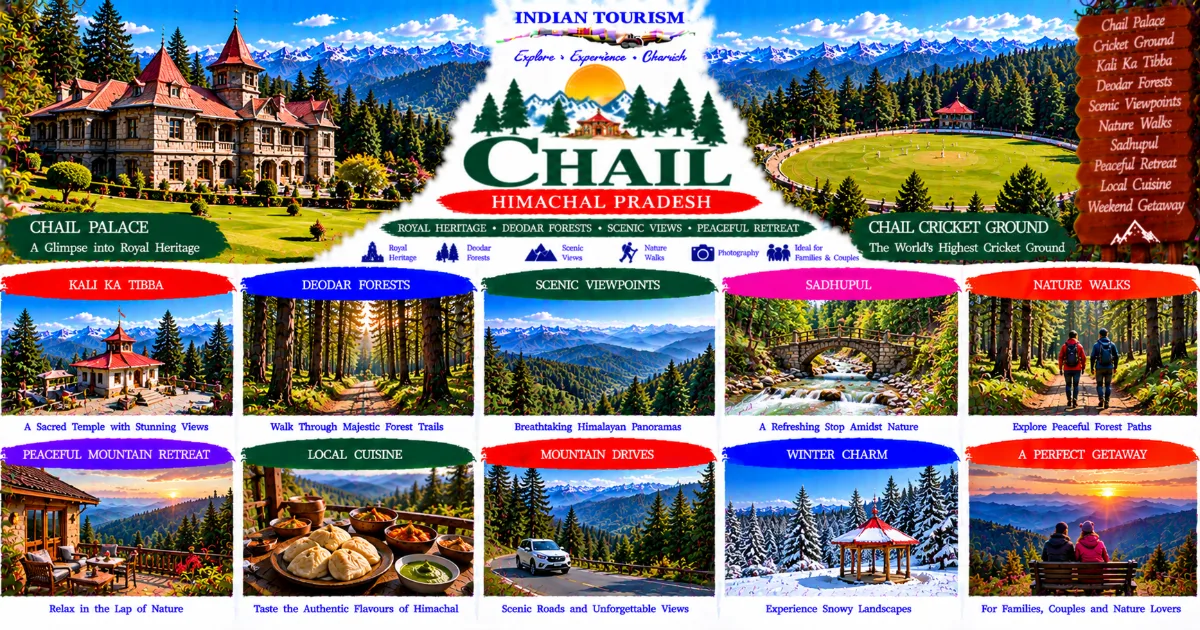
Experience the Peaceful Beauty of Chail
Himachal Pradesh is home to several mountain destinations that attract visitors with their spectacular landscapes, pleasant weather, colonial heritage and opportunities to experience life in the Himalayas. While Shimla is known for its historic architecture and bustling streets, and Kufri attracts travellers with its mountain scenery and winter activities, Chail offers a quieter alternative for those who want to slow down and enjoy the natural beauty of the region. Surrounded by forests of towering deodar trees, rolling hills and peaceful mountain villages, Chail is an inviting destination for families, couples, nature enthusiasts and travellers seeking a relaxing break from city life.
Situated in the Solan district of Himachal Pradesh, Chail is known for its scenic setting, royal history, forest trails and the distinctive atmosphere of an old Himalayan hill station. The destination became associated with the former princely state of Patiala during the colonial period, and its heritage remains an important part of its identity. The historic Chail Palace, the famous cricket ground located at a high elevation, and the surrounding forest landscape give the town a character different from many other hill stations in northern India.
Chail is especially appealing to visitors who prefer nature and peaceful surroundings over crowded commercial markets. The journey through winding mountain roads reveals changing views of valleys, pine-covered slopes, small settlements and distant ridgelines. The cool mountain air, the sound of birds among the trees and the quiet rhythm of local life create an atmosphere that encourages visitors to explore at a comfortable pace.
A trip to Chail can be designed around several interests. History lovers can explore the royal heritage of the palace, photographers can capture the forest scenery and mountain viewpoints, couples can enjoy a peaceful retreat, and families can spend time walking through the grounds and discovering nearby attractions. Travellers who enjoy longer outdoor experiences can also use Chail as a base for exploring surrounding villages and other destinations in Himachal Pradesh.
This guide explores the history, attractions, seasons, activities, accommodation choices, food, transport and practical travel considerations that can help you plan a rewarding visit to Chail.
The History and Royal Heritage of Chail
Chail's modern identity is closely connected with the Maharaja of Patiala, Bhupinder Singh, who developed the destination as a summer retreat during the British colonial period. The area became associated with royal leisure, mountain scenery and the desire to establish a peaceful residence away from the crowded environment of Shimla. Its development helped transform a forested Himalayan setting into a distinctive hill destination with a lasting historical legacy.
The royal connection is most clearly visible at Chail Palace. The property reflects the lifestyle and architectural preferences associated with princely India, combining a grand residential setting with the natural surroundings of the hills. Its location among forests and mountain slopes gives it a character that differs from palaces situated in major cities or open plains. Visitors interested in India's princely history can use the palace as an introduction to the political and cultural world of the former hill states.
Chail's heritage is not limited to its palace. The destination also became famous for its cricket ground, which is widely recognised for its unusual elevation and forest surroundings. The ground reflects the sporting traditions and recreational interests that developed among the region's colonial and royal communities. Today, it remains one of Chail's most distinctive landmarks, even for visitors who do not follow cricket closely.
The town's historical significance also helps explain its atmosphere. Unlike hill stations that expanded primarily around large commercial centres, Chail retains an identity closely linked with woodland, heritage properties and relatively low-density development. Although tourism has introduced hotels, restaurants and other facilities, the natural landscape remains central to the visitor experience.
Exploring Chail with an understanding of its history adds depth to the journey. The palace becomes more than a scenic building, and the cricket ground becomes more than an unusual sporting venue. Together, these places tell a story about royal recreation, colonial-era hill travel and the evolution of Himachal Pradesh as a destination for mountain holidays.
Chail Palace: A Landmark of Royal Architecture
Chail Palace is one of the most recognisable attractions in the destination. Set amid green grounds and tall trees, the palace offers visitors an opportunity to experience a part of Himachal Pradesh's royal past while enjoying the calm atmosphere of the surrounding hills. Its historical associations, spacious setting and architectural character make it an important stop for travellers interested in heritage tourism.
The palace is particularly appealing because its setting contributes as much to the experience as the building itself. The surrounding trees, landscaped spaces and mountain air create an environment that feels removed from the rush of modern urban life. Visitors can appreciate the relationship between the historic property and the landscape in which it was established.
The architecture reflects a period when royal residences served as places for relaxation, entertainment and social gatherings. Details of the property and its grounds provide a glimpse into the way princely households used hill stations as seasonal retreats. The palace also offers an opportunity to discuss the relationship between Indian royalty and the colonial-era culture of mountain travel.
Visitors should confirm current access arrangements before planning a detailed palace visit. Entry rules, visitor areas, photography permissions and operating arrangements may change, particularly where parts of a historic property are used for hospitality or other purposes. It is sensible to check locally rather than assume that every room or section is open to the public.
The best way to experience the palace is to combine an appreciation of its history with time spent observing the surrounding landscape. Visitors who enjoy photography may find interesting compositions in the building, its grounds and the trees that frame the property. Those travelling with family can use the stop as an opportunity to introduce children to the region's royal history and the historical development of Indian hill stations.
Chail Palace is particularly suitable for travellers who enjoy destinations that offer more than natural scenery. It connects the beauty of the Himalayas with a historical narrative, making it one of the essential attractions to consider when planning a visit.
Chail Cricket Ground: A Sporting Landmark in the Hills
The Chail Cricket Ground is among the destination's most distinctive landmarks. Widely known for its high-altitude setting, the ground is surrounded by forested slopes and mountain scenery. Its location makes it unusual compared with cricket grounds in major cities, where large buildings, roads and busy neighbourhoods often dominate the surrounding landscape.
The ground is associated with the sporting interests of the former royal establishment. Its history is part of Chail's wider story as a place developed for recreation and leisure. The venue has gained recognition because of its elevation and distinctive setting, attracting visitors who want to see a landmark that combines sport, history and Himalayan geography.
For travellers who enjoy cricket, the ground provides an interesting connection between India's sporting culture and its princely past. For those who are less interested in the sport, the setting still offers a reason to visit. The surrounding forest and open landscape create a memorable contrast with the busy cricket venues familiar from televised matches.
Visitors should understand that a famous ground is not necessarily an unrestricted tourist attraction. Access may be affected by its use, local rules or maintenance requirements. Travellers should confirm whether entry is permitted during their visit and respect any restrictions in place. It is best not to assume that the playing area is open for walking, photography or recreational activities.
A visit to the ground can be included in a half-day exploration of Chail's historical attractions. The experience works especially well when combined with the palace and a leisurely drive through the surrounding forest roads. Together, these locations help visitors understand why Chail developed a reputation that extends beyond its mountain views.
Sadhupul: A Relaxing Stop Near Chail
Sadhupul is a small destination in the broader Chail region that is often associated with a relaxed atmosphere and the experience of spending time beside a stream. Its appeal lies in the natural setting rather than monumental architecture or large tourist facilities. Depending on seasonal conditions, visitors may enjoy the sound of flowing water, green surroundings and a pleasant break during a mountain journey.
Sadhupul can be a good choice for families and travellers who want to add a leisurely stop to their itinerary. Instead of rushing between major attractions, visitors can spend time appreciating the landscape, enjoying refreshments where available and observing the surrounding hills. The journey itself is part of the attraction, with winding roads and changing views providing a sense of the region's geography.
The experience at Sadhupul depends considerably on the weather and water conditions. During periods of heavy rainfall, streams may become faster and potentially dangerous. Visitors should keep a safe distance from the water, follow local advice and avoid entering streams where the current or depth is uncertain. Children should be supervised closely, and slippery rocks should not be treated as safe walking surfaces.
Sadhupul is best approached as a short scenic excursion rather than a destination that requires an elaborate schedule. It can complement a visit to Chail by offering a different kind of experience, especially for travellers who enjoy natural settings and informal outdoor stops.
Kali Ka Tibba: Mountain Views and a Spiritual Atmosphere
Kali Ka Tibba is a well-known temple destination in the Chail area, associated with devotion to Goddess Kali. Located on an elevated point, the temple is also appreciated for its expansive views of the surrounding mountain landscape. Its combination of spiritual significance and scenic surroundings makes it attractive to both religious visitors and travellers who enjoy peaceful hilltop destinations.
For devotees, the visit provides an opportunity for prayer and reflection in a setting away from the noise of busy urban areas. For other travellers, the location offers a chance to appreciate the Himalayan landscape while respecting the religious character of the site. Visitors should dress appropriately, follow temple customs and maintain a considerate atmosphere.
The approach to the temple can itself be part of the experience. Mountain roads pass through forested terrain, and the landscape opens up as visitors reach higher ground. On clear days, the surrounding hills create an impressive panorama. Weather conditions can alter visibility quickly, however, so the quality of the view cannot be guaranteed on every visit.
Photography should be undertaken respectfully, especially near worshippers and religious activities. Visitors should follow any local restrictions and avoid disrupting ceremonies. If visiting during a festival or a busy religious period, it is wise to allow additional time for travel and parking.
Kali Ka Tibba is particularly rewarding for travellers who want their Chail itinerary to include both cultural and natural experiences. It demonstrates how religious sites in the Himalayas often occupy locations that are deeply connected with the landscape.
Exploring the Forests and Nature Trails of Chail
One of Chail's greatest attractions is its forest environment. Tall deodar trees, pine-covered slopes and quiet roads create opportunities for visitors to experience the mountains at a slower pace. While some hill stations are defined by markets, traffic and commercial activity, Chail's appeal often lies in the time spent outdoors and the feeling of being surrounded by woodland.
Walking is one of the simplest ways to appreciate this environment. A short stroll along a safe, accessible road can provide opportunities to observe forest vegetation, listen to birds and enjoy the changing light between the trees. Longer walks may appeal to experienced visitors, but routes should be chosen carefully according to fitness, weather, daylight and local conditions.
Travellers should not assume that every forest path is a formal tourist trail. Some routes may be used by residents, forestry staff or local workers, and others may be poorly marked. It is advisable to ask locally about suitable walking areas and avoid entering unfamiliar forest terrain without guidance. A mobile phone may not have reliable coverage everywhere, so visitors should let someone know their plans before undertaking a longer walk.
Nature enthusiasts can also use the forest setting to observe seasonal changes. Spring brings fresh growth and a renewed green appearance, while summer offers a welcome escape from the heat of the plains. Autumn can bring clearer skies and changing colours, and winter creates a different atmosphere with colder air and the possibility of frost or snowfall under suitable conditions.
Responsible behaviour is essential for preserving the landscape. Visitors should carry their rubbish back, avoid disturbing wildlife, refrain from making excessive noise and never light fires in unauthorised areas. Forest ecosystems can be vulnerable to litter, careless tourism and human interference. Respecting the environment ensures that future visitors can enjoy the same sense of peace.
The Best Viewpoints and Photography Opportunities
Chail is an appealing destination for photography because its scenery changes throughout the day and across the seasons. Forested ridges, misty slopes, mountain roads and open viewpoints create opportunities for both landscape photography and casual travel pictures. The destination is not limited to a single famous viewpoint. Much of its visual appeal comes from the wider journey through the hills.
Early morning can be an excellent time for photography. The atmosphere is often quieter, and the light may reveal the shapes of distant ridgelines. Depending on the weather, mist may settle among the trees or drift through the valleys. These conditions can create atmospheric photographs, although visibility varies and cannot be guaranteed.
Late afternoon may provide softer light on the surrounding slopes. Travellers should still keep track of daylight because mountain roads can be more difficult to navigate after dark, particularly for visitors unfamiliar with the area. It is sensible to stop only at safe pull-offs or designated viewpoints rather than parking on narrow bends.
A useful photography itinerary can include the palace grounds where access permits, the cricket ground surroundings, Kali Ka Tibba and selected scenic stretches along the road. Visitors should avoid trespassing on private property for photographs and should never stand in traffic lanes to capture a landscape. Drone use may be subject to restrictions and permissions, so local rules should be checked before flying one.
Chail's forests are especially suitable for close-up photography. Patterns of tree trunks, filtered sunlight, forest paths and small details of vegetation can produce compelling images without requiring dramatic mountain peaks. This makes the destination attractive to beginners as well as experienced photographers.
The Best Time to Visit Chail
Chail can be visited throughout much of the year, but the best season depends on what travellers want from the experience. Weather, road conditions, accommodation prices and personal preferences should all be considered when choosing travel dates.
Summer: March to June
Summer is one of the most popular periods for visiting Chail. As temperatures rise across the northern plains, the hill station offers cooler surroundings and an opportunity to spend time outdoors. The forests are inviting, the roads provide scenic drives and the weather is often suitable for sightseeing.
This period is particularly appropriate for families with school-age children, couples seeking a short holiday and travellers who prefer walking and outdoor exploration. Visitors can combine the palace, cricket ground, temple and nearby scenic stops without needing to plan around extreme cold.
The busiest periods may coincide with school holidays and long weekends. Booking accommodation in advance can help travellers secure suitable rooms and avoid limited choices. Even in summer, evenings may feel cool, so carrying a light jacket is sensible.
Monsoon: July to September
The monsoon transforms the landscape, often making the forests and hills appear exceptionally green. Cloud formations, mist and fresh vegetation can create a beautiful atmosphere for visitors who appreciate quieter mountain scenery. Chail can be visually attractive during this season, but rainfall introduces important travel considerations.
Heavy rain can cause slippery roads, poor visibility, falling branches, landslides and delays. Conditions can change quickly, especially on mountain routes. Travellers should monitor local weather advisories, check road conditions before departure and avoid unnecessary driving during intense rainfall.
Monsoon travel is best suited to visitors with flexible schedules who are comfortable adjusting plans. Outdoor walks should be limited to safe areas, and streams or riverbanks should be avoided during periods of heavy rain. A beautiful landscape is not worth taking unnecessary risks.
Autumn: October to November
Autumn can be an excellent time to explore Chail. The monsoon generally retreats, and clearer conditions may improve visibility across the surrounding hills. The air becomes cooler, and the forest landscape offers a calm atmosphere that suits photography, sightseeing and relaxed travel.
Visitors who prefer quieter holidays may find this period appealing, although conditions vary from year to year. It is useful to pack layers because afternoons may be pleasant while mornings and evenings can be cold.
Winter: December to February
Winter gives Chail a distinctly different character. Temperatures fall, mornings can be very cold and snowfall may occur when weather conditions permit. Travellers who enjoy cold mountain destinations may appreciate the peaceful atmosphere and the possibility of seeing snow-covered scenery.
Snowfall should never be guaranteed as part of a travel plan. It depends on the weather, elevation and timing of a particular system. Visitors should check current conditions before travelling, carry warm clothing and prepare for potential road delays. Accommodation with suitable heating is especially important during colder periods.
For most first-time visitors seeking comfortable sightseeing, spring and autumn are strong choices. Summer is suitable for a classic hill holiday, while monsoon and winter trips require greater attention to weather and road safety.
How Many Days Should You Spend in Chail?
The ideal length of a Chail holiday depends on whether the destination is part of a larger Himachal Pradesh itinerary or the main purpose of the trip. A short visit can cover the major attractions, while a longer stay allows travellers to enjoy the forest setting without rushing.
One-Day Visit
A one-day visit is possible for travellers who are already staying in the surrounding region. The day can focus on Chail Palace, the cricket ground where access is permitted, Kali Ka Tibba and a few scenic stops. Travellers should avoid trying to fit too many distant locations into the schedule, particularly when mountain roads and traffic may affect journey times.
A one-day trip is best for visitors who want an introduction to Chail rather than an in-depth exploration. Starting early allows more flexibility and reduces the pressure to travel after dark.
Two-Day Visit
Two days offer a more comfortable experience. The first day can be dedicated to the palace, cricket ground and other heritage attractions. The second day can include Kali Ka Tibba, a visit to Sadhupul where conditions permit, and time for a forest walk or relaxed sightseeing.
This itinerary leaves room for meals, photography and rest. It is particularly suitable for couples and families who want to enjoy the hill station without following a tightly packed schedule.
Three-Day Visit
A three-day stay is ideal for travellers who prefer slow travel. In addition to the main attractions, visitors can spend more time exploring the surrounding countryside, enjoying the hotel environment, discovering local food and taking short excursions according to weather and road conditions.
A longer stay is also useful for photographers and nature lovers who want to experience the destination at different times of day. Instead of rushing from one attraction to another, visitors can enjoy the atmosphere that makes Chail distinctive.
How to Reach Chail
Chail is accessible by road from several major towns and transport hubs in Himachal Pradesh. The final journey generally involves winding mountain roads, so travellers should allow adequate time and avoid planning connections that leave no room for delays.
By Road
Road travel is the most practical way to reach Chail. Visitors can use private cars, taxis or suitable bus connections to travel from nearby towns. Shimla and Solan are useful reference points when planning a journey, although the best route depends on the starting location and current road conditions.
Mountain driving requires patience and attention. Roads may be narrow, bends can be sharp and travel times can vary according to traffic, weather and road maintenance. Drivers should avoid overtaking where visibility is limited and should use designated stopping areas for photographs.
Travellers unfamiliar with hill roads may prefer an experienced local driver. During winter or heavy rainfall, it is particularly important to check the condition of the intended route before leaving.
By Train
The nearest practical railway connection depends on the route and service selected. Travellers may use rail services to reach a nearby city or town and continue to Chail by road. Some visitors also combine a journey through the Kalka and Shimla railway region with a road transfer, depending on their itinerary.
Rail passengers should check current train schedules, connection times and onward transport arrangements before booking. A scenic train journey may be enjoyable, but it does not remove the need to plan the final road journey carefully.
By Air
Travellers arriving by air generally need to continue by road from an airport serving the wider region. The suitability of a particular airport depends on available flights, seasonal schedules and the starting point of the journey. Visitors should compare total travel time and transfer arrangements rather than choosing an airport based only on distance shown on a map.
Flight schedules can change, and weather may occasionally affect operations in mountainous regions. Leaving a reasonable buffer between an arrival and a time-sensitive onward connection is a sensible precaution.
Where to Stay in Chail
Chail offers different accommodation styles, from heritage-inspired properties and comfortable hotels to smaller guesthouses and nature-oriented retreats. The right choice depends on budget, group size, transport arrangements and the kind of holiday a visitor wants.
Heritage and Character Stays
Travellers interested in history may prefer accommodation with traditional architecture or a connection to the area's royal heritage. Such properties can contribute to the overall atmosphere of the trip, particularly for couples and visitors who enjoy destinations with a strong sense of place.
Before booking, travellers should verify the exact facilities available, including heating, parking, restaurant service and accessibility. A historic appearance does not necessarily mean that every modern convenience is available.
Hotels for Families
Families may prefer hotels with comfortable rooms, reliable meals, convenient parking and straightforward access to major attractions. When travelling with young children or older family members, it is useful to ask about stairs, room heating, hot water and the distance from the parking area to the accommodation.
A property located slightly away from the busiest road may offer a quieter stay, but transport arrangements should be considered if restaurants and attractions are not within easy walking distance.
Nature-Oriented Retreats
Nature-oriented accommodation can appeal to visitors seeking quiet surroundings and views of the forested hills. These stays may be especially suitable for couples, photographers and travellers who plan to spend substantial time relaxing at the property.
Guests should still consider practical needs such as mobile connectivity, food availability, road access and emergency arrangements. A remote setting can be peaceful, but it may require more planning than a centrally located hotel.
Budget Guesthouses
Budget-conscious travellers can look for guesthouses and smaller hotels that provide the essentials without expensive extras. Comparing the total cost of accommodation, meals and local transport can help determine whether a lower room rate represents good value.
Read recent guest feedback carefully and confirm the final price, cancellation terms and included services before making a reservation. During busy weekends and holidays, availability may be limited.
Food and Local Culinary Experiences
Food is an important part of a visit to Himachal Pradesh, and Chail provides an opportunity to explore the flavours associated with mountain communities. The available selection depends on the property and restaurant, but visitors may encounter North Indian meals, familiar vegetarian dishes, seasonal preparations and regional Himachali food.
Traditional Himachali cuisine often includes dishes prepared with lentils, beans, rice, yoghurt and local spices. Dham, a celebratory meal associated with Himachal Pradesh, is particularly well known for its regional variety. The exact dishes differ across communities and occasions, so visitors should not expect one fixed menu everywhere.
Madra is a recognised Himachali preparation commonly made with legumes and yoghurt-based gravy. Other regional dishes may include rajma preparations, siddu in areas where it is served, and different seasonal vegetable recipes. Travellers interested in authentic local food can ask restaurant staff which dishes are prepared in a regional style rather than choosing only familiar hotel menus.
Simple meals can be especially satisfying after a day spent outdoors. Hot tea, coffee, soup and freshly prepared food can be welcome during cooler evenings. Visitors should consider dietary needs in advance, particularly when staying at smaller properties where restaurant choices may be limited.
Responsible food tourism also means respecting local traditions. Asking about ingredients and preparation methods can help visitors understand the cuisine more fully. Those with food allergies or dietary restrictions should communicate them clearly before ordering.
Chail for Couples and Honeymoon Travellers
Chail can be an appealing destination for couples who prefer quiet surroundings, scenic drives and unhurried time together. Its forested setting creates a different atmosphere from busy commercial hill stations, making it suitable for travellers who value privacy and a relaxed pace.
Couples can spend the morning exploring the palace and its surroundings, enjoy a leisurely meal, visit a viewpoint or temple, and reserve the evening for rest at their accommodation. A short walk through a safe forested area can provide a simple but memorable experience without the need for expensive activities.
Photography is another enjoyable part of a couple's holiday. Scenic roads, tall trees and changing mountain light create opportunities for photographs throughout the trip. Couples should choose safe stopping places and avoid standing on road edges or entering restricted property for pictures.
For honeymoon travellers, accommodation deserves careful consideration. A property with comfortable rooms, good food, dependable heating in winter and scenic surroundings can make the experience more enjoyable. Booking in advance is recommended during holidays and popular wedding or honeymoon periods.
Chail is particularly suited to couples who prefer nature and conversation over a packed itinerary. It can also be combined with other destinations in Himachal Pradesh, provided the route and travel time are planned sensibly.
Chail for Families with Children
Families can enjoy Chail because the destination offers a mix of history, scenery and accessible sightseeing. The palace introduces children to the region's royal past, while the cricket ground provides a connection to sport and geography. Forest views and scenic drives can also make the journey interesting for younger travellers.
Parents should select activities according to the ages and interests of their children. Short walks are often more practical than demanding hikes, and frequent breaks help prevent fatigue. Families should carry water, snacks, warm clothing and any essential medicines needed during the trip.
Mountain roads require particular care. Children should remain properly seated and use appropriate restraints where available. At viewpoints, streams and forest edges, adults should maintain close supervision and follow local safety advice.
Accommodation with family rooms, suitable meals and reliable heating can improve the experience. Parents should also check whether the hotel has convenient access, especially if travelling with a stroller or with family members who have mobility limitations.
A family trip does not need to include every attraction. Allowing time to relax, enjoy the scenery and have meals together can make the holiday more rewarding than attempting to complete a long checklist.
Adventure and Outdoor Activities
Chail is better known for its forests and peaceful mountain atmosphere than for large-scale adventure tourism, but the surrounding region can still offer opportunities for outdoor recreation. Walking, nature observation, photography and scenic drives are among the simplest ways to enjoy the landscape.
Some local operators may offer activities such as guided walks or other seasonal outdoor experiences. Availability, safety standards and permissions should be confirmed before making arrangements. Visitors should not assume that an activity is operating merely because it appears in older travel information.
Those considering longer walks should wear suitable footwear, carry water, check the forecast and start early enough to return before dark. Routes should be selected according to fitness and experience, and visitors should avoid entering unfamiliar forest areas alone.
Adventure activities should be chosen with safety as the first priority. Travellers should ask about equipment, guide experience, emergency procedures and any age or health restrictions. If weather conditions deteriorate, postponing an activity is preferable to taking unnecessary risks.
For many visitors, the most rewarding outdoor experience in Chail may be a simple walk among the trees. Not every mountain holiday requires strenuous activity. The destination's natural environment offers value even to travellers who prefer gentle exploration.
Responsible Tourism in Chail
Chail's forests and mountain environment are central to its appeal, but these landscapes can be affected by careless tourism. Increased vehicle traffic, litter, unmanaged construction and irresponsible behaviour can diminish the quality of the destination for residents and visitors alike.
Travellers should carry reusable water bottles where practical, avoid leaving plastic waste behind and use designated waste bins. If bins are unavailable, rubbish should be carried back to a suitable disposal point. Throwing waste into forests, streams or roadside vegetation can damage wildlife habitats and pollute the local environment.
Noise should be kept to a reasonable level, particularly near residential areas, religious sites and forested locations. Visitors should not disturb animals, feed wildlife or remove plants from their natural surroundings. Fires should never be started in forest areas unless explicitly permitted in a designated facility.
Respect for local communities is equally important. Visitors should ask permission before photographing people, follow the rules of religious places and avoid blocking roads or private entrances while stopping for photographs. Supporting local shops, guides and food businesses can help tourism contribute more directly to the regional economy.
Responsible travel is not only about protecting nature. It also involves recognising that Chail is a living community rather than simply a scenic backdrop. A considerate visitor helps preserve the quiet atmosphere that makes the destination special.
Practical Travel Tips for Visiting Chail
Preparation can make a substantial difference to the quality of a mountain holiday. Travellers should check weather forecasts and road conditions shortly before departure, especially during monsoon and winter. A route that is straightforward in clear weather may become slower or more difficult after heavy rainfall or snowfall.
Clothing should be selected according to the season. Summer visitors may need light layers for the day and a jacket for cooler evenings. Winter travellers should carry insulated clothing, warm socks, gloves and suitable footwear. Even during warmer months, temperatures can fall after sunset.
Comfortable walking shoes are useful for exploring uneven grounds and forest paths. Visitors planning to spend time outdoors should carry water, sunscreen, a hat and basic personal supplies. A small first-aid kit can also be helpful.
Cash may be useful at smaller businesses, although payment options vary. Travellers should not assume that mobile connectivity or digital payment services will work everywhere. Keeping essential booking details and emergency contact information accessible offline is sensible.
It is advisable to reserve accommodation in advance during busy holidays and long weekends. Before confirming a booking, check the property's location, parking arrangements, meal options, heating facilities and cancellation conditions. Travellers arriving late should inform the accommodation provider and confirm that check-in will be possible.
Finally, leave flexibility in the itinerary. Mountain weather and traffic can disrupt carefully planned schedules. A relaxed approach makes it easier to adjust plans while still enjoying the destination.
Suggested Two-Day Itinerary for Chail
A two-day itinerary provides a practical introduction to Chail without making the holiday feel rushed. The first day can focus on the destination's historical identity, while the second can be dedicated to the surrounding landscape and quieter experiences.
On the first morning, begin with Chail Palace, allowing enough time to appreciate the grounds and learn about the royal history associated with the property. Confirm access arrangements in advance. Afterward, visit the cricket ground if entry is permitted and spend some time exploring the surrounding forest scenery.
Enjoy lunch at a suitable local restaurant or at your accommodation. In the afternoon, take a relaxed drive through the surrounding area, stopping only at safe and permitted locations. Return to your hotel before dark and enjoy a quiet evening.
On the second day, visit Kali Ka Tibba, allowing time for the journey and for respectful exploration of the temple. If weather and road conditions permit, consider a stop around Sadhupul or another suitable scenic location in the region. Spend the remaining time enjoying a short walk or a leisurely meal before returning to your next destination.
This itinerary can be adjusted according to the season, road conditions and the interests of the group. Families may prefer fewer stops, while photography enthusiasts may want more time at selected viewpoints. The aim is to experience Chail at a comfortable pace rather than to visit every possible attraction.
Nearby Destinations to Combine with Chail
Chail can be incorporated into a broader Himachal Pradesh itinerary. Shimla is a natural option for travellers interested in colonial architecture, shopping streets and a more developed hill-station environment. Combining the two destinations creates a contrast between Shimla's urban energy and Chail's quieter woodland atmosphere.
Kufri may also be considered by travellers who want additional mountain scenery and seasonal outdoor activities. Its attractions and operating arrangements can vary, so visitors should check current conditions before planning specific experiences.
Mashobra offers another opportunity to explore forested surroundings and a quieter side of the Shimla region. Naldehra is known for its natural scenery and golf-course landscape, making it a possible addition for visitors who enjoy relaxed outdoor destinations.
These locations should be arranged according to the traveler's starting point, total holiday duration and current road conditions. It is better to explore a smaller number of places comfortably than to spend most of the trip travelling between attractions.
Is Chail Worth Visiting?
Chail is worth considering for travellers who want a Himalayan destination that combines natural scenery, historical character and a relaxed atmosphere. Its royal heritage gives it a distinctive identity, while the surrounding forests provide an inviting setting for gentle outdoor exploration.
The destination is particularly suitable for couples, families, photographers, history enthusiasts and travellers who prefer quieter holidays. It can also serve as a useful contrast to more crowded destinations in Himachal Pradesh. Visitors who expect extensive nightlife, large shopping districts or a packed adventure-sports programme may find Chail quieter than they anticipated.
Its greatest strength is the balance between heritage and nature. Chail Palace and the cricket ground provide a connection to the past, while Kali Ka Tibba and the surrounding forest landscape offer opportunities for reflection and scenic exploration. Nearby places such as Sadhupul can add variety to a trip when conditions permit.
A rewarding visit does not depend on fitting every attraction into one schedule. Taking time to enjoy the forest air, the changing mountain views and the slower pace of local life is an important part of the experience.
Conclusion: Discover the Quiet Charm of Chail
Chail represents a different side of Himachal Pradesh's mountain tourism. It is a place where royal history meets forest scenery, where a famous cricket ground sits within a remarkable Himalayan setting, and where visitors can enjoy a holiday shaped by nature rather than constant activity.
From the heritage of Chail Palace to the elevated setting of Kali Ka Tibba, from peaceful forest roads to scenic excursions around Sadhupul, the destination offers a variety of experiences for different kinds of travellers. Its changing seasons provide additional reasons to visit, whether the preference is for summer greenery, autumn clarity or the possibility of a cold winter landscape.
Careful planning helps visitors make the most of the trip. Checking road conditions, choosing suitable accommodation, dressing for the season and respecting local customs can improve both comfort and safety. Responsible travel also helps protect the forests and communities that give Chail its distinctive appeal.
For those exploring Himachal Pradesh one destination at a time, Chail deserves a place on the itinerary. It is not simply a place to see the mountains. It is a place to slow down, appreciate the history of the hills and enjoy the quieter experiences that make mountain travel memorable.
#IndianTourism #Chail #ChailTourism #HimachalPradesh #ExploreHimachal #HimachalTourism #ChailPalace #KaliKaTibba #HimalayanTravel #MountainGetaway #NatureTravel #HeritageTourism #FamilyTravel #HoneymoonDestination #TravelIndia #IncredibleIndia
