
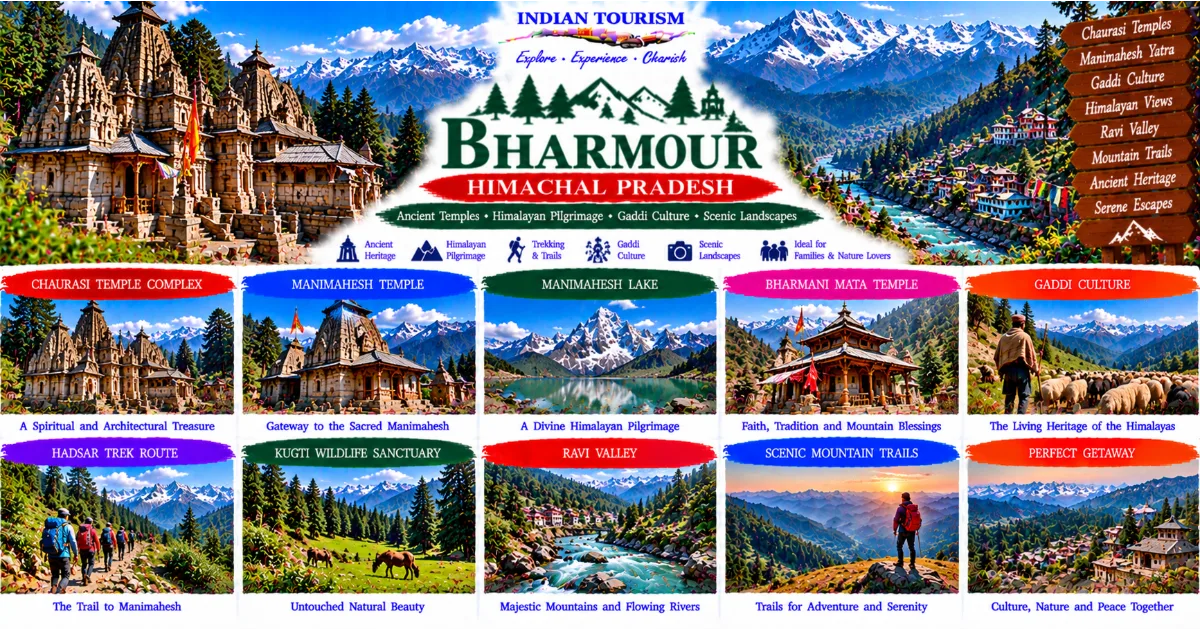
Discover the Ancient Mountain Town of Bharmour
Bharmour is one of the most culturally significant destinations in Himachal Pradesh, a historic mountain town known for its ancient temples, traditional communities, dramatic Himalayan landscapes and deep connections with pilgrimage. Located in the Chamba district, Bharmour offers a different experience from popular hill stations such as Dalhousie and Shimla. Instead of being defined primarily by shopping streets and resort accommodation, it is known for its religious heritage, mountain traditions and proximity to some of the western Himalayas' most celebrated pilgrimage routes.
For centuries, Bharmour has held an important place in the history of the Chamba region. It is traditionally associated with the ancient kingdom of Brahmpura and is widely recognised for the Chaurasi Temple Complex, a collection of shrines that forms the spiritual heart of the town. The temples preserve architectural traditions that developed in the mountains, while their continued use demonstrates the importance of religious life in the local community.
Bharmour is also closely associated with the Gaddi community, a pastoral community whose cultural identity is connected with the mountains, seasonal movement, livestock rearing, traditional dress, music and religious customs. The region's geography has shaped these traditions over generations. Mountain passes, high-altitude pastures and changing seasons influence both daily life and the routes used by shepherds and pilgrims.
The wider area is particularly important for devotees travelling towards Manimahesh Lake, a high-altitude pilgrimage destination associated with Lord Shiva. The annual Manimahesh Yatra draws pilgrims from different parts of India, transforming the region into a centre of religious activity during the pilgrimage season. The journey requires preparation because of the altitude, changing weather and demanding terrain.
Bharmour is suitable for travellers interested in history, architecture, culture, spirituality and mountain landscapes. However, visitors should understand that some attractions are remote and that travel conditions can change quickly. A thoughtful itinerary should allow enough time to explore the town, visit its temples, learn about local traditions and plan any mountain excursions responsibly.
This guide explores the best places to visit in Bharmour, its history, religious traditions, food, festivals, transport options and practical travel considerations. Whether you are planning a cultural holiday or a pilgrimage, Bharmour offers an opportunity to experience a quieter and deeply rooted side of Himachal Pradesh.
The History of Bharmour: The Ancient Capital of the Chamba Region
Bharmour has a long history associated with the early political and cultural development of the Chamba region. The town is traditionally identified with Brahmpura, an early capital of the local ruling dynasty. Historical traditions connect the establishment of the kingdom with Maru Varman, whose descendants developed the political and religious institutions of the area.
Bharmour's importance grew from its position within a mountainous region where settlements depended on access to valleys, water, agricultural land and routes connecting different communities. Although the terrain created challenges for movement, it also helped preserve distinctive cultural traditions. The town developed as a centre of administration, worship and regional identity.
The Chaurasi Temple Complex is one of the clearest expressions of Bharmour's historical importance. The temples represent centuries of religious patronage and local craftsmanship. Their continued use also illustrates how historic monuments can remain active parts of community life rather than becoming isolated archaeological sites.
The surrounding region developed through connections between royal institutions, religious centres and pastoral communities. The Gaddi people maintained traditions adapted to mountain life, including seasonal movement between lower settlements and higher pastures. These patterns contributed to the cultural diversity of the Chamba district.
Over time, political administration changed, and Bharmour became part of the wider territory governed from Chamba. Nevertheless, its religious and cultural significance remained strong. The town continues to attract devotees, researchers, history enthusiasts and travellers interested in the heritage of the western Himalayas.
Exploring Bharmour today is an opportunity to understand how mountain settlements preserve identity through temples, oral traditions, festivals, craftsmanship and relationships with the surrounding landscape. Its history is not confined to the past because many of its religious institutions and cultural practices continue to shape everyday life.
Best Places to Visit in Bharmour
1. Chaurasi Temple Complex
The Chaurasi Temple Complex is Bharmour's most important attraction and the central landmark of its religious heritage. The name Chaurasi means eighty-four, and the complex is associated with a traditional collection of shrines arranged around an open courtyard. The temples are dedicated to different deities and reflect the religious traditions that developed in the Chamba region over many centuries.
The complex is especially important for its architectural diversity. Visitors can observe traditional stone and wooden elements, carved details and structures that reflect regional building practices. The temples vary in size and form, creating a setting in which different architectural traditions can be appreciated together.
One of the best-known shrines within the complex is the Manimahesh Temple, associated with Lord Shiva and the wider pilgrimage tradition connected with Manimahesh Lake. Other shrines are dedicated to deities worshipped within the region, illustrating the variety of religious practices represented in Bharmour.
The complex is not simply a group of historic buildings. It remains an active place of worship where local residents participate in ceremonies and religious observances. Visitors should therefore behave respectfully, dress appropriately and follow any instructions issued by temple authorities.
Spend time observing the relationship between the temples and the courtyard. The arrangement creates a shared sacred space that brings different shrines into one cultural setting. A quiet visit allows travellers to appreciate the craftsmanship and atmosphere without disturbing worshippers.
For anyone interested in the history of Himachal Pradesh, the Chaurasi Temple Complex is essential. It offers a direct connection to the region's religious traditions, architectural history and community identity.
2. Manimahesh Temple
The Manimahesh Temple within Bharmour's temple complex is closely associated with the pilgrimage to Manimahesh Lake, one of the region's most revered destinations. The shrine provides a place for devotees to offer prayers before undertaking the longer journey into the mountains.
Manimahesh is associated with Lord Shiva, and the pilgrimage forms an important part of religious life in the Chamba district. Devotees travel from different places to participate in the yatra, which is linked to a traditional calendar and local religious customs.
For visitors who are not undertaking the high-altitude pilgrimage, the temple offers an opportunity to understand the spiritual significance of the destination in a more accessible setting. It also provides context for the rituals and traditions encountered during the pilgrimage season.
The temple should be approached with respect, particularly during busy religious periods. Visitors should follow local instructions, avoid obstructing ceremonies and ask before taking photographs. Religious practices may be unfamiliar to some travellers, but observing them respectfully can provide a meaningful cultural experience.
3. Bharmani Mata Temple
Bharmani Mata Temple is an important religious site associated with Bharmour's spiritual traditions. The shrine is linked with the local religious landscape and is often included in discussions of the pilgrimage routes and sacred places around the town.
The temple is significant not only because of its religious role but also because of its location within the surrounding mountain environment. Visits may involve walking or travelling along roads that climb through the hills, depending on the route and current access arrangements.
The surrounding scenery provides an opportunity to appreciate the relationship between mountain geography and religious practice. Across the Himalayas, many sacred places are located on hillsides, near water sources or along routes that connect settlements with higher landscapes.
Visitors should check current access conditions before travelling, particularly during winter or periods of heavy rain. Comfortable footwear, water and suitable clothing are important if the visit involves walking.
Bharmani Mata Temple can add a valuable cultural dimension to a Bharmour itinerary, especially for travellers interested in the region's living religious traditions.
4. Bharmour's Traditional Mountain Streets
The streets and neighbourhoods of Bharmour offer a chance to observe everyday life in a historic Himalayan settlement. The town is smaller and quieter than many popular hill stations, and its character is shaped by temples, local homes, shops and the surrounding mountains.
Walking through the town allows visitors to notice building styles, local markets and the daily routines of residents. The experience can be particularly rewarding for travellers who enjoy cultural observation rather than moving quickly from one major attraction to another.
Visitors should remember that residential streets are private community spaces, not open-air exhibits. Ask permission before photographing people or homes, avoid entering private property and keep noise to a reasonable level.
A short walk can also help travellers understand how the town's historic and religious landmarks relate to its modern life. The temple complex remains part of the community's daily geography, while shops and services support both residents and pilgrims.
5. Manimahesh Lake
Manimahesh Lake is the most famous pilgrimage destination associated with Bharmour. Located high in the Himalayas beneath the Manimahesh Kailash mountain, the lake is revered by devotees of Lord Shiva. Its dramatic mountain setting and religious significance make it one of the most important sacred landscapes in Himachal Pradesh.
The pilgrimage is commonly known as the Manimahesh Yatra. Pilgrims travel towards the lake during a designated season, following established routes through mountain terrain. The journey combines physical effort with religious devotion and is an important cultural event for many participants.
Manimahesh Lake is not an ordinary sightseeing destination. The high altitude, cold conditions, steep sections and rapidly changing weather make preparation essential. Travellers should understand the demands of the route before deciding to undertake it. Suitable footwear, warm clothing, water, food planning and attention to local guidance are important.
The lake's religious significance should also shape visitor behaviour. Many pilgrims regard the journey and the waters as sacred. Visitors should respect local customs, follow instructions and avoid littering or disturbing the natural environment.
For travellers who are not prepared for a high-altitude trek, Bharmour itself provides opportunities to learn about the pilgrimage through temples, local traditions and conversations with knowledgeable guides. There is no need to undertake a demanding mountain journey simply to appreciate the cultural importance of Manimahesh.
6. Kugti Village and the Surrounding Mountain Landscape
Kugti is a village in the wider Bharmour region, known for its mountain setting and connections with traditional life in the Chamba district. The surrounding landscape includes steep slopes, forested areas and routes that lead towards higher mountain environments.
The village can be of interest to travellers seeking to understand rural Himalayan life. However, visits should be planned carefully because access and travel times depend on road conditions, weather and the season. Some routes may be more suitable for experienced walkers or travellers accompanied by local guides.
The wider area is associated with the Kugti Wildlife Sanctuary, which protects important mountain habitats. Visitors interested in nature should learn about current access rules before entering protected areas and should not assume that all trails are open for unrestricted tourism.
Rural destinations offer opportunities to learn about local livelihoods, but travellers should respect residents' privacy and daily routines. Ask permission before taking photographs, avoid entering private land without consent and support local services where appropriate.
7. Kugti Wildlife Sanctuary
Kugti Wildlife Sanctuary is one of the significant protected natural areas in the Chamba district. Its mountain terrain and forest habitats support wildlife adapted to the western Himalayan environment. The sanctuary also reflects the ecological importance of the high-altitude landscapes surrounding Bharmour.
The natural environment changes with elevation, creating different habitats and vegetation patterns. Travellers interested in ecology may appreciate the opportunity to learn about mountain forests, wildlife conservation and the pressures facing fragile Himalayan environments.
Wildlife sightings are never guaranteed. Visitors should focus on understanding the habitat rather than expecting to see particular animals. Loud noise, littering and attempts to approach wildlife can cause disturbance and should be avoided.
Access to protected areas may be regulated, and particular routes may require permission or local guidance. Check current rules before planning a visit. Travellers should also consider their fitness and experience before undertaking remote walks.
8. Hadsar: The Gateway to the Manimahesh Trek
Hadsar is commonly used as a starting point for the trek towards Manimahesh Lake. It is an important stop for pilgrims preparing to enter the higher mountain terrain. The settlement's role in the pilgrimage reflects the way religious journeys depend on local transport, accommodation, food services and community support.
During the pilgrimage season, Hadsar can become busy as people prepare for the journey. Travellers may encounter temporary services and facilities intended to support pilgrims, although availability varies with the season and local arrangements.
The trek beyond Hadsar requires careful preparation. Terrain, altitude and weather can make the route physically demanding, and conditions can change rapidly. Travellers should follow official and local guidance, carry suitable clothing and avoid continuing when conditions are unsafe.
Anyone planning to undertake the trek should check current route information and requirements rather than relying on outdated travel descriptions. Fitness, health, weather and experience all influence whether the journey is appropriate.
9. The Ravi Valley
The Ravi River and its surrounding valley form an important part of the wider Chamba region. The river has influenced settlement patterns, agriculture and connections between mountain communities. Its valley provides scenic views and reveals how water and terrain shape life in the Himalayas.
Travelling through the Ravi valley offers changing perspectives on the landscape, from cultivated slopes and settlements to forested hills and steep mountain terrain. The scenery can be particularly rewarding for photographers who enjoy rivers, bridges and mountain roads.
Visitors should be cautious near the river. Mountain streams and rivers can have strong currents, and water levels may rise quickly after rainfall or snowmelt. Avoid entering unfamiliar stretches of water and follow local safety guidance.
The valley is best appreciated through safe viewpoints and planned stops. Drivers should not stop in unsafe road locations simply to take photographs, and pedestrians should remain aware of traffic on narrow mountain roads.
10. Chamba Town
Chamba town is an important cultural destination that can be combined with a visit to Bharmour. It is known for historic temples, the Bhuri Singh Museum, royal heritage and traditional handicrafts.
Visitors interested in history can explore the Lakshmi Narayan Temple Complex and learn about the region's artistic traditions through museum collections. Chamba is also associated with the distinctive Chamba rumal embroidery and Pahari miniature painting.
A visit to Chamba provides a useful contrast with Bharmour. While both destinations have strong religious and cultural traditions, each has its own architectural character and local history. Travellers with enough time can explore both as part of a wider journey through the Chamba district.
The road journey between destinations should be planned according to current conditions and available daylight. It is better to allow enough time to explore each place than to attempt too many stops in a single day.
The Manimahesh Yatra: A Sacred Himalayan Journey
The Manimahesh Yatra is one of the most important religious pilgrimages in the Chamba region. Devotees travel towards Manimahesh Lake, which lies beneath the sacred Manimahesh Kailash mountain. The journey is associated with Lord Shiva and holds deep spiritual significance for many pilgrims.
The pilgrimage is generally undertaken during a specific period in the Hindu calendar, with the main activity linked to the time around the annual Janmashtami and Radha Ashtami observances. Exact dates and arrangements can vary, so pilgrims should confirm the current year's official schedule before travelling.
The yatra is both a religious journey and a demanding mountain undertaking. The route includes steep sections, high-altitude terrain and exposure to rapidly changing weather. Conditions may be cold even during the pilgrimage season, and rain can make paths slippery.
Preparation should include appropriate footwear, layered clothing, rain protection, drinking water, food planning and awareness of altitude-related risks. Travellers should follow the instructions of local authorities and organisers, use authorised services where applicable and avoid pushing beyond their physical limits.
People with health concerns, limited trekking experience or difficulty walking long distances should seek appropriate professional advice before deciding whether to undertake the journey. The pilgrimage should not be treated as a casual sightseeing walk.
The cultural significance of the yatra extends beyond the physical route. Pilgrims travel with prayers, songs, rituals and a shared sense of devotion. Local communities contribute to the journey through hospitality, transport, food services and support arrangements.
Visitors who do not undertake the trek can still learn about the pilgrimage by exploring Bharmour's temples and speaking with knowledgeable local guides. Understanding the religious context can make a visit to the region more meaningful without requiring every traveller to reach the lake.
Gaddi Culture: The Living Heritage of Bharmour
Bharmour is closely associated with the Gaddi community, whose traditions form an important part of the cultural identity of the Chamba region. The Gaddis are traditionally known for pastoral livelihoods, including sheep and goat rearing, and for seasonal movement between different elevations.
Mountain geography has shaped many aspects of Gaddi life. Seasonal changes affect access to grazing land, water and settlements. Traditional knowledge of routes, weather and livestock management has developed through generations of experience in the Himalayan environment.
Gaddi cultural identity is expressed through language, dress, music, religious traditions, festivals and social practices. Traditional clothing is especially recognisable in the region, although everyday dress varies according to age, occupation, location and personal preference.
Music and oral traditions have helped preserve community stories and religious themes. Songs may accompany celebrations, social gatherings and other important occasions. These traditions are part of a living culture, not merely historical displays.
Visitors should approach Gaddi culture with curiosity and respect. Ask permission before photographing individuals, avoid treating people as tourist attractions and recognise that traditions vary between families and villages. A local guide can help explain cultural practices accurately and provide context that visitors might otherwise miss.
Supporting local businesses and services can also help tourism contribute to community livelihoods. Buying locally made products, hiring local guides and respecting customary practices are practical ways to travel responsibly.
Architecture and Religious Traditions in Bharmour
Bharmour's architecture reflects the region's historical relationship with religion, geography and craftsmanship. The Chaurasi Temple Complex is the most visible example, but the wider area contains other shrines and traditional structures that contribute to its cultural landscape.
Mountain architecture often uses stone and wood, materials that are available locally and can be adapted to the climate. Building techniques reflect practical needs as well as religious and aesthetic traditions. Decorative carvings, roof forms and shrine layouts provide clues about the skills and influences that shaped local construction.
Temples in Bharmour are active institutions. They connect religious practice with festivals, community gatherings and local identity. Their continued use helps preserve traditions, but it also means visitors must treat the spaces respectfully.
A thoughtful visit includes more than looking at buildings. Learn about the deities associated with the shrines, observe how the complex is organised and consider how worship remains connected with daily life. Where information is limited, local guides and community members may provide useful context, provided they are approached respectfully.
Festivals and Cultural Celebrations
Manimahesh Yatra
The Manimahesh Yatra is the region's most prominent pilgrimage event. It brings together devotees who travel towards the sacred lake during the designated pilgrimage season. The journey involves religious observances, community participation and movement through mountain settlements.
The pilgrimage period can affect transport, accommodation and local services. Travellers planning to visit Bharmour during this time should expect increased activity and should arrange accommodation and travel plans early where possible.
Visitors should follow current guidance regarding the trek and respect the religious nature of the event. The pilgrimage route can become crowded, and conditions may change with the weather.
Local Temple Festivals
Temples in Bharmour and nearby villages observe religious festivals and special occasions throughout the year. The exact calendar and customs vary by shrine and community. Celebrations may include worship, processions, music, traditional dress and gatherings of local residents.
These events provide opportunities to learn about local culture, but visitors should ask about appropriate behaviour before attending. Some rituals may be intended primarily for worshippers, and photography or access may be restricted.
Community Gatherings and Traditional Music
Community gatherings help maintain social connections and pass traditions between generations. Music, stories, food and shared religious practices contribute to the cultural life of the region.
Travellers may not encounter organised performances during every visit, and it is important not to expect everyday culture to be staged for visitors. Respectful conversations and locally guided experiences can offer a more authentic understanding of community life.
Local Food: What to Eat in Bharmour
Food in Bharmour reflects the wider culinary traditions of Himachal Pradesh and the practical demands of mountain life. Meals often include grains, lentils, seasonal vegetables and preparations suited to colder weather. Recipes vary between households, villages and communities.
Madra
Madra is a traditional Himachali dish commonly prepared with chickpeas or other legumes in a yoghurt-based gravy. It is associated with festive meals and is valued for its rich texture and flavour.
The preparation varies across regions, so travellers may encounter different versions. Visitors interested in regional cuisine should ask local restaurants about traditional dishes rather than expecting every establishment to offer the same menu.
Dham
Dham is a traditional celebratory meal served at weddings and other important occasions in Himachal Pradesh. The dishes vary according to regional customs and may include rice, lentils and yoghurt-based preparations.
Dham is important because it reflects hospitality and community participation. It may not be available as a regular restaurant meal, so travellers should ask locally whether a traditional version is being prepared during their visit.
Siddu
Siddu is a steamed bread associated with parts of Himachal Pradesh. It may be filled with different ingredients and served with accompaniments according to local tradition.
Availability in Bharmour depends on the establishment and season. Travellers should remain flexible and enjoy whatever regional specialties are freshly prepared.
Simple Mountain Meals
In smaller mountain towns and villages, meals may be straightforward and based on seasonal ingredients. Rice, lentils, vegetables, bread and tea are common options in many parts of Himachal Pradesh, although specific dishes vary.
Food availability may be more limited outside the main town, particularly during quieter periods. Travellers planning longer excursions should arrange meals in advance where necessary and carry appropriate snacks and drinking water.
Best Time to Visit Bharmour
Bharmour can be visited during different parts of the year, but the best season depends on whether your priority is cultural sightseeing, comfortable road travel, mountain scenery or the Manimahesh pilgrimage.
Spring: March to April
Spring brings gradually changing temperatures and renewed colour to the surrounding countryside. It can be a pleasant time to explore the town's temples and historic streets, although higher areas may remain cold.
Visitors should carry warm clothing and check road conditions before travelling to more remote places. Spring is suitable for cultural sightseeing when access is available and weather conditions are favourable.
Summer: May to June
Summer is often a comfortable period for exploring Bharmour and the wider Chamba region. Daytime conditions can be suitable for visiting temples, walking around the town and taking road excursions.
Travellers planning a mountain trek should remember that higher elevations can remain cold even when the weather is pleasant in town. The conditions along a pilgrimage route may be very different from those in Bharmour itself.
Monsoon: July to September
The monsoon brings rainfall and greenery but can create significant travel challenges. Heavy rain may lead to landslides, road closures, poor visibility and unstable trail conditions.
Travellers should monitor current weather information and avoid unnecessary journeys during severe conditions. Anyone planning the Manimahesh Yatra must follow the latest official guidance because mountain conditions can change quickly.
Autumn: October to November
Autumn can be a rewarding period for exploring Bharmour's cultural heritage and enjoying mountain scenery, provided roads remain accessible. Temperatures fall, especially at night, and higher areas may experience cold conditions.
Visitors should carry warm layers and confirm transport arrangements before setting out for remote locations.
Winter: December to February
Winter brings cold temperatures, and higher routes may be affected by snow or ice. Access to remote villages and mountain areas can become difficult, depending on the weather.
Winter visitors should concentrate on accessible parts of the town unless current conditions and local guidance support further travel. Warm clothing, flexible plans and reliable transport arrangements are essential.
For ordinary sightseeing, late spring and early autumn may provide a practical balance of access and comfort. Pilgrims planning the Manimahesh Yatra should follow the official schedule and current conditions rather than relying on general seasonal advice.
How to Reach Bharmour
By Road
Road travel is the main way to reach Bharmour. The town is connected to Chamba and other parts of Himachal Pradesh through mountain roads. Travellers can use private vehicles, taxis or available bus services depending on their starting point and the current transport schedule.
Road journeys may take longer than expected because of winding routes, traffic, weather and road conditions. Allow extra time, especially during the monsoon, winter and busy pilgrimage periods.
If hiring a taxi, confirm the fare, waiting arrangements and return journey in advance. Drivers familiar with the region can provide useful advice about current road conditions and the realistic time required for excursions.
By Train
Bharmour does not have a railway station. Travellers arriving by train need to use a suitable station elsewhere in the region and continue by road. The most convenient station depends on the route, train availability and the starting city.
Consider the complete journey rather than focusing only on the train segment. The road transfer through the mountains may take several hours, and it is wise to leave a buffer if connecting with another service.
By Air
The most practical airport depends on current flight schedules and the chosen route. Kangra's Gaggal Airport may be useful for some itineraries, while larger airports farther away may offer more flight options. A road transfer is required to reach Bharmour.
Before booking, check the availability of onward transport and the expected journey time. Weather may affect both flights and mountain roads, so travellers should avoid planning tight connections.
Getting Around Bharmour
The central part of Bharmour can be explored on foot, particularly when visiting the Chaurasi Temple Complex and nearby streets. Walking allows visitors to observe architectural details and the everyday rhythm of the town.
For destinations outside the centre, local taxis or arranged transport may be necessary. Availability can vary, especially during quieter seasons or in remote areas. Confirm return arrangements before travelling to a place where transport options may be limited.
Anyone planning a visit to Bharmani Mata Temple, Kugti or Hadsar should check current access conditions and allow enough time for the journey. Mountain roads can be affected by weather, and routes may require more time than expected.
The Manimahesh trek should be planned separately from ordinary town sightseeing. It involves high-altitude terrain and requires appropriate preparation, current information and attention to local instructions.
Suggested Bharmour Itinerary
One Day in Bharmour
Begin with the Chaurasi Temple Complex, allowing enough time to explore the shrines and understand their religious significance. Visit the Manimahesh Temple and observe the architecture and atmosphere of the complex respectfully.
After lunch, walk through the surrounding town and explore local shops or accessible viewpoints. If time and transport permit, consider a visit to another nearby shrine, provided current conditions allow a comfortable return.
This itinerary focuses on Bharmour's central cultural attractions and avoids trying to cover remote mountain destinations in a single day.
Two Days in Bharmour
Spend the first day exploring the Chaurasi Temple Complex, the town's historic streets and other accessible religious sites. Use the evening to learn about the local culture and prepare for the following day's excursion.
On the second day, choose an excursion according to your interests and current conditions. Travellers interested in the Manimahesh pilgrimage may visit Hadsar or learn about the route, but should not begin a high-altitude trek without adequate preparation. Others may prefer a shorter visit to a nearby village or a cultural exploration around the town.
Three Days in Bharmour
A three-day visit allows more time for cultural sightseeing and careful planning. Use the first day for the temple complex and the town. Dedicate the second day to a suitable nearby excursion, such as a visit to Bharmani Mata Temple or another accessible destination, subject to current conditions.
Reserve the third day for a longer regional excursion or a more relaxed exploration of local culture. If your goal is to undertake the Manimahesh Yatra, plan it as a separate journey with the time, preparation and flexibility it requires. Do not treat the trek as a simple extension of a sightseeing itinerary.
Where to Stay in Bharmour
Accommodation in Bharmour may include guesthouses, small hotels and other basic or comfortable properties. Facilities and availability vary according to the season, local demand and the type of accommodation.
Staying in the town centre can make it easier to visit the Chaurasi Temple Complex and access local shops and transport. Travellers preparing for the pilgrimage should pay attention to the location of accommodation and the arrangements needed for reaching the starting point of their journey.
During the Manimahesh pilgrimage season, accommodation and other services may become busier. Advance planning is advisable, and visitors should confirm what facilities are available rather than assuming that all properties offer the same services.
Before booking, check heating arrangements, meal availability, road access, parking and cancellation conditions. Travellers going during colder months should pay particular attention to heating and warm bedding.
Bharmour for Pilgrims, Families and Cultural Travellers
Bharmour for Pilgrims
Bharmour is an important destination for devotees interested in the Manimahesh tradition and the region's temples. The Chaurasi Temple Complex provides an accessible place to worship and understand the pilgrimage's cultural setting.
Those planning to continue to Manimahesh Lake should check the current schedule, route conditions and official requirements. Physical preparation and suitable equipment are essential, and pilgrims should follow local guidance throughout the journey.
Bharmour for Families
Families can explore the town's temples and cultural attractions at a relaxed pace. The central temple complex provides an opportunity to introduce children to regional history and religious architecture.
Parents should plan around walking distances, weather and available facilities. Mountain roads can be tiring, and remote excursions may not be suitable for every family member.
Bharmour for History and Culture Enthusiasts
Bharmour is particularly rewarding for travellers interested in Himalayan heritage. The temple complex, local traditions and Gaddi culture provide opportunities to understand the relationship between geography, religion and community life.
Visitors can deepen the experience by using a knowledgeable local guide, asking respectful questions and allowing enough time to observe the town rather than treating it as a brief stop on a long road journey.
Responsible Tourism in Bharmour
Bharmour's cultural and natural heritage deserves careful treatment. Responsible tourism helps protect historic structures, supports local livelihoods and reduces pressure on the mountain environment.
At temples, dress respectfully, follow local instructions and avoid disturbing religious ceremonies. Do not climb on historic structures or touch delicate carvings unnecessarily. Ask before photographing worshippers and respect any restrictions on photography.
In villages and residential areas, remember that people are going about their daily lives. Ask permission before taking photographs, avoid entering private land without consent and keep noise at a reasonable level.
If travelling towards Manimahesh Lake or other remote areas, carry waste back to appropriate disposal points. Avoid leaving plastic, food packaging or disposable items along trails. Mountain environments are difficult to clean, and litter can affect wildlife and water sources.
Support local businesses where possible. Using local guides, purchasing regional products and eating at local establishments can help tourism income reach the communities that maintain the area's cultural traditions.
Most importantly, recognise the limits of mountain travel. Do not attempt difficult routes without preparation, and follow the advice of local authorities when weather or access conditions are unsafe.
Practical Travel Tips for Bharmour
Carry warm clothing even if the weather is comfortable when you arrive. Temperatures can fall quickly in the mountains, particularly during the evening and at higher elevations.
Wear comfortable shoes for walking around the temple complex and town. If planning longer excursions, choose footwear appropriate for the terrain and current weather.
Keep some cash available for local transport and small purchases. Digital payment availability may vary, especially outside the main town.
Check road conditions before travelling to remote villages or the Manimahesh route. Monsoon rainfall, snowfall and landslides can affect access. Allow extra time for mountain journeys and avoid tight onward connections.
If planning the pilgrimage, review the current official guidance and prepare for altitude, cold weather, physical exertion and possible delays. Carry essential supplies and avoid continuing when conditions become unsafe.
Finally, plan realistically. Bharmour's value lies in its history, religious traditions and mountain setting. A relaxed itinerary with time for observation and cultural understanding is more rewarding than trying to visit every attraction in a short period.
Why Bharmour Deserves a Place on Your Himachal Pradesh Itinerary
Bharmour offers a distinctive experience for travellers seeking the historical and spiritual dimensions of the Himalayas. Its Chaurasi Temple Complex preserves important religious architecture, while the town's association with the Manimahesh pilgrimage gives it a continuing role in the spiritual life of the region.
The surrounding landscape adds another dimension. Mountain villages, river valleys and forest habitats reveal the geography that has shaped local livelihoods and traditions. The Gaddi community's cultural heritage demonstrates how people have adapted to seasonal changes and maintained a strong connection with the mountain environment.
Bharmour is also a useful destination for travellers exploring the wider Chamba district. Chamba town provides museums, royal heritage and traditional crafts, while Dalhousie and Khajjiar offer different landscapes and visitor experiences. Together, these destinations create a varied journey through the western Himalayas.
What makes Bharmour particularly meaningful is the relationship between its monuments and living traditions. The temples are not simply historic attractions, and the pilgrimage is not merely a scenic trek. They remain connected to religious practice, community identity and the cultural memory of the region.
Visitors who approach Bharmour with respect and curiosity can gain a deeper appreciation of Himachal Pradesh beyond its familiar hill stations. It is a destination where history, faith and mountain life come together.
Conclusion
Bharmour is one of the most significant heritage destinations in the Chamba district, known for its ancient temples, Gaddi culture, mountain scenery and association with the Manimahesh Yatra. The Chaurasi Temple Complex provides a compelling introduction to the town's history, while nearby villages and natural landscapes reveal the wider cultural and ecological richness of the region.
Plan your visit according to the season, confirm transport and access conditions, and allow enough time to explore the town at a comfortable pace. If you intend to undertake the Manimahesh pilgrimage, treat it as a serious mountain journey requiring preparation and current local guidance.
Above all, travel respectfully. Bharmour's greatest value lies in its living heritage, sacred traditions and the communities that continue to preserve them. For travellers interested in the deeper cultural story of Himachal Pradesh, Bharmour is a destination worth discovering.
#IndianTourism #Bharmour #BharmourTourism #HimachalPradesh #ChambaDistrict #ManimaheshYatra #ChaurasiTempleComplex #GaddiCulture #HimalayanPilgrimage #ExploreIndia #IndianHeritage #MountainTravel #SpiritualTourism #HimalayanCulture #ResponsibleTourism
