
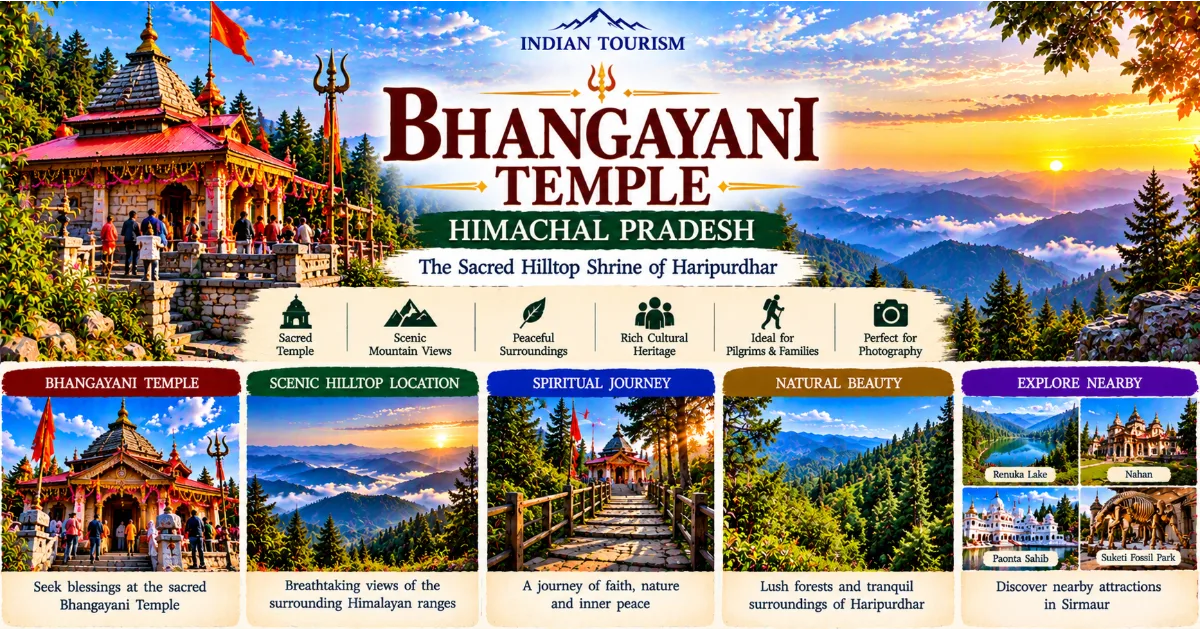
A Spiritual Journey into the Mountains of Sirmaur
Himachal Pradesh is a land where mountain landscapes and religious traditions are deeply connected. Across its valleys, forests and highland settlements, ancient temples preserve stories that have shaped local communities for generations. Some shrines stand beside rivers, others occupy forest clearings, and many are located on hilltops where the surrounding landscape becomes part of the spiritual experience. Bhangayani Temple, situated at Haripurdhar in the Sirmaur district, is one such destination. Revered by devotees and valued for its mountain setting, the temple offers travellers an opportunity to explore the religious heritage and quieter landscapes of southern Himachal Pradesh.
Dedicated to Goddess Bhangayani, the temple is an important local place of worship. Devotees visit to offer prayers, seek blessings and maintain family and community traditions associated with the goddess. Its significance extends beyond the physical structure because religious sites often represent a shared cultural memory, passed from one generation to another through stories, rituals and annual observances.
Haripurdhar, where the temple is located, provides a distinctly different atmosphere from the crowded commercial centres of Himachal Pradesh. The surrounding hills, winding roads and rural settlements create a setting suited to a reflective journey. Visitors may come primarily for religious reasons, while others are drawn by the opportunity to explore a lesser-known part of Sirmaur and experience the relationship between local belief and mountain life.
A visit to Bhangayani Temple can be combined with a wider exploration of the region, including nearby villages, forested landscapes and other destinations in Sirmaur. The journey is especially rewarding for travellers who prefer cultural discovery and scenic road trips to hurried sightseeing. It also offers an opportunity to understand how temples continue to shape community identity in the Himalayan region.
This guide explores Bhangayani Temple's religious significance, its location, the journey to Haripurdhar, the best time to visit, local customs, nearby attractions and practical travel considerations. Whether you are a pilgrim, a cultural traveller or someone discovering the lesser-known destinations of Himachal Pradesh, the temple offers a meaningful introduction to the spiritual heritage of Sirmaur.
Where Is Bhangayani Temple Located?
Bhangayani Temple is located at Haripurdhar in the Sirmaur district of Himachal Pradesh. Haripurdhar is a mountain settlement in the region's higher terrain, surrounded by hills, rural communities and forested landscapes. Its location gives the temple a distinctive character, combining religious significance with the atmosphere of a hill destination.
Sirmaur occupies the southern part of Himachal Pradesh and includes a variety of landscapes, from lower foothills and river valleys to higher ridges and forested areas. Haripurdhar represents the more elevated side of the district, where road journeys can involve winding routes and changes in weather conditions.
The temple attracts devotees from surrounding villages and other parts of Himachal Pradesh. For many visitors, the journey is part of a religious tradition, while others come to learn about the local goddess and the cultural history of the area.
Travellers should remember that Haripurdhar is not a large commercial hill station with the extensive facilities available in places such as Shimla. Accommodation, transport and shopping options may be more limited, depending on the season. Confirming these arrangements before departure is therefore important.
The road journey can also take longer than expected because of the terrain. Visitors should plan enough time to reach the temple comfortably, explore the surroundings and return safely without rushing through the experience.
Who Is Goddess Bhangayani?
The Goddess and Her Place in Local Tradition
Goddess Bhangayani is revered in the religious traditions of the Sirmaur region. The temple at Haripurdhar is an important place where devotees express their faith through prayer, offerings and visits associated with family and community customs.
Local forms of goddess worship are an important part of the religious landscape of Himachal Pradesh. Across the state, different communities honour particular deities whose stories, rituals and sacred places are connected with the history of their region. These traditions reflect the diversity of Hindu religious life and the importance of local belief in shaping cultural identity.
The significance of Goddess Bhangayani is closely connected with the people who visit and maintain the temple. Devotees may associate their visits with gratitude, hopes for the future, family well-being or the desire to seek spiritual comfort. The meaning of a pilgrimage can therefore differ from one person to another while remaining connected through a shared place of worship.
Visitors who are unfamiliar with the goddess should approach the temple with curiosity and respect. Speaking with local residents or temple representatives, when appropriate, can help explain the traditions associated with the shrine. It is important not to assume that every local belief or story is identical across communities.
Why Local Deities Matter in Himachal Pradesh
The religious culture of Himachal Pradesh includes many local deities whose worship is closely connected with villages, valleys and mountain settlements. These traditions have developed over long periods and remain an important part of community life.
Local temples can serve as places of worship, gathering and cultural continuity. Festivals and religious observances may bring together families from different villages, strengthening relationships and preserving shared customs. The temple may also play a role in the way people understand the history and identity of their region.
Bhangayani Temple forms part of this wider tradition. Its significance cannot be understood solely by looking at the building or its location. The stories associated with the goddess, the practices of devotees and the continuing role of the shrine are equally important.
For travellers, learning about local religious traditions offers a way to understand Himachal Pradesh beyond its scenery. Mountains and forests may attract visitors initially, but the cultural life of the people who inhabit those landscapes gives the region much of its distinctive character.
Faith, Family and Community
For many devotees, a visit to a local temple is not an isolated event. It may be connected with family customs, personal milestones or an annual journey undertaken over many years. These repeated visits create a sense of continuity and belonging.
Religious places also bring together people from different backgrounds. During busy periods, visitors may encounter families, elderly devotees, young people and travellers who have come for different reasons. Their shared presence reflects the continuing importance of the shrine within the region.
Visitors should respect the personal nature of prayer. Some people may be willing to explain their traditions, while others may prefer to worship quietly. Asking permission before photographing individuals or religious ceremonies is an important part of respectful travel.
Understanding these social dimensions can make a visit to Bhangayani Temple more meaningful than a brief stop for photographs. It allows travellers to appreciate the living community behind the destination.
The Spiritual Experience at Bhangayani Temple
Entering a Sacred Space
A visit to Bhangayani Temple begins with recognising that the destination is an active place of worship. The movement of devotees, the presence of religious offerings and the routines associated with prayer create an atmosphere different from that of an ordinary tourist attraction.
Visitors should follow the instructions provided at the temple, dress respectfully and behave in a manner that does not disturb worshippers. If there are specific requirements regarding footwear, photography or access to particular areas, these should be observed.
For people visiting for religious reasons, the temple provides an opportunity to offer prayers and seek blessings according to their beliefs. Those who arrive out of cultural curiosity can learn about the shrine and observe its traditions without feeling obliged to participate in rituals.
A respectful approach makes the experience more comfortable for everyone. Visitors should avoid loud conversations, unnecessary movement during prayers and behaviour that turns the religious setting into a stage for entertainment.
Prayer and Personal Reflection
Religious travel often offers a pause from everyday responsibilities. At a hilltop temple such as Bhangayani, the journey through the mountains can create an atmosphere that encourages reflection before visitors even reach the shrine.
People may come seeking comfort, expressing gratitude or marking an important event in their lives. Others may simply wish to spend time in a place associated with their family's traditions. These personal reasons are part of what makes pilgrimage meaningful.
Visitors who are not familiar with the local faith can still appreciate the quietness and cultural significance of the place. Observing respectfully and taking time to understand the setting can provide insight into the role of religion in everyday life.
The value of the visit lies not in how quickly the temple is explored but in the understanding that develops through the experience.
The Importance of Respectful Conduct
Religious destinations depend on cooperation between worshippers, local communities and visitors. Simple actions, such as keeping the premises clean, following instructions and allowing space for prayer, help maintain a welcoming atmosphere.
Photography should be limited to areas where it is permitted. Some people may not wish to be photographed during religious activities, and their privacy should be respected.
Visitors should also avoid making assumptions about the meaning of particular offerings or rituals. When explanations are available, listening carefully is more appropriate than treating unfamiliar practices as curiosities.
Respectful conduct is especially important during festivals and other busy occasions, when crowds may make movement more difficult. Patience and attention to local guidance help preserve the experience for everyone.
Haripurdhar: A Mountain Settlement with a Distinctive Character
The Landscape Around the Temple
Haripurdhar's mountain setting is an important part of the Bhangayani Temple experience. The surrounding terrain includes hills, forested areas, rural settlements and winding roads that reflect the geography of Sirmaur.
The scenery changes according to the season and weather. Clear days can provide views across the surrounding hills, while clouds and mist may create a softer atmosphere. After rainfall, vegetation can appear especially fresh, although wet conditions may make the roads more challenging.
For travellers accustomed to busy urban environments, the mountain setting can provide a welcome change of pace. The journey encourages visitors to pay attention to the landscape rather than focusing only on the destination.
However, visitors should remember that the surrounding land is also home to local communities. Fields, paths and open spaces may be used for farming or other everyday activities. Travellers should remain on suitable public routes and ask permission before entering private property.
Rural Life in Sirmaur
Haripurdhar and its surrounding settlements offer glimpses of rural life in the mountain region. The design of houses, the arrangement of cultivated land and the routines of local residents reflect the practical demands of living in a hilly environment.
Agriculture, local trade and community relationships remain important aspects of rural life. Seasonal changes can influence work patterns, food availability and travel conditions. These details help explain why a visit to a rural destination can be different from a stay in a major hill station.
Visitors should observe local life with sensitivity. A village is a living community rather than an attraction designed solely for tourists. Photographing people, homes or private activities should always be approached with consideration.
Supporting local businesses and using local services where practical can help tourism contribute to the community. Respectful interactions also make the journey more rewarding for visitors.
A Different Kind of Mountain Tourism
Haripurdhar offers a different experience from the commercial tourism found in some of Himachal Pradesh's best-known towns. Its appeal lies primarily in religious heritage, the surrounding landscape and the opportunity to experience a quieter part of Sirmaur.
Visitors should not expect the same range of entertainment, shopping and accommodation options found in larger destinations. Instead, the region is better suited to travellers who appreciate a slower pace and are interested in local culture.
This distinction is important when planning a trip. People seeking a spiritual visit or a scenic road journey may find the destination rewarding, while travellers looking for nightlife or extensive adventure facilities may prefer a different location.
Understanding the character of Haripurdhar helps visitors prepare realistically and appreciate what makes the temple and its surroundings distinctive.
Best Time to Visit Bhangayani Temple
Spring: Comfortable Conditions for a Visit
Spring can be a pleasant time to explore Haripurdhar and visit Bhangayani Temple. Temperatures may become more comfortable after winter, while the surrounding vegetation begins to show fresh growth.
The season can be suitable for families, pilgrims and travellers who want to enjoy the mountain scenery without facing the stronger heat of summer. Mornings and evenings may still be cool, so carrying a light jacket is sensible.
Spring is also a good period for a relaxed road trip through Sirmaur. Visitors can take time to enjoy the changing landscape and stop at suitable public viewpoints along the route.
Weather can vary from year to year, so travellers should check the forecast before leaving and confirm local road conditions.
Summer: A Season for Mountain Travel
Summer is a popular period for exploring many parts of Himachal Pradesh. Haripurdhar may offer a more comfortable atmosphere than the hot plains, although temperatures depend on local conditions and elevation.
Visitors should carry drinking water, wear comfortable clothing and plan outdoor activities around the weather. If travelling with children or older adults, allow regular breaks and avoid a demanding itinerary.
Public holidays and school vacations can increase visitor numbers at popular religious sites. Travellers planning to visit during busy periods should allow additional time for transport and check accommodation availability in advance.
Monsoon: Greenery and Caution
The monsoon can bring fresh greenery and misty views to the hills around Haripurdhar. For visitors who enjoy mountain scenery, the changing landscape can be attractive.
However, heavy rainfall may affect road conditions, reduce visibility and create a risk of landslides in some parts of Himachal Pradesh. Wet roads can be slippery, and travel times may increase.
Visitors should check weather and road updates before setting out. If severe rainfall is forecast, postponing the journey is often the safer decision.
During the monsoon, flexibility is essential. Travellers should be prepared to change their plans rather than continuing when conditions are unsuitable.
Autumn: Clear Views and Relaxed Exploration
Autumn can offer comfortable conditions for exploring Haripurdhar, depending on the weather. Clear days may provide good visibility across the surrounding hills, making the road journey particularly enjoyable.
This season is suitable for visitors who want to combine a temple visit with photography and exploration of the wider Sirmaur region. The cooler atmosphere can also make time outdoors more comfortable.
Travellers should still confirm the current road conditions and avoid assuming that every route will remain unaffected by seasonal changes.
Winter: Cooler Weather and Careful Planning
Winter can bring cold mornings and evenings to Haripurdhar. Visitors should carry warm clothing and confirm that their chosen accommodation is open and suitably equipped.
Road conditions may become more difficult during periods of severe weather. Travellers should monitor forecasts and avoid late-night driving on unfamiliar mountain roads.
A winter visit can be peaceful when conditions are suitable, but the journey should be planned with care. The temple can be enjoyed without attempting unnecessary travel through unsafe weather.
How to Reach Bhangayani Temple
By Road
Road travel is the main practical way to reach Bhangayani Temple at Haripurdhar. Visitors travel towards the Sirmaur district and continue along local roads to the settlement and temple area.
The journey depends on the starting point, selected route, traffic and road conditions. Mountain roads often require slower driving than routes across the plains, and temporary disruptions may affect travel time.
A private vehicle provides flexibility, while a taxi can be convenient for visitors who prefer not to drive on unfamiliar roads. Before hiring a taxi, confirm the fare, the route and the arrangements for the return journey.
Travellers should plan to arrive during daylight whenever possible. This allows more time to manage unexpected delays and makes it easier to navigate the final approach.
By Rail
Visitors travelling from distant cities can use a suitable railway connection serving the wider region and continue by road towards Haripurdhar. The most convenient railhead depends on the origin of the journey and the available services.
Rail travel can reduce the burden of a long drive, but the onward road transfer should be planned carefully. Travellers arriving late in the day may need to stay overnight before continuing towards the temple.
Check train schedules, transport availability and expected journey times before booking. If the visit is part of a wider trip through Sirmaur, consider arranging a vehicle for the complete route.
By Air
Travellers arriving from other parts of India can consider an airport with suitable connections to the wider region and continue by road. The best option depends on flight availability, the distance to Haripurdhar and the quality of the onward transport connection.
When comparing options, consider the total journey rather than the flight duration alone. A convenient arrival time and reliable road transfer can make the trip much easier.
Confirm transport arrangements before departure and allow extra time for mountain roads. Flexible plans can be useful when weather or traffic causes delays.
Local Transport and Final Access
Local transport options may be more limited in smaller mountain settlements than in major tourist towns. Visitors should confirm whether a taxi can reach the temple area directly and whether parking or a short walk is required.
If staying outside Haripurdhar, ask the accommodation provider about the best route and current conditions. This is particularly important for visitors travelling with children, older adults or people with mobility concerns.
Keep the contact details of your accommodation available and carry essential navigation information offline where possible. Planning the final stage of the journey can prevent unnecessary delays.
What to See and Do at Bhangayani Temple
Explore the Temple Complex
The temple itself is the main focus of a visit. Visitors can observe the religious setting, learn about Goddess Bhangayani and appreciate the role the shrine plays in the lives of local devotees.
Take time to understand the temple's significance rather than moving through the complex quickly. If information is available from local representatives, it can help explain the traditions associated with the goddess.
Follow all instructions regarding footwear, offerings, photography and access. Visitors should avoid disturbing worshippers and keep pathways clear.
The temple visit can be meaningful for people with different backgrounds, provided it is approached with respect and an interest in the local culture.
Enjoy the Mountain Scenery
The surrounding landscape offers opportunities to appreciate the hills and rural environment of Sirmaur. Visitors may find suitable places to pause along public roads or at designated viewpoints, depending on local access.
Photography can capture the relationship between the temple, the settlement and the surrounding hills. The changing weather may create different moods, from clear mountain views to misty scenes.
Visitors should avoid stopping on narrow roads or moving into unsafe areas for photographs. Road safety and respect for private land should always take priority.
Learn About Local Traditions
A visit to Bhangayani Temple provides an opportunity to learn about the religious customs and stories associated with the region. Local residents and temple representatives may be able to explain aspects of the goddess's worship and the temple's importance.
Visitors should ask questions politely and accept that some people may prefer not to engage in conversation. Religious practices should not be treated as entertainment, and personal beliefs should be respected.
Learning about local traditions can make the journey more meaningful because it connects the physical destination with the community that preserves its heritage.
Explore the Surrounding Settlement
Haripurdhar offers a chance to observe everyday life in a mountain settlement. Depending on local availability, visitors may find small shops and places to obtain refreshments or basic supplies.
Walking through public areas can provide a glimpse of the local environment, but visitors should respect the privacy of residents. Ask permission before photographing homes or individuals.
Purchasing goods from local businesses where practical can support the community. Even small purchases and respectful interactions contribute to a more responsible form of tourism.
Bhangayani Temple for Families and Cultural Travellers
A Religious Visit for Families
Families can use a visit to Bhangayani Temple to introduce children to local religious traditions and the cultural diversity of Himachal Pradesh. The story of Goddess Bhangayani can provide a starting point for discussing how communities preserve beliefs and traditions.
Parents should explain the importance of respectful behaviour in a place of worship. Children should be supervised and encouraged to follow local instructions regarding movement, footwear and photography.
The journey should be planned according to the needs of all family members. Carry drinking water, suitable clothing and any essential medicines, and allow enough time for rest.
A relaxed visit is often more rewarding than attempting to cover several distant attractions in a single day.
A Cultural Journey for Curious Travellers
Travellers interested in regional culture may find Bhangayani Temple particularly appealing because it represents a living tradition rather than a historical site preserved only for display.
The temple's significance is expressed through the continued devotion of local people and the stories associated with the goddess. Observing these traditions can provide insight into the relationship between religion, community and landscape.
Visitors should approach the experience with an open mind and avoid assuming that local customs are identical to those found elsewhere. The diversity of regional practices is one of the most interesting aspects of India's cultural heritage.
A Scenic Road Trip for Couples
Couples who enjoy road journeys and cultural exploration may find the trip to Haripurdhar rewarding. The mountain scenery, quieter settlement and religious destination provide an alternative to more commercial holiday experiences.
The trip is best planned with realistic expectations about accommodation, transport and available activities. Visitors should confirm facilities before booking and allow enough time to enjoy the journey without rushing.
A scenic drive can be part of the experience, but road safety remains important. Avoid driving in poor visibility or severe weather, and plan the return journey before beginning the visit.
Nearby Attractions to Explore in Sirmaur
Renuka Lake
Renuka Lake is one of the most recognised natural and religious destinations in Sirmaur. Surrounded by vegetation and hills, the lake is associated with Goddess Renuka and forms an important part of the district's cultural heritage.
Visitors can enjoy the lakeside environment, explore religious sites and learn about the traditions connected with the area. It offers a natural contrast to the hilltop setting of Bhangayani Temple.
The two destinations can be combined as part of a broader Sirmaur itinerary, but travellers should check the road distance and allow sufficient time for the journey.
Nahan
Nahan is a historic town in Sirmaur known for its local markets, cultural heritage and distinctive town atmosphere. It provides a different experience from the rural mountain setting of Haripurdhar.
Visitors can explore the streets, learn about the history of the former princely state of Sirmaur and observe everyday life. The town can also be a practical base for arranging transport or obtaining supplies.
If including Nahan in the same trip, plan the route carefully. A longer stay may be more comfortable than attempting to visit several destinations in a single day.
Paonta Sahib
Paonta Sahib is a major Sikh religious destination associated with Guru Gobind Singh Ji. The town is known for Gurudwara Paonta Sahib and the traditions of worship, langar and seva.
A visit offers insight into Sikh history and community service. It contrasts with the local goddess tradition associated with Bhangayani Temple, illustrating the diversity of religious heritage within Sirmaur.
Because the journey between destinations can be substantial, travellers should consider a multi-day itinerary if they wish to explore both places properly.
Habban Valley
Habban Valley offers forested landscapes, rural settlements and opportunities for slow travel. It is suited to visitors who enjoy quiet surroundings, nature walks and a relaxed mountain atmosphere.
Combining Habban Valley with Haripurdhar can provide a varied experience of the district, but road conditions and travel times should guide the plan.
Visitors who want to explore both places may benefit from an overnight stay. This creates more time for scenery and local life without making the journey unnecessarily demanding.
Accommodation and Travel Planning
Choosing Accommodation
Accommodation in the wider Haripurdhar region may be more limited than in major hill stations. Visitors should confirm availability, facilities and the distance from the temple before booking.
Ask about room arrangements, meals, parking, hot water and heating where relevant. Travellers with accessibility needs should clarify the layout and access arrangements in advance.
If visiting during a major religious gathering, booking ahead is sensible because demand may increase. Flexible plans can also help if weather affects road access.
How Long Should You Stay?
A day trip may be enough for visitors whose main purpose is to visit Bhangayani Temple. Those who want to explore the surrounding region can benefit from a longer stay.
An overnight visit allows more time to enjoy the mountain setting and reduces the pressure of completing a long road journey in a single day. It can also make it easier to include another attraction in Sirmaur.
Visitors should avoid overloading the itinerary. The temple and surrounding settlement deserve time, and a relaxed schedule allows travellers to appreciate the destination more fully.
Preparing for the Journey
Check the weather forecast and road conditions before departure. Carry comfortable footwear, water, seasonal clothing and essential medicines.
If travelling with children or older adults, consider the length of the journey and the facilities available at the destination. Confirm transport arrangements in advance, particularly if using a taxi.
Keep the accommodation's contact details available and allow extra time for the return journey. Good preparation helps make the trip more comfortable and reduces the risk of unexpected problems.
Responsible Tourism at Bhangayani Temple
Respecting the Sacred Site
Bhangayani Temple is an active place of worship, and visitors should treat it accordingly. Dress respectfully, follow local instructions and avoid behaviour that disturbs prayer or other religious activities.
Ask before taking photographs of individuals or ceremonies, and observe any restrictions on photography or access. During busy periods, be patient and allow space for worshippers.
The temple's importance comes from the faith and traditions of the community. Respectful behaviour helps preserve that significance for future visitors and devotees.
Protecting the Mountain Environment
The hills around Haripurdhar are part of a wider natural landscape that can be affected by litter, road traffic and unmanaged visitor activity. Visitors should carry rubbish to appropriate disposal points and avoid leaving waste along roads or in forested areas.
Stay on suitable public routes and avoid damaging vegetation. If stopping to photograph the landscape, ensure that the vehicle does not obstruct traffic or create a safety hazard.
Reducing waste and respecting local access rules are simple ways to help protect the environment. Responsible tourism allows visitors to enjoy the scenery without placing unnecessary pressure on the destination.
Supporting the Local Community
Tourism can provide opportunities for local transport operators, shops, accommodation providers and other small businesses. Choosing local services where practical can help distribute the benefits of travel within the region.
Visitors should pay agreed fares, treat workers and residents courteously, and avoid entering private property without permission.
A meaningful travel experience depends on more than scenery. Respectful relationships with local people help make destinations welcoming and support the communities that preserve their cultural heritage.
Suggested One-Day Itinerary
Begin the journey early enough to reach Haripurdhar during daylight. On arrival, visit Bhangayani Temple and take time to understand its religious significance. Follow local customs and allow space for devotees to offer prayers.
After visiting the temple, explore the immediate surroundings and enjoy the mountain scenery from suitable public locations. If local shops or refreshment options are available, consider supporting them before beginning the return journey.
Keep the schedule flexible and allow enough time for road travel. If weather or traffic conditions change, prioritise a safe return rather than attempting to add another attraction.
This itinerary is best suited to visitors whose primary purpose is the temple. Travellers wishing to explore several destinations in Sirmaur should consider staying overnight.
Suggested Two-Day Sirmaur Itinerary
On the first day, travel to Haripurdhar and visit Bhangayani Temple. Spend time learning about the goddess, observing the religious setting and enjoying the surrounding landscape. Stay overnight in suitable accommodation if available.
On the second day, travel towards another destination in Sirmaur, such as Renuka Lake or Nahan. Choose the location according to your interests and the time required for the journey.
Renuka Lake offers a combination of natural scenery and religious heritage, while Nahan provides a historic town atmosphere and local markets. Paonta Sahib can also be considered as part of a longer itinerary.
Confirm routes, opening arrangements and transport before setting out. A slower itinerary will allow you to appreciate each destination rather than spending most of the trip on the road.
Who Should Visit Bhangayani Temple?
Bhangayani Temple is particularly suitable for pilgrims, cultural travellers, families and people interested in the lesser-known religious destinations of Himachal Pradesh. Its association with Goddess Bhangayani and its location in the mountain settlement of Haripurdhar create a distinctive experience.
Visitors interested in local traditions may appreciate the opportunity to learn about the role of regional deities in community life. Travellers who enjoy scenic road journeys can also value the surrounding hills and rural atmosphere.
The destination may be less suitable for people seeking extensive entertainment facilities, shopping complexes or nightlife. Its main appeal lies in religious heritage, cultural discovery and the mountain environment.
Understanding the character of the destination helps visitors plan a trip that matches their interests and expectations.
Conclusion: Discover the Sacred Heritage of Haripurdhar
Bhangayani Temple at Haripurdhar offers a meaningful opportunity to explore the religious and cultural heritage of Sirmaur. Dedicated to Goddess Bhangayani, the shrine remains an important place of worship for devotees and a distinctive destination for travellers interested in local traditions.
The surrounding mountain landscape adds another dimension to the experience, creating a setting that encourages visitors to slow down and appreciate the relationship between faith and nature. The journey can also be combined with a broader exploration of Sirmaur, including Renuka Lake, Nahan, Paonta Sahib and Habban Valley.
A successful visit depends on thoughtful planning, respect for local customs and care for the environment. Check road conditions, arrange suitable transport, carry seasonal clothing and allow enough time to enjoy the destination without rushing.
For travellers exploring the lesser-known places of Himachal Pradesh, Bhangayani Temple offers more than a scenic stop. It provides an opportunity to encounter a living religious tradition and understand how sacred places continue to connect communities with their landscape and history.
Whether you visit as a pilgrim or a curious traveller, approaching Haripurdhar with respect and an open mind can make the journey a memorable part of your exploration of Himachal Pradesh.
#IndianTourism #HimachalPradesh #BhangayaniTemple #Haripurdhar #Sirmaur #SpiritualTourism #ReligiousHeritage #TempleTourism #HimachalTravel #ExploreHimachal #CulturalTourism #MountainTravel #ResponsibleTourism #DiscoverIndia #IncredibleIndia
