
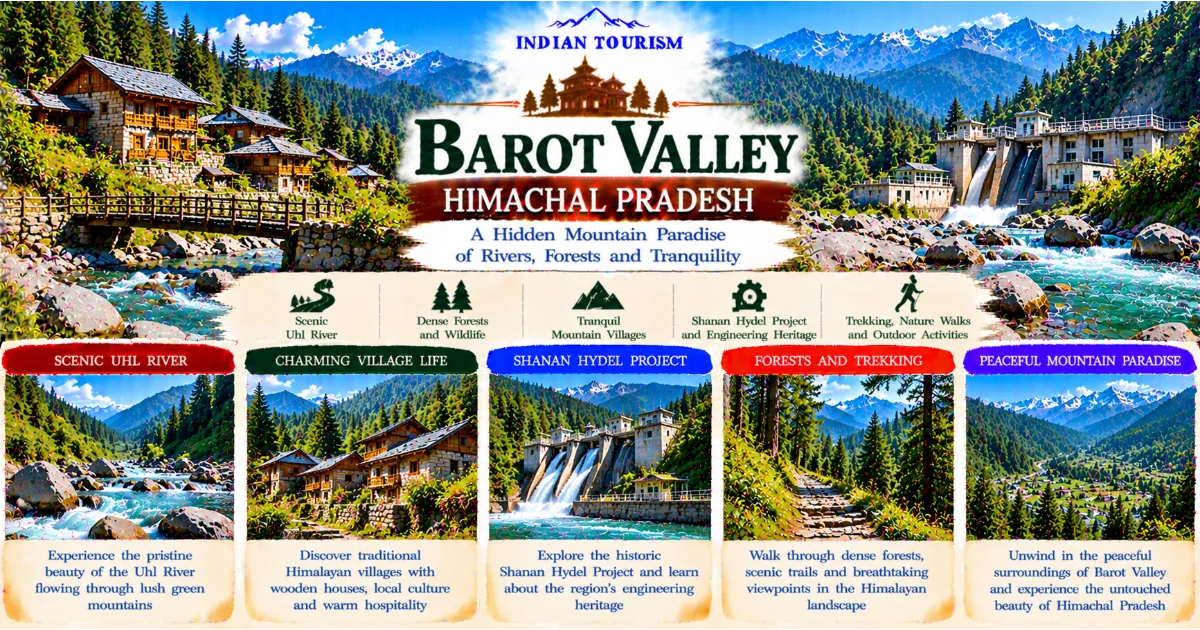
Discovering the Quiet Charm of Barot Valley
Hidden among the mountains of Himachal Pradesh, Barot Valley is a destination for travellers who want to experience the Himalayas beyond crowded hill stations and commercial tourist centres. Known for its forested hills, the Uhl River, traditional villages, mountain roads and peaceful surroundings, Barot offers a combination of natural scenery, outdoor exploration and rural life. Its appeal lies in its relatively relaxed atmosphere and the opportunity to enjoy the mountains at a slower pace.
Located in the Mandi district region, Barot is a small mountain settlement associated with the Uhl River valley. The surrounding landscape includes steep slopes, pine and deodar forests, cultivated patches, scattered homes and winding roads. The river flows through the valley, creating a scenic environment that attracts photographers, nature enthusiasts, anglers where permitted, hikers and travellers seeking a quiet retreat.
Barot also has an interesting connection with the history of water management and hydroelectric development in the region. The area is associated with the Shanan Hydel Project, an important early hydroelectric undertaking that helped shape the local landscape and infrastructure. This industrial heritage sits alongside the natural scenery, giving the destination an additional dimension beyond its forests and river.
Unlike larger tourist centres, Barot has a limited commercial environment. Visitors will not find the same range of shops, entertainment venues and accommodation choices available in major hill stations. Instead, the experience is shaped by village life, small guesthouses, local food, mountain walks and the surrounding landscape. Planning transport, meals and accommodation ahead of time is therefore useful.
Barot can also form part of a wider journey through the Mandi region and neighbouring mountain destinations. Travellers may combine it with other villages, forest routes and scenic drives, depending on available time and road conditions. However, mountain roads can be affected by heavy rainfall, landslides, snow and maintenance work, so flexibility is essential.
For travellers seeking a quieter side of Himachal Pradesh, Barot Valley offers an opportunity to experience a mountain landscape where river scenery, local communities and the history of regional development come together.
Where Is Barot Valley Located?
Barot is situated in the Mandi district region of Himachal Pradesh, in the western Himalayas. It lies in a mountainous valley associated with the Uhl River and is surrounded by forested slopes and scattered settlements.
The village is connected by mountain roads to other parts of the state. The route passes through winding sections, bends and areas where the terrain rises sharply above the valley. Travel times depend on the starting point, road conditions, weather and traffic, so visitors should allow additional time for delays.
Barot's geographical setting gives it a character different from the more urbanised hill stations. The settlement is relatively small, and the surrounding mountains remain central to the visitor experience. The river and forested slopes are prominent features, while local homes and agricultural areas demonstrate how people have adapted to the landscape.
The wider region has connections with other mountain communities and historic routes. Roads and paths have long played an important role in linking settlements that are separated by steep terrain. Today, these routes make it possible for visitors to explore Barot, although some sections require careful driving.
Travellers should decide whether to visit Barot as a day trip or stay overnight. A day trip may be suitable for those starting from a nearby base, but an overnight stay provides more time to appreciate the landscape and reduces the pressure of completing a long return journey on the same day.
Before travelling, check current road conditions, accommodation availability and local transport options. Remote mountain destinations can have fewer services than larger towns, particularly during quieter seasons.
The Uhl River: The Natural Heart of Barot
The Uhl River is one of the defining features of Barot Valley. Its flowing water, rocky banks and surrounding vegetation create much of the scenery that makes the destination attractive to visitors.
The river moves through a landscape shaped by mountain slopes, rainfall and seasonal water flow. Its appearance changes throughout the year. During periods of stronger flow, the water may move rapidly over rocks and channels, while conditions can look different during drier periods.
For visitors, the river provides opportunities for photography, quiet observation and walks along suitable paths. The sound of flowing water adds to the peaceful atmosphere, and the surrounding hills create a dramatic setting for landscape photography.
The Uhl River is also important to the wider ecosystem and local livelihoods. Rivers in mountain valleys support vegetation, provide water resources and form part of the ecological connections between forests, slopes and settlements. The relationship between water and human activity is especially visible in areas where hydroelectric development has played a role in the region's history.
Visitors should treat the river with caution. Clear water does not necessarily indicate safe swimming conditions. Currents may be strong, rocks can be slippery and water levels can rise quickly following heavy rainfall. Avoid entering the river unless an activity is explicitly permitted and appropriate safety arrangements are in place.
Children should be supervised closely near the water, and visitors should not attempt to cross the river at unapproved locations.
The river also needs protection from pollution. Do not throw rubbish into the water, wash vehicles beside it or use soaps and detergents along the banks. Keeping the river clean helps preserve both the landscape and the natural resources on which local communities depend.
The Shanan Hydel Project and Barot's Engineering Heritage
Barot is associated with the Shanan Hydel Project, an important part of the region's hydroelectric history. The project reflects the role that mountain rivers and elevation differences have played in the development of electricity generation in northern India.
Hydroelectric projects use the energy of moving water to generate electricity. In mountainous regions, differences in elevation can provide useful conditions for directing water through channels or conduits towards generating equipment. Such infrastructure often requires extensive engineering, including water management systems and access routes through difficult terrain.
The Shanan Hydel Project is associated with the wider Uhl River system and has contributed to the historical significance of the Barot area. Its presence gives visitors a reason to look beyond the natural scenery and consider the relationship between engineering, energy production and mountain geography.
The history of hydroelectric development in the region also demonstrates how infrastructure can transform a remote landscape. Roads and other facilities built to support major projects may later become important for residents and visitors.
However, visitors should distinguish between accessible public areas and operational infrastructure. Hydroelectric facilities can contain restricted zones, hazardous water channels, steep drops and machinery. Do not enter fenced areas or attempt to explore tunnels, channels or other structures without authorised access.
Those interested in engineering history should seek information from reliable local or official sources and respect any restrictions on photography or entry.
Barot's industrial heritage adds a distinctive element to its identity. It is a place where the natural power of a mountain river intersects with the history of modern infrastructure.
The Forests Around Barot Valley
Forests are an important part of the landscape surrounding Barot. The mountain slopes support vegetation that varies according to elevation, moisture, soil and exposure. These forests create the green backdrop that defines much of the valley's visual appeal.
Pine and deodar are characteristic trees of many parts of Himachal Pradesh, although the exact vegetation varies from one location to another. Forested slopes provide habitat for birds and other wildlife, contribute to soil stability and influence the movement of water through the landscape.
Walking through suitable forest areas allows visitors to experience the region at a slower pace. The changing light between trees, the sound of birds and the views through gaps in the vegetation can make even a short walk rewarding.
However, forest trails differ in length and difficulty. Some may be suitable for casual walkers, while others require better fitness, local knowledge and appropriate equipment. Visitors should seek current information before attempting unfamiliar routes.
Forests are vulnerable to careless tourism. Litter, trampling, unauthorised fires and disturbance to wildlife can affect the environment. Visitors should carry rubbish out, remain on established paths and follow local restrictions on fire and camping.
Dry periods can increase the risk of forest fires. Never discard burning materials or leave a fire unattended, and avoid lighting fires unless explicitly permitted in a suitable designated location.
The forests around Barot are not simply scenery for photographs. They are part of the ecological foundation of the valley and deserve careful protection.
The Mountain Villages Around Barot
The wider Barot region includes small mountain settlements where homes, agricultural areas and local roads follow the contours of the terrain. These villages provide an opportunity to understand the everyday life of communities living in a landscape shaped by steep slopes and seasonal weather.
The geography influences almost every aspect of local life. Suitable land for cultivation and construction can be limited, while roads must follow narrow routes through valleys and along hillsides. Weather conditions influence travel, farming activities and access to services.
Village architecture often reflects local materials and building traditions. Timber and stone have historically played important roles in mountain construction, although modern materials are also used in contemporary homes and guesthouses.
Visitors who walk through accessible village areas may observe agricultural activity, household routines and local transport. These experiences can provide a deeper understanding of the region than a brief stop beside the river.
However, villages are living communities rather than open-air tourist attractions. Private homes, courtyards and agricultural fields should be treated respectfully. Ask permission before entering private property or photographing residents.
Visitors should also keep noise at a reasonable level, particularly near homes and during the evening. Roads and paths may be used by residents for everyday tasks, so avoid blocking access.
Supporting locally operated accommodation, food services and transport can help tourism contribute to village livelihoods. A respectful visit recognises both the beauty of the surroundings and the needs of the people who live there.
Trout Fishing and the Aquatic Environment
Barot and the wider Uhl River region are associated with trout fishing, making the area interesting for anglers. Cold mountain waters can provide suitable habitat for trout under the right environmental conditions, although fish populations and fishing opportunities depend on local factors.
Fishing is not an activity that should be undertaken without checking the rules. Permits, designated waters, seasonal restrictions, catch limits and permitted methods may apply. Regulations can change, so visitors should confirm current requirements through authorised local sources before fishing.
Responsible fishing also requires respect for the river ecosystem. Water quality, habitat conditions and the movement of aquatic species are important to the health of the river. Litter, pollution and careless handling of fish can cause harm.
Visitors who are new to fishing should seek guidance from a legitimate local provider where permitted. They should ask about licences, equipment, suitable locations and any conservation rules that apply.
Fishing should never involve blocking the river, damaging banks or disturbing other visitors and residents. All waste, including fishing line and packaging, must be carried away and disposed of properly.
Even for visitors who do not fish, the river provides an opportunity to learn about aquatic ecosystems. Observing the water and its surrounding habitat can be rewarding without engaging in an activity that requires special permissions.
Barot's relationship with fishing is one aspect of its outdoor appeal, but protecting the river must remain more important than the recreational experience.
Hiking and Walking Around Barot
Barot offers opportunities for walking through village areas, forested slopes and suitable paths around the valley. The experience varies according to the route, elevation, terrain and weather.
Short walks can provide views of the river, surrounding hills and local settlements. Longer routes may involve steeper gradients and uneven surfaces, requiring better fitness and appropriate footwear.
Visitors should obtain current route information before setting out. Some paths may be used primarily by residents or may lead into areas where access is restricted. A local guide can help identify suitable routes and provide information about the surrounding landscape.
Walking in the mountains requires preparation. Carry enough water, suitable clothing, snacks and a charged phone. Tell someone about your route and expected return time if you plan a longer excursion.
Weather can change quickly. Rain may make trails slippery, while fog can reduce visibility. Avoid unfamiliar paths in poor conditions and turn back if the route becomes unsafe.
Visitors should also be aware of road traffic when walking beside mountain roads. Narrow sections may offer limited space for pedestrians, so remain alert and avoid walking around blind bends.
Nature walks are most rewarding when they allow time to appreciate the landscape rather than rushing to a particular point. Barot's quiet surroundings encourage visitors to observe the river, forests and village life at a comfortable pace.
Photography and Scenic Viewpoints
Barot Valley offers many opportunities for landscape photography. The Uhl River, forested slopes, mountain roads, village homes and changing cloud formations create a varied set of subjects.
Early morning may bring mist or soft light across the valley, while clear afternoons can reveal more detail in the surrounding mountains. Weather conditions change the appearance of the landscape, so photographers should remain flexible rather than expecting the same view throughout the day.
The river is a natural focal point, particularly where it curves through the valley or passes beneath bridges. Forested slopes provide depth, while village buildings can add a human element to landscape photographs.
Visitors should always choose safe places to stop. Do not stand in the middle of a road, block traffic or approach unstable riverbanks to obtain a better angle. Steep slopes and slippery rocks can create serious hazards.
Photographing infrastructure associated with hydroelectric facilities may be subject to restrictions. Follow posted instructions and do not enter restricted areas.
When photographing residents, ask permission and respect their decision. Avoid taking pictures through windows or into private courtyards.
A good photographic experience should not come at the expense of safety, privacy or the environment. Barot is best captured through patient observation and respectful exploration.
Best Time to Visit Barot Valley
Barot can offer different experiences throughout the year, but the best time depends on weather, road access and the activities planned.
Spring: March to April
Spring marks the transition from winter. Temperatures gradually become more comfortable, and the surrounding vegetation responds to the changing season.
This period may suit travellers interested in quiet walks and photography. Mornings and evenings can still be cold, so warm clothing remains important.
Summer: May to June
Summer is often a practical period for exploring Barot. Daytime conditions may be suitable for village walks, riverside observation and scenic drives.
The region can attract more visitors during school holidays and long weekends, so accommodation should be booked in advance if travelling at a busy time.
Monsoon: July to September
The monsoon can make the valley greener, but heavy rainfall may cause landslides, slippery trails and road disruptions. The river may also rise quickly.
Visitors should check current weather and road information before travelling. Avoid riverbanks during high water and postpone excursions if conditions are unsafe.
Autumn: October to November
Autumn can provide cooler temperatures and clear periods that are favourable for photography and mountain views. The atmosphere may feel quieter after the main summer travel period.
Visitors should prepare for colder evenings and confirm accommodation availability before arrival.
Winter: December to February
Winter brings colder conditions, and higher areas may experience snow or ice. Road access can become difficult during severe weather, and some services may operate on limited schedules.
Travellers should confirm road status and carry suitable clothing. Avoid attempting snowy or icy mountain routes without appropriate experience and current local guidance.
For many visitors, late spring and early autumn offer a useful balance between scenery and accessibility. Summer can also be rewarding, provided travellers remain alert to monsoon-related risks.
How to Reach Barot Valley
Barot is reached primarily by road. The most suitable route depends on the starting point and current conditions.
By Road
Travellers can reach Barot through mountain roads connecting the wider Mandi region with the valley. The journey includes winding sections and steep gradients, so travel times may be longer than expected.
Drivers should check road conditions before departure, avoid rushing and allow additional time for delays. During heavy rain or snowfall, routes may become difficult or temporarily inaccessible.
If you are unfamiliar with mountain driving, consider hiring an experienced local driver rather than attempting challenging roads without preparation.
By Bus
Public transport may connect nearby towns and settlements with the Barot region, but schedules and direct services can vary. Confirm current bus timings and the final connection before travelling.
If the bus does not reach your accommodation, arrange onward transport in advance where possible.
By Train
Barot does not have a railway station. Visitors arriving by train must continue by road from a suitable station serving their broader itinerary.
By Air
There is no airport in Barot. Travellers arriving by air must arrange onward road transport from an airport that fits their route.
Because the final journey involves mountain roads, allow sufficient time between arrival and any fixed connection.
Local Transport
Local taxis and other transport services may be available for travel between the village and nearby locations. Confirm fares, return arrangements and the condition of the intended route before setting out.
Transport availability can be limited during quieter periods, so advance planning is particularly useful for visitors staying outside the main settlement.
Accommodation in Barot
Accommodation in Barot is generally more limited than in large tourist towns. Visitors may find guesthouses, homestays and smaller properties in the village and surrounding area, depending on the season.
A homestay can provide an opportunity to learn about local life and experience regional hospitality. Facilities vary, so visitors should confirm room arrangements, heating, hot water, meals and access before booking.
Some properties offer river or mountain views, while others are located closer to the road or village services. The most scenic property is not always the most convenient, particularly for travellers who do not have private transport.
Advance booking is advisable during weekends, holidays and popular travel periods. Visitors should also confirm check-in arrangements if arriving late, since some smaller properties may not have reception facilities throughout the night.
Travellers planning to explore nearby routes should ask hosts about current road conditions and suitable transport. Local knowledge can help visitors avoid unnecessary delays.
Visitors should respect household rules, maintain reasonable noise levels and keep shared spaces clean. Homestays are often family-run businesses, and considerate behaviour supports positive relationships between visitors and residents.
If accommodation options are limited on your chosen dates, consider staying in a larger nearby town and making a carefully planned trip to Barot.
Food and Local Culinary Experiences
Food in Barot reflects the wider traditions of Himachal Pradesh, with meals often based on grains, pulses, vegetables and seasonal ingredients. The range of dishes available depends on the establishment and the time of year.
Small guesthouses and homestays may provide home-style meals, while other options can be limited compared with larger tourist centres. Travellers should confirm meal availability before arrival, especially if reaching the village late in the day.
Visitors interested in regional cuisine can ask their hosts about local dishes and traditional preparations. Food customs vary across communities, so asking respectfully is often the best way to discover what is commonly eaten in the area.
Travellers with dietary requirements should communicate their needs clearly when booking. Carrying suitable snacks is useful for longer excursions, particularly where shops and restaurants may be far apart.
If you purchase food for a riverside picnic, carry all packaging and waste back with you. Food scraps should not be left along the river or in forested areas.
Supporting locally operated eateries and accommodation can help tourism benefit the community. A meal prepared by a local host can also provide a more personal introduction to the region's hospitality.
Barot for Families, Couples and Solo Travellers
Barot can appeal to different types of visitors, but the itinerary should reflect individual needs and the practical conditions of the valley.
For Families
Families may enjoy the river scenery, village walks and peaceful surroundings. Children should be supervised closely near water, roads and steep terrain.
Parents should choose walks according to the ages and abilities of family members. Avoid assuming that every riverside path is suitable for young children or people with limited mobility.
For Couples
Couples may appreciate the quiet atmosphere, mountain views and opportunities for relaxed walks. An overnight stay can provide more time to enjoy the valley without rushing through a long road journey.
Visitors planning a winter trip should confirm heating, road access and accommodation availability in advance.
For Solo Travellers
Solo travellers can explore accessible village areas and enjoy the natural surroundings, but they should plan transport and walking routes carefully.
Share your plans with someone before undertaking longer walks, avoid unfamiliar trails in poor weather and confirm return transport before setting out.
For Nature Enthusiasts
The forests, river and mountain landscape offer opportunities for photography and nature observation. Visitors should avoid disturbing wildlife and follow local guidance on access.
For History and Engineering Enthusiasts
Barot's connection with hydroelectric development provides an additional area of interest. Visitors should seek reliable information and respect restrictions around operational infrastructure.
A Suggested Two-Day Barot Valley Itinerary
A two-day trip allows visitors to experience Barot at a relaxed pace while reducing the pressure of completing a long journey and several activities in a single day.
On the first day, travel to Barot and settle into accommodation. After arrival, explore accessible parts of the settlement, observe the Uhl River from a safe location and enjoy the surrounding mountain scenery. If time permits, learn about the region's connection with hydroelectric development from reliable local sources.
Spend the evening at your accommodation or a local establishment. Confirm road conditions and any planned walking routes for the following day.
On the second day, begin with a relaxed walk through suitable village or forest paths. Take time to observe the landscape and photograph the river from safe viewpoints. If fishing is part of your plan, confirm that the activity is permitted and that all necessary authorisations are in place.
Enjoy a meal before beginning the return journey. Allow sufficient time for mountain roads and possible delays.
The itinerary should remain flexible. If weather conditions deteriorate, shorten the walk or postpone the excursion. A slower visit is more rewarding than attempting to follow a fixed schedule in unsafe conditions.
A Three-Day Itinerary for a Deeper Experience
A three-day stay provides additional time to explore the village and surrounding landscape without rushing.
On the first day, arrive and settle into accommodation. Spend the afternoon exploring accessible areas of Barot, observing the river and learning about the settlement's history.
On the second day, focus on nature and outdoor exploration. Choose a suitable walk based on your fitness and current trail conditions. Visitors interested in the river can spend time observing the aquatic environment from safe locations.
On the third day, explore another nearby settlement or scenic route if road conditions permit. Ask local hosts for recommendations and confirm transport arrangements before departure.
This longer itinerary also provides flexibility if rain or other weather conditions affect the planned activities.
Travellers who want to visit additional destinations in the wider Mandi region should check travel times carefully. Mountain roads can make apparently short distances time-consuming, and it is better to explore fewer places thoroughly than rush through several locations.
Responsible Tourism in Barot Valley
Barot's natural environment and village character depend on responsible visitor behaviour. Tourism can support local livelihoods, but careless activity can damage the river, forests and surrounding communities.
Carry all rubbish to suitable disposal points. Do not leave plastic bottles, food wrappers or other waste along the river, roads or forest paths.
Respect the Uhl River and avoid polluting the water. Do not wash vehicles or use soaps and detergents beside the river.
Follow local rules for fishing, camping and outdoor activities. Confirm permits and restrictions before beginning any activity that may require authorisation.
Stay on suitable paths and avoid damaging vegetation. Do not enter restricted areas associated with hydroelectric infrastructure.
Respect private property, agricultural fields and local customs. Ask permission before photographing residents or entering courtyards.
Support locally operated accommodation, food services and transport providers where possible. Treat workers respectfully and agree on prices before using paid services.
Check weather and road conditions before travelling. If the river rises or the road becomes unsafe, change your plans rather than taking unnecessary risks.
Responsible tourism helps ensure that Barot remains a destination where natural beauty, local livelihoods and engineering heritage can be appreciated together.
Practical Travel Tips for Barot Valley
Carry layered clothing because temperatures can change quickly, especially in the morning and evening.
Wear suitable footwear for uneven paths and forest walks. Rain may make surfaces slippery, while winter conditions can affect road access.
Check current road information before departure and allow extra time for mountain travel.
Book accommodation in advance during popular periods and confirm meals, heating, hot water and transport arrangements.
Carry essential medication, drinking water and suitable snacks for longer excursions.
Download maps and important information before travelling through areas with unreliable mobile connectivity.
Share your plans with someone if you are undertaking a longer walk or travelling alone.
Stay away from fast-flowing water and avoid entering the river without appropriate safety arrangements.
Confirm current fishing regulations before attempting to fish, and respect any restrictions around hydroelectric infrastructure.
Carry rubbish out and avoid disturbing wildlife or damaging vegetation.
Conclusion: Why Barot Valley Deserves a Place on Your Himachal Pradesh Itinerary
Barot Valley is a rewarding destination for travellers who want to explore a quieter and less commercial side of Himachal Pradesh. Its flowing river, forested mountains, small villages and peaceful atmosphere create an experience that differs from the crowded streets of major hill stations.
The valley's appeal extends beyond natural scenery. Its connection with the Uhl River and the Shanan Hydel Project provides an opportunity to understand the role of mountain geography in the development of hydroelectric infrastructure. Village life, regional food and traditional building practices add further depth to the visitor experience.
A successful visit requires practical preparation. Accommodation and services are more limited than in larger towns, mountain roads can be affected by weather, and the river requires careful attention to safety. Checking current conditions and allowing enough time for travel make the journey more comfortable.
Barot is also a place where responsible tourism matters. The river and forests are important to the local environment, while the surrounding settlements are home to people whose everyday lives continue alongside tourism. Visitors can help protect the region by carrying out rubbish, respecting private property, following local rules and supporting legitimate local businesses.
For travellers exploring Himachal Pradesh, Barot Valley offers an opportunity to slow down and appreciate the relationship between nature, engineering history and mountain communities. Its greatest attraction is the balance between these elements, making it a worthwhile addition to a thoughtfully planned Himalayan journey.
#IndianTourism #BarotValley #HimachalPradesh #Mandi #UhlRiver #ShananHydelProject #HimalayanVillages #MountainTravel #NatureTourism #RiverValley #ExploreHimachal #ResponsibleTourism #HiddenHimalayas #IncredibleIndia
