
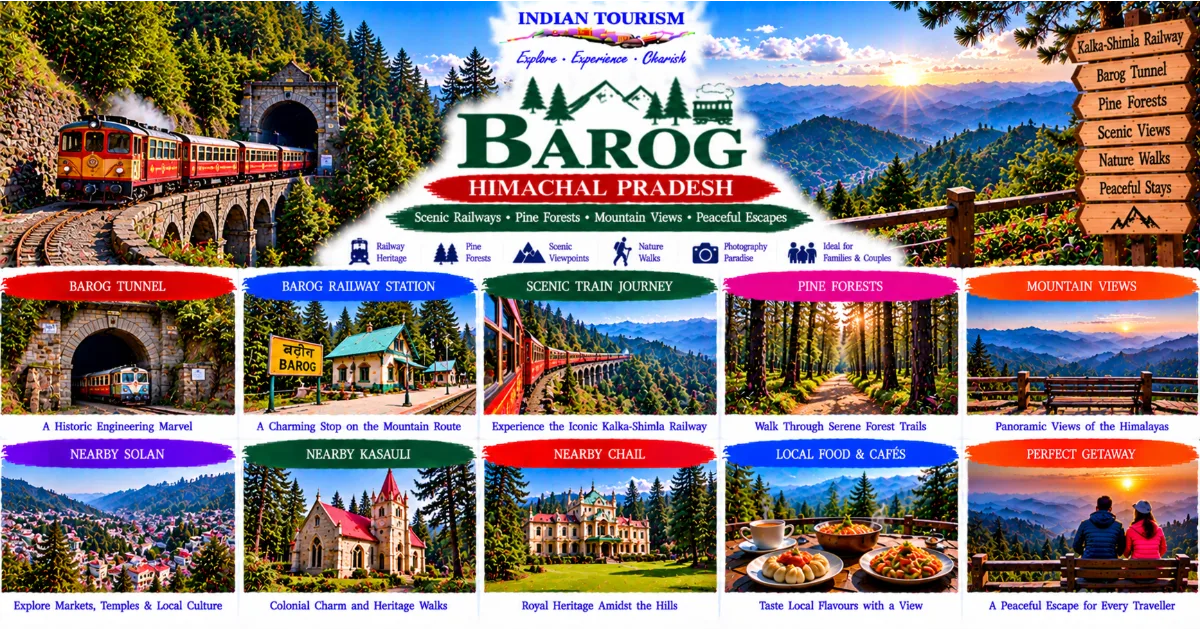
Discovering Barog, a Quiet Retreat in Himachal Pradesh
Barog is a charming mountain destination in the Solan district of Himachal Pradesh, known for its forested hills, peaceful atmosphere and connection with the historic Kalka-Shimla railway. Located along one of the most memorable railway routes in the Indian Himalayas, Barog attracts travellers who appreciate scenic journeys, railway heritage, nature walks and the slower rhythm of life in the mountains. Although it is less commercially developed than some of the state's better-known hill stations, its combination of natural beauty and historical significance makes it a rewarding place to explore.
For many travellers, Barog is first encountered during a journey on the Kalka-Shimla railway. The train passes through mountain scenery, tunnels, bridges and small settlements that reveal the engineering challenges involved in connecting the hills with the plains. Barog is particularly associated with one of the route's notable tunnels, making it an interesting destination for people who enjoy transport history and mountain engineering.
However, Barog is more than a railway stop. The surrounding landscape includes pine-covered slopes, winding roads, quiet neighbourhoods and viewpoints overlooking the hills. Visitors can spend time appreciating the scenery, enjoying a relaxed stay, exploring accessible public areas and learning about the region's development. The destination is well suited to travellers who prefer a calm retreat rather than a packed itinerary filled with commercial attractions.
Barog can also be included in a broader journey through the Solan district. Solan offers local markets, religious landmarks and agricultural traditions, while Kasauli is known for its colonial-era architecture and forest walks. Chail provides royal heritage and mountain scenery. Combining these destinations can give travellers a more complete understanding of the cultural and natural diversity of Himachal Pradesh.
The experience in Barog changes with the seasons. Spring brings fresh vegetation, summer attracts visitors seeking cooler weather, the monsoon creates greener landscapes but can affect road conditions, autumn may provide pleasant weather for outdoor exploration, and winter brings colder temperatures in the surrounding hills. Snowfall is not guaranteed on any particular date, so visitors should check current forecasts before travelling.
This guide explores Barog's railway heritage, natural attractions, seasonal experiences, nearby destinations, local food, accommodation and practical travel advice. It also explains how to enjoy the region responsibly while respecting the environment and the communities that call these hills home.
Understanding Barog's Location and Landscape
Barog is situated in the Solan district of Himachal Pradesh, within the lower Himalayan region. Its position along the Kalka-Shimla railway and the road network connecting the plains with Shimla makes it a convenient destination for travellers exploring the western Himalayan foothills.
The landscape consists of forested slopes, mountain ridges, small settlements and winding roads. Pine trees contribute to the area's distinctive appearance, while changes in elevation create varied views across nearby hills and valleys. The natural setting gives Barog a peaceful character that appeals to visitors seeking a break from busy urban environments.
Unlike larger hill stations, Barog does not have a dense concentration of major tourist attractions in one central area. Its appeal lies in the combination of railway history, forest surroundings and quiet mountain scenery. Visitors should therefore approach the destination with an interest in exploring slowly rather than expecting a long list of large attractions.
The terrain is hilly, and walking distances may be more demanding than they appear on a map. Some routes include slopes, uneven surfaces or limited pedestrian space. Travellers should consider their fitness and the weather before choosing a walking route.
Barog is also part of a living landscape that includes homes, agricultural areas, railway infrastructure and local businesses. Visitors should respect private property and avoid entering restricted railway or forest areas. Not every path visible from a road is a public walking trail.
Weather conditions can change quickly in the mountains. Rain can make paths slippery, fog can reduce visibility, and winter mornings and evenings can be cold. Visitors should carry suitable clothing and check road conditions before setting out.
Understanding Barog's geography helps travellers appreciate its character. The destination is not simply a stop on the railway route. It is a mountain settlement whose identity is shaped by forests, transport history and the everyday life of the surrounding region.
The Kalka-Shimla Railway: A Journey Through Himalayan Engineering
The Kalka-Shimla railway is one of the defining features of Barog's tourism identity. This historic narrow-gauge railway connects Kalka in the plains with Shimla in the hills, passing through a landscape of steep slopes, tunnels, bridges and mountain settlements.
The railway was developed during the British colonial period to improve access to Shimla, which became an important administrative and summer destination. Building a railway through the mountainous terrain required careful planning, considerable engineering effort and solutions to the challenges posed by steep gradients and changing elevations.
The line is particularly memorable because of the way it follows the contours of the hills. Rather than cutting directly through the landscape, the railway uses a carefully designed route that includes curves, bridges and tunnels. The journey provides passengers with changing views of forests, valleys, villages and mountain slopes.
For visitors, the railway is both a transport connection and a heritage experience. Travelling on it offers an opportunity to observe the relationship between engineering and geography. The slow movement through the hills allows passengers to appreciate details that may be missed when travelling by road.
Barog has a special association with the railway because of its tunnel and station. The settlement provides a natural stopping point for travellers interested in the history of the line, although the exact experience depends on train schedules and the time available.
The railway is recognised for its historic and engineering significance. Its preservation helps maintain an important part of India's transport heritage and supports tourism in the surrounding region.
Visitors should remember that the railway remains an operational transport system. Tracks, tunnels, bridges and railway facilities are not unrestricted tourist areas. Travellers must never walk on the tracks, enter tunnels on foot or approach railway infrastructure for photographs. The railway should be experienced from permitted passenger areas and authorised public locations.
For railway enthusiasts, photographers and history lovers, the Kalka-Shimla line offers an unusual way to experience the Himalayas. Barog provides an opportunity to connect the journey with the wider story of mountain settlements and the development of transport in Himachal Pradesh.
Barog Tunnel: The Landmark That Defines the Destination
Barog Tunnel is one of the most recognisable landmarks associated with the destination. It forms part of the Kalka-Shimla railway and is often discussed in accounts of the engineering challenges involved in building the line through the hills.
The tunnel is notable for its length and its place in the history of the railway. It demonstrates how engineers had to work with difficult terrain to create a route capable of carrying trains through the mountainous landscape.
The tunnel is also associated with stories about the original railway construction. Historical accounts commonly describe difficulties encountered during the early work and the eventual completion of the tunnel. Visitors interested in these stories should distinguish documented history from popular retellings, which may vary in their details.
The tunnel remains part of an operational railway. It is not a place for unauthorised walking or independent exploration. Visitors should never enter the tunnel on foot, stand on railway tracks or attempt to photograph trains from unsafe locations.
The safest way to experience the tunnel is from a train travelling along the railway or from an authorised public area where access is permitted. Travellers planning to photograph the railway should check local rules and avoid any location that puts them or railway operations at risk.
The tunnel's historical importance extends beyond its physical structure. It represents the technical effort required to connect remote mountain areas with the plains and the role of transport in shaping the region's development.
Barog Tunnel also illustrates how infrastructure can become part of a destination's cultural identity. The railway is not simply a means of reaching Shimla. It is a historic landmark that continues to attract travellers interested in engineering, history and the experience of travelling through the hills.
Barog Railway Station: A Memorable Stop on the Mountain Route
Barog Railway Station is an important part of the destination's appeal. Set among the hills, it provides a scenic stop on the Kalka-Shimla railway and gives travellers an opportunity to appreciate the railway's relationship with the surrounding landscape.
The station is associated with the traditional atmosphere of mountain railway travel. Its setting and connection with the historic route make it particularly interesting for visitors who enjoy heritage transport and the history of railway development in India.
Travellers arriving by train should check current schedules and plan their stop according to the service they are using. Not every journey will allow a long break, and train arrangements may differ depending on the service and season.
Visitors should follow station rules and remain within permitted passenger areas. Railway platforms and tracks are operational spaces, and safety instructions must be followed at all times. Travellers should never cross tracks except at authorised crossings or enter restricted facilities.
The station can also serve as a starting point for learning about the wider region. Visitors may use the stop to appreciate the landscape, observe the railway's engineering features from safe areas and understand how rail transport connects smaller mountain settlements.
Photography can be rewarding, especially when the station and surrounding hills are visible in clear weather. However, visitors should avoid obstructing passengers, railway staff or station operations.
Barog Railway Station offers a different kind of tourism experience from a conventional viewpoint or commercial attraction. Its appeal lies in its connection with a living heritage system and the opportunity to experience a historic railway in its natural mountain setting.
Pine Forests and the Natural Beauty of Barog
The forests around Barog are among its most attractive features. Pine-covered slopes create a distinctive mountain landscape, providing a peaceful setting for scenic drives, outdoor photography and suitable nature walks.
The forest environment changes throughout the year. Spring brings fresh vegetation, summer provides greener surroundings, autumn offers cooler weather and changing light, and winter may bring frost or occasional snowfall in suitable conditions. Each season creates a different atmosphere, although weather and visibility can vary from day to day.
Pine forests contribute to the ecological health of the region. Trees provide habitat for wildlife, help protect soil and form part of the wider mountain environment. The forests are also important to the character of the destination, creating the quiet atmosphere that many visitors seek.
Travellers can appreciate the scenery from permitted public roads, accessible viewpoints and authorised walking routes. Not every track through the forest is a public trail, and some routes may cross private land or enter restricted areas.
Visitors should wear suitable footwear and consider the terrain before walking. Rain can make paths slippery, while fog may reduce visibility. Travellers unfamiliar with the area should seek reliable local guidance before undertaking longer walks.
The forest should be treated as a living ecosystem rather than simply a backdrop for photographs. Visitors should avoid damaging vegetation, collecting plants or disturbing wildlife. Rubbish should never be left along paths or roadsides.
Fire safety is particularly important in wooded areas. Visitors should never start unauthorised fires or discard burning materials. Any local restrictions concerning smoking, camping or open flames should be followed.
Barog's forests offer a simple but rewarding experience. A quiet walk, time spent observing the trees or a scenic drive through the hills can provide a meaningful connection with the natural environment.
Scenic Viewpoints and Mountain Photography
Barog and its surrounding hills offer opportunities to enjoy mountain views and photograph the landscape. The combination of forested slopes, valleys, winding roads and railway heritage creates a variety of subjects for visitors.
The quality of the views depends on weather and visibility. Clear days may reveal distant ridges and valleys, while mist and cloud can create a quieter atmosphere. Travellers should not assume that every visit will provide uninterrupted views of the mountains.
Morning and late afternoon may offer pleasant light for photography, depending on the season and weather. The changing light can highlight the contours of the hills and create different textures in the forest.
Visitors should use safe and permitted viewpoints. Stopping a vehicle on a sharp bend, standing in the roadway or approaching an unprotected edge for a photograph can create serious risks. Drivers should stop only where parking is safe and permitted.
Railway photography requires particular care. Tracks, tunnels and bridges are not public walking routes. Visitors should never enter railway infrastructure or attempt to photograph trains from unsafe locations. Photographs should be taken only from permitted areas.
Visitors should also respect local residents. Ask permission before taking close-up photographs of people or private properties, and avoid intruding on homes or workplaces.
A camera or mobile phone can capture the scenery, but travellers should also take time to appreciate the surroundings without rushing from one photo opportunity to another.
Barog is particularly rewarding for photographers who enjoy quiet landscapes rather than heavily staged tourist scenes. Its forests, railway heritage and mountain atmosphere offer subjects that reflect the character of the region.
Nature Walks and Outdoor Exploration
Barog is suitable for travellers who enjoy gentle outdoor exploration. Its forested surroundings and mountain roads provide opportunities for walking and observing the landscape, provided visitors choose appropriate routes and follow local access rules.
The suitability of a walk depends on the route, weather and individual fitness. Some paths may involve slopes, uneven surfaces or limited signage. Visitors should ask locally about suitable public routes before setting out.
Comfortable footwear with a good grip is recommended. Travellers should carry drinking water, wear clothing appropriate to the season and allow enough time to return before dark.
Short walks can be rewarding for families and visitors who do not want a demanding activity. Longer walks should be undertaken only when travellers understand the terrain and have sufficient time and preparation.
Visitors unfamiliar with the area should avoid following unmarked tracks deep into the forest. Local guidance can help identify permitted routes and areas that should be avoided.
Nature walks offer opportunities to notice birds, vegetation and changes in the landscape. Wildlife sightings are unpredictable, and visitors should not approach or feed animals.
Families should supervise children near roads, steep slopes and uneven ground. Travellers with mobility limitations should check the gradients and surfaces before beginning a walk.
Outdoor exploration should also be environmentally responsible. Visitors should stay on permitted paths, avoid littering and refrain from damaging plants or disturbing wildlife.
Barog's walking experiences are best approached at a comfortable pace. The goal is not necessarily to cover a long distance but to appreciate the forest environment and enjoy the peaceful atmosphere of the hills.
Barog as a Quiet Weekend Escape
Barog can be a good choice for travellers seeking a quiet weekend away from the busy routines of city life. Its forest surroundings, railway heritage and relaxed atmosphere make it suitable for visitors who prefer a slower pace.
A weekend in Barog does not need to revolve around a long list of attractions. Visitors can spend time appreciating the railway, enjoying a scenic walk on an appropriate route, relaxing at their accommodation and exploring the surrounding hills.
The destination may appeal to couples looking for a peaceful break, families interested in a short mountain holiday and railway enthusiasts who want to experience the Kalka-Shimla route. Travellers who enjoy photography may also appreciate the forest scenery and changing light.
Barog is less suitable for visitors who expect extensive nightlife, large shopping centres or a dense concentration of commercial entertainment. Its appeal lies primarily in the landscape and the experience of slowing down.
Visitors should choose accommodation according to their preferences. Some may prefer a property close to transport connections, while others may want a quieter setting among the hills. The exact location matters because walking distances and road access can be challenging in mountainous terrain.
Weekend traffic and accommodation demand may increase during popular holiday periods. Booking ahead can help visitors find a suitable property and plan transport.
A relaxed schedule allows travellers to adapt to weather and local conditions. If rain makes walking uncomfortable, visitors can focus on the railway heritage or enjoy the surroundings from a sheltered location.
Barog's value as a weekend destination comes from its simplicity. It offers an opportunity to experience the Himalayas without requiring an intensive sightseeing plan.
Nearby Solan: Markets, Temples and Local Culture
Solan is the main town in the surrounding district and can be combined with Barog for a broader exploration of the region. It offers local markets, religious landmarks and insight into the agricultural economy of Himachal Pradesh.
Shoolini Mata Temple is one of Solan's important religious landmarks, while Jatoli Shiva Temple is another notable attraction in the wider area. Visitors interested in religious heritage should follow local customs and confirm access arrangements before travelling.
Solan is also known for its association with mushroom cultivation and horticulture. The town's markets provide opportunities to observe everyday commercial activity and discover seasonal produce.
Travellers can use Solan as a place to enjoy a meal, purchase everyday supplies or learn about the area's agricultural identity. The town offers a different experience from Barog's quiet forest setting.
Visitors should allow sufficient time for the road journey between destinations and check current traffic conditions. A flexible itinerary is useful during the monsoon and winter, when weather can affect travel.
Combining Barog and Solan provides a balanced experience of the district. Barog offers railway heritage and forest scenery, while Solan adds religious traditions, local markets and agricultural history.
Nearby Kasauli: Colonial Architecture and Forest Walks
Kasauli is another destination that can be included in a wider journey through the Solan district. It is known for its colonial-era buildings, pine forests, scenic viewpoints and walking routes.
Visitors may explore the historic centre and appreciate landmarks such as Christ Church from permitted public areas. Gilbert Trail is associated with the town's outdoor experience, although access and trail conditions should be checked before setting out.
Kasauli's atmosphere is different from Barog's railway-focused identity. It is often chosen for heritage walks and a quiet retreat among the trees, while Barog attracts visitors interested in the historic railway and its mountain setting.
Travellers should confirm access requirements for attractions such as Monkey Point, where local rules may restrict entry. The destination's cantonment environment means that not every area is open to unrestricted tourist access.
The road journey should be planned according to current conditions and the time available. Visitors should avoid attempting too many destinations in one day, especially during periods of heavy traffic.
Combining Barog and Kasauli can provide variety for travellers who enjoy history and nature. The two destinations offer different ways to experience the landscape and heritage of Himachal Pradesh.
Nearby Chail: Royal Heritage and Forested Hills
Chail is a well-known destination in Himachal Pradesh associated with Chail Palace, the cricket ground linked with the former royal establishment of Patiala and surrounding pine and deodar forests.
For travellers based in or around Barog, Chail can be considered as part of a longer regional itinerary. It offers a combination of royal history, sporting heritage and mountain scenery that differs from Barog's railway heritage.
Visitors interested in Chail Palace should confirm current access arrangements and opening details. The cricket ground may also have restrictions, so visitors should not assume that every part of the site is open to the public.
The forests around Chail provide opportunities for suitable nature walks and photography where access is permitted. Visitors should respect private land and follow local instructions.
Travel between destinations should be planned carefully. Mountain roads can take longer than expected, and traffic, rain or fog may affect journey times.
Combining Chail and Barog is best suited to travellers with enough time to appreciate both destinations. A longer itinerary allows visitors to experience different aspects of the region's history, transport heritage and natural landscape.
Best Time to Visit Barog
Barog can be visited throughout much of the year, but the best time depends on personal preferences and planned activities.
Spring brings fresh vegetation and can be pleasant for sightseeing, railway travel and outdoor exploration. Daytime conditions may be comfortable, although mornings and evenings can remain cool.
Summer attracts visitors seeking a break from the heat of the plains. Barog's mountain setting and forest surroundings can make it a pleasant destination for a short holiday. Popular weekends may bring more visitors, so booking accommodation in advance is advisable.
The monsoon creates greener scenery but also introduces travel challenges. Heavy rain can make paths slippery, reduce visibility and affect mountain roads. Visitors should check current forecasts and road advisories before setting out.
Autumn often offers cooler weather and opportunities for scenic drives, photography and walks. It may appeal to travellers who prefer a quieter visit without depending on snow-related activities.
Winter brings cold temperatures, particularly during the morning and evening. Visitors should carry warm clothing and confirm heating arrangements at their accommodation. Frost or occasional snowfall may occur in suitable conditions in the surrounding hills, but snow is not guaranteed on any particular date.
Railway travel should be planned around current train schedules. Visitors should confirm service availability and allow enough time for onward transport.
The best time to visit depends on whether travellers prioritise outdoor exploration, railway heritage or a quiet retreat. Checking the current forecast shortly before departure is more reliable than relying on seasonal assumptions.
How to Reach Barog
Barog is accessible by road and rail, making it convenient for travellers exploring the Solan district and the wider Shimla region.
By Rail
The Kalka-Shimla railway serves Barog and provides one of the most distinctive ways to reach the destination. Travellers can experience the historic narrow-gauge line and enjoy the mountain scenery along the journey.
Train schedules and service availability can vary, so visitors should confirm current timetables and ticket arrangements before travelling. The length of a stop at Barog depends on the service and itinerary.
Travellers should plan onward transport if their accommodation is not within comfortable walking distance of the station. The terrain is hilly, and a short distance on a map may involve a steep route.
By Road
Road travel is another practical way to reach Barog. Visitors can use private vehicles, taxis or available bus services to reach the wider area.
The roads pass through mountainous terrain and may include sharp bends and steep sections. Journey times can vary according to traffic, weather and road conditions.
Travellers driving themselves should remain cautious, especially during rain and fog. Parking arrangements should be confirmed with the accommodation provider.
By Air
Visitors arriving by air can consider airports serving the wider region, including Chandigarh, depending on current flight availability and their starting point. An onward road journey is required to reach Barog.
Flight schedules and route availability can change, so travellers should confirm current services before booking. The full journey time should include the road transfer through the hills.
Getting Around Barog
Barog is best explored through a combination of walking and road transport. Some areas around the station may be accessible on foot, while other attractions and accommodation properties may require a taxi or private vehicle.
The terrain is hilly, so visitors should check walking distances and gradients before setting out. Roads may have limited pedestrian space, and not every visible route is a suitable public walking path.
Taxis can provide flexibility for visiting nearby towns and attractions. Visitors should agree on fares, waiting charges and planned stops before beginning an excursion.
Railway infrastructure must be treated carefully. Tracks, tunnels, bridges and operational railway facilities are not public walking areas. Visitors should follow station rules and use authorised access routes.
Families and travellers with mobility limitations should consider slopes, steps, road surfaces and transport arrangements before choosing activities.
A flexible itinerary is helpful because weather and traffic can affect travel times. Grouping nearby attractions together can reduce unnecessary journeys and leave more time to enjoy the scenery.
Where to Stay in Barog
Accommodation in and around Barog includes hotels, guesthouses, resorts and homestays. The best choice depends on budget, transport preferences, comfort requirements and the type of holiday planned.
Some properties offer forest views and a quiet setting, while others are closer to transport connections and local services. Visitors should confirm the exact location before booking, particularly if they intend to travel by train and do not plan to hire a vehicle.
Travellers seeking a peaceful retreat may prefer accommodation among the surrounding hills. Those planning frequent excursions to Solan, Kasauli or other destinations may benefit from convenient road access.
Winter visitors should ask about heating, hot water and road access during cold weather. Facilities vary between properties, so visitors should confirm what is included in the quoted price.
Meal availability should also be checked. Some properties have restaurants, while others may require guests to arrange meals in advance. Travellers staying in quieter locations should consider how they will reach food outlets.
Homestays can provide a more personal experience and opportunities to learn about local food and everyday life. Guests should communicate arrival times and dietary requirements clearly.
Booking ahead is advisable during popular weekends and holidays. Visitors should review cancellation policies, parking arrangements and additional charges before confirming a reservation.
Choosing accommodation according to the planned activities can make the visit more comfortable. Barog is best enjoyed when transport arrangements and daily plans are realistic.
Food and Local Dining in Barog
Food options in Barog may be more limited than in larger towns, so visitors should consider meal arrangements when choosing accommodation and planning excursions. Hotels, guesthouses and local eateries may provide familiar Indian meals, snacks and hot beverages, although the range varies by location.
Travellers interested in regional Himachali cuisine can ask about traditional dishes available locally. Siddu, a wheat-based preparation associated with parts of Himachal Pradesh, is one regional dish worth asking about. Dham is a festive meal tradition found in different regional forms, although availability varies and not every restaurant serves it.
Visitors may also find simple North Indian meals and hot drinks that are welcome after a walk in cool weather. Those planning longer excursions should carry drinking water and suitable snacks if food outlets may be limited along the route.
Travellers should check menu prices before ordering and communicate dietary restrictions or food allergies clearly. If staying in a remote property, it is useful to confirm whether meals need to be arranged in advance.
Solan offers a wider range of shops and restaurants and may be a useful stop for visitors who want additional dining options.
Food packaging should be disposed of responsibly. Visitors should never leave rubbish along railway platforms, forest paths, roadsides or scenic viewpoints.
Dining in Barog can be a relaxed part of the mountain experience. A warm meal after exploring the railway or surrounding forests provides an opportunity to rest and enjoy the quiet atmosphere.
Shopping and Local Products
Barog is not primarily known as a shopping destination. Its main attractions are railway heritage, forest scenery and a peaceful mountain environment. Visitors may find small shops selling everyday goods, snacks and selected souvenirs, but the range can be limited.
Travellers interested in a wider selection of products can explore markets in Solan or nearby towns. These markets may offer clothing, packaged food, household goods and selected regional products.
Visitors should check the quality and origin of products before making expensive purchases. Responsible shopping means supporting legitimate local businesses and paying fairly for genuine goods.
For food products, travellers should check freshness, packaging and storage conditions before buying items to carry home.
Visitors should avoid purchasing products made from protected wildlife or materials whose origin is unclear. A receipt is useful for expensive purchases.
Shopping can complement a visit, but it should not be the main expectation. Barog's appeal lies in the opportunity to experience a historic railway, appreciate the forested hills and enjoy a quieter side of Himachal Pradesh.
A Suggested Two-Day Barog Itinerary
A two-day visit allows travellers to experience Barog's railway heritage and natural surroundings without rushing.
On the first day, arrive by road or rail and settle into the accommodation. If travelling on the Kalka-Shimla railway, allow time to appreciate the journey and the mountain scenery. Visit the station area while following all railway safety rules.
Learn about Barog Tunnel and its connection with the historic railway. The tunnel should only be experienced from a train or an authorised public location. Do not enter railway infrastructure on foot.
Later, enjoy a suitable walk or scenic outing in an accessible public area. Choose the route according to weather and fitness, and allow enough time to return before dark.
Finish the day with a relaxed meal and time to enjoy the peaceful mountain setting.
On the second day, consider an excursion to Solan, where visitors can explore Shoolini Mata Temple, local markets and other cultural attractions. Travellers interested in heritage architecture may instead choose Kasauli, subject to road conditions and the available time.
Those with additional time can consider Chail or other destinations in the wider district. Travel times should be checked carefully, and visitors should avoid trying to cover too many places in one day.
Families should include rest breaks and choose activities suitable for all members. Visitors with mobility limitations should check the terrain and access arrangements before planning walks.
The itinerary should remain flexible, especially during the monsoon and winter. Weather and transport conditions may affect the schedule.
A relaxed approach allows visitors to appreciate Barog's distinctive combination of railway history and natural scenery.
Responsible Tourism in Barog
Barog's forests, railway heritage and mountain environment are central to its appeal. Responsible tourism helps preserve these features while supporting the local community.
Visitors should dispose of waste properly and avoid leaving plastic bottles, food packaging or other rubbish along forest paths, roadsides, railway platforms or viewpoints.
Railway safety is particularly important. Visitors must never walk on tracks, enter tunnels on foot or access bridges and railway facilities without authorisation. Trains operate on the route, and unauthorised access can put lives at risk.
Forest areas should be treated carefully. Travellers should remain on permitted paths, avoid damaging vegetation and refrain from disturbing wildlife. Unauthorised fires should never be started.
Visitors should respect private property and local residents. Ask permission before photographing people or entering residential and agricultural areas.
Supporting local accommodation providers, restaurants and guides can help tourism contribute to the regional economy. Visitors should pay agreed prices and treat workers respectfully.
Mountain roads require careful driving, especially during rain, fog and winter conditions. Travellers should follow official advisories and avoid unsafe journeys.
Responsible tourism also means respecting the quiet character of the destination. Keeping noise under control and avoiding litter helps preserve the peaceful atmosphere that attracts visitors.
Small actions can make a meaningful difference. By protecting the railway environment, forests and local communities, travellers help ensure that Barog remains a rewarding destination for future visitors.
Is Barog Suitable for Families, Couples and Railway Enthusiasts?
Barog can suit a range of travellers, particularly those who enjoy railway heritage, nature and a quieter mountain environment.
Families may appreciate the scenic train journey and the opportunity to learn about mountain railway engineering. Parents should supervise children carefully around stations and roads and explain that railway tracks and tunnels are strictly off limits.
Couples may enjoy the peaceful atmosphere, forest surroundings and accommodation options that provide a quiet retreat. A relaxed itinerary with scenic views and time to rest can make Barog a rewarding short break.
Railway enthusiasts may find the destination particularly interesting because of its connection with the Kalka-Shimla railway and Barog Tunnel. Visitors can learn about the route's engineering history while experiencing the railway from permitted passenger areas.
Nature lovers can appreciate the pine forests and opportunities for suitable outdoor walks. Photographers may enjoy the combination of historic railway settings and mountain scenery, provided they follow safety and access rules.
Travellers seeking extensive nightlife, large shopping centres or a long list of commercial attractions may prefer to combine Barog with larger towns.
Visitors with mobility limitations should check the terrain, station access, accommodation facilities and walking distances before planning a visit.
Barog's greatest strength is its distinctive atmosphere. It offers a chance to experience the Himalayas through railway heritage, forest landscapes and a slower pace of travel.
Conclusion: Why Barog Deserves a Place on Your Himachal Pradesh Travel List
Barog is a rewarding destination for travellers who want to explore a quieter and historically distinctive part of Himachal Pradesh. Its association with the Kalka-Shimla railway, the notable Barog Tunnel, pine forests and peaceful mountain surroundings gives it a character different from many commercial hill stations.
The railway offers an opportunity to experience a remarkable historic transport route through the hills. The station and tunnel provide context for understanding the engineering effort involved in connecting Kalka with Shimla, while the surrounding forests create opportunities for scenic drives, photography and suitable nature walks.
Nearby Solan, Kasauli and Chail offer additional experiences, including religious heritage, colonial architecture, royal history and local markets. These destinations can be combined with Barog to create a varied journey through the Solan district.
The best time to visit depends on personal interests and weather conditions. Spring and summer can be pleasant for sightseeing and outdoor exploration, autumn may provide cooler conditions, and winter brings cold weather in the surrounding hills. The monsoon requires additional attention to road and walking safety.
Good planning makes the experience more comfortable. Confirm train schedules, choose accommodation according to transport needs and check current road conditions before travelling between destinations.
Responsible tourism is essential. Visitors should protect the forests, respect railway safety rules, avoid littering and support local businesses where appropriate.
For the Indian Tourism series, Barog demonstrates that a destination can be memorable because of its history, landscape and atmosphere rather than the number of commercial attractions it contains. It offers an opportunity to appreciate the relationship between engineering, nature and mountain life.
Whether you visit for the historic railway, the tunnel, the pine forests or a peaceful weekend among the hills, Barog offers a meaningful way to discover another side of Himachal Pradesh.
#IndianTourism #HimachalPradesh #Barog #BarogTourism #KalkaShimlaRailway #BarogTunnel #RailwayHeritage #MountainRailway #SolanDistrict #HimalayanTravel #PineForests #NatureWalks #MountainViews #ScenicTrainJourney #RailwayHistory #Solan #Kasauli #Chail #ResponsibleTourism #ExploreIndia
