
Discover the Quiet Charm of Barog
Himachal Pradesh is home to celebrated hill stations, snow-covered mountain villages, ancient temples, pine forests and winding roads that reveal breathtaking Himalayan landscapes. While destinations such as Shimla, Manali and Dharamshala attract visitors throughout the year, the state also has quieter places where travellers can enjoy the mountains at a slower pace. Barog is one such destination. Located in the Solan district, this small hill station offers forested slopes, fresh mountain air, scenic railway views and an atmosphere that feels removed from the rush of crowded tourist centres.
Barog is particularly appealing to travellers who want a short mountain escape without planning an elaborate itinerary. Its setting among pine and deodar trees, pleasant weather during much of the year and proximity to Solan, Kasauli and other destinations make it suitable for couples, families, photographers and nature lovers. The town is also associated with the historic Kalka to Shimla railway, one of the most memorable railway journeys in the Himalayan foothills. The railway line passes through a remarkable landscape of tunnels, bridges, steep slopes and small mountain settlements, giving Barog a special place in the region's travel story.
Unlike destinations known for large shopping streets, amusement activities or extensive nightlife, Barog offers a quieter experience. Visitors can spend their time walking through forested surroundings, enjoying views from their accommodation, exploring the railway heritage, tasting Himachali food and taking short excursions into the surrounding hills. The charm of the destination lies less in a long list of attractions and more in the quality of the experience. It is a place where a morning walk, a misty hillside or an evening spent watching the changing colours of the mountains can become the highlight of a trip.
Where Is Barog Located?
Barog is situated in Himachal Pradesh's Solan district, in the lower Himalayan region. Its location makes it accessible from the plains of northern India while still offering the landscape and climate associated with a mountain retreat. The surrounding terrain consists of wooded hills, deep valleys, winding roads and scattered settlements. Depending on the season and weather conditions, visitors may experience clear mountain views, soft morning mist, bright sunshine or clouds drifting across the slopes.
The town's position between the Kalka region and Solan makes it useful as both a destination in its own right and a stopping point during a wider Himachal Pradesh journey. Travellers heading towards Shimla may pass through the surrounding region by road or railway. Those who prefer a quieter holiday can choose to stay in Barog for a few nights and explore nearby places without changing accommodation every day.
Barog is not a large urban centre. Its appeal comes from its peaceful setting and its relationship with the surrounding landscape. Accommodation options may be located along hillsides or roads that offer views of forested slopes. Visitors should check the precise location of their chosen stay before booking because properties described as being in Barog may be some distance from the railway station or the main settlement.
The Story of Barog and Its Historic Railway
The Kalka to Shimla Railway
One of Barog's most distinctive features is its association with the Kalka to Shimla railway. Built during the British colonial period and opened in 1903, the narrow-gauge railway was designed to connect the plains with Shimla, which served as the summer capital of British India. Constructing a railway through the steep and uneven Himalayan foothills required considerable engineering effort. The route passes through numerous tunnels and over bridges while negotiating sharp curves and changing elevations.
Today, the railway is valued not only for its practical role but also for its heritage and scenic character. The journey gives travellers a view of the mountain landscape that is very different from travelling by road. Instead of moving quickly between towns, the train follows the contours of the hills, passing through forests, valleys and small settlements. The gradual movement and historic character of the route make the experience especially attractive to railway enthusiasts and travellers who enjoy slower forms of exploration.
The railway forms part of the UNESCO-listed Mountain Railways of India. Its historic engineering, distinctive landscape and continuing operation have made it an important part of the region's cultural identity. Barog is one of the most recognisable places along the route because of its long tunnel and its connection with the story of railway construction in the hills.
Barog Tunnel
The Barog Tunnel is a major landmark associated with the railway. It is among the best-known tunnels on the Kalka to Shimla route and is often remembered by visitors as one of the most interesting sections of the journey. The tunnel represents the technical challenges faced by the engineers and workers who constructed the railway through difficult terrain.
The tunnel is commonly associated with Colonel Barog, an engineer involved in its construction. The story traditionally told about the tunnel describes difficulties during the original excavation, when the two ends of the tunnel failed to align as intended. The tunnel's name is linked to the engineer, and the surrounding railway settlement also came to be known as Barog. As with many stories associated with historic infrastructure, details are sometimes retold differently, so visitors interested in the full engineering history can explore dedicated railway heritage material.
For travellers, the most memorable way to appreciate the tunnel is through a journey on the heritage railway. The experience of entering a long tunnel while travelling through the mountains is part of the route's appeal. Visitors should remember that the tunnel is an operational railway structure. It is not an ordinary walking attraction, and entering the tunnel on foot or standing on railway tracks is dangerous and should be avoided. The railway should be appreciated from permitted public areas and through an authorised train journey.
Top Attractions and Experiences in Barog
1. Barog Railway Station
Barog Railway Station is an excellent place to begin exploring the destination's railway heritage. The station reflects the character of the historic mountain railway, with its modest scale and mountain setting. Unlike large railway terminals in cities, the station is closely connected with the landscape around it. The hills, trees and railway tracks create an atmosphere that appeals to visitors who appreciate heritage architecture and old transport systems.
Travellers can enjoy the station's surroundings while respecting railway operations and access restrictions. It is a good place for photographs when conditions are safe and photography is permitted. The arrival or departure of a small mountain train can also become a memorable moment, particularly for visitors who have not experienced a narrow-gauge railway before.
The station should not be treated as a large entertainment complex. Its value lies in its heritage, peaceful setting and role in the railway journey. Visitors who want to travel on the train should check current services, schedules and ticket availability in advance because services and operating conditions can change.
2. The Historic Barog Tunnel Experience
The tunnel is the most famous railway feature associated with Barog. Travellers taking the Kalka to Shimla train can experience it as part of the journey. The route provides an opportunity to understand how engineers adapted railway construction to the steep terrain of the Himalayan foothills.
For history enthusiasts, the tunnel offers a starting point for learning about colonial-era infrastructure and the development of mountain transport. The railway transformed movement between the plains and Shimla, making travel more practical and strengthening connections between settlements. The construction of such a route required the coordination of engineering, labour, surveying and material transport in challenging conditions.
Visitors should not attempt to walk through the tunnel or access railway infrastructure without authorisation. A heritage attraction is best appreciated when it can be enjoyed without creating danger for visitors, railway workers or train operations.
3. Forest Walks and Nature Appreciation
The wooded slopes around Barog are among its greatest attractions. Pine and other mountain trees create a refreshing environment, and the changing light through the branches can make even a short walk feel restorative. During quiet hours, visitors may hear birds, feel cool air moving through the trees and enjoy views of the surrounding hills.
Nature walks are particularly suitable for travellers who do not want a tightly scheduled holiday. Instead of rushing between landmarks, visitors can choose a safe route, pause at scenic viewpoints and spend time observing the landscape. The experience varies with the season. Spring brings fresh growth, summer offers relief from the heat of the plains, autumn often provides clear conditions and the monsoon transforms the hills into a lush green landscape.
Not every forest path is suitable for casual visitors. Some routes may be steep, slippery or poorly marked. It is sensible to ask local accommodation staff about safe walking areas, carry drinking water and avoid isolated paths after dark. During the monsoon, visitors should be particularly careful around wet rocks, muddy slopes and areas vulnerable to landslides.
4. Scenic Viewpoints Around Barog
Barog's hillside setting offers opportunities to enjoy wide views across forested ridges and valleys. The scenery changes throughout the day. Early morning can bring mist and soft light, while clear afternoons may reveal layers of distant hills. In the evening, the fading sunlight can create warm colours across the landscape.
Some viewpoints are informal rather than developed tourist attractions. Visitors should confirm whether a location is publicly accessible before travelling to it. Roadside stopping points can be narrow, and vehicles should never be parked in a way that blocks traffic or creates a hazard. Where a viewpoint has a designated parking area or walking platform, visitors should use it.
Photography enthusiasts can experiment with wide landscape compositions, forest details and the contrast between railway structures and natural surroundings. Weather conditions can change rapidly in the hills, so a clear view should be treated as a bonus rather than a guarantee.
5. Barog's Quiet Mountain Atmosphere
One of the most rewarding experiences in Barog is simply spending time in the town without a long list of activities. Visitors can enjoy breakfast overlooking the hills, read on a balcony, walk along a quiet road during daylight or watch clouds move across the valley. This slower style of travel is especially appealing to people who spend most of their time in busy cities.
A peaceful destination does not need to offer a major attraction at every turn. In Barog, the environment itself becomes part of the holiday. The combination of forest, cool air, historic railway surroundings and limited urban bustle creates a setting suited to rest and reflection.
Travellers should also remember that Barog is a living settlement rather than a purpose-built resort. Visitors can help preserve its atmosphere by keeping noise levels reasonable, disposing of waste properly and respecting the privacy of local residents.
Best Time to Visit Barog
Spring: March to April
Spring is a pleasant time to explore Barog. Temperatures generally become more comfortable, the landscape begins to show fresh growth and the surrounding forests offer attractive conditions for walks. The season is suitable for couples, families and photographers who want to enjoy the outdoors without the intensity of summer heat in the plains.
Days can be comfortable, but mornings and evenings may remain cool. Travellers should carry a light jacket and check the forecast before leaving for outdoor activities. Spring can also be a good time for a railway journey because the changing landscape provides plenty of opportunities for scenic observation.
Summer: May to June
Summer is one of the most popular periods for visitors travelling from the plains. Barog's elevation and forested surroundings can provide a welcome change from high temperatures in many northern Indian cities. The season is suitable for short holidays, family trips and weekend breaks.
Because summer is a popular travel period, accommodation and transport may be busier, particularly around weekends and public holidays. Booking a stay in advance is advisable if travellers have particular requirements for room type, views or accessibility. Visitors should also keep realistic expectations about the weather, as mountain temperatures can vary and warm days are possible.
Monsoon: July to September
The monsoon transforms the hills into a lush green landscape. Forests become denser in appearance, clouds move through the valleys and the region can look especially dramatic. Travellers who enjoy rain-washed scenery and quiet stays may find this season attractive.
However, the monsoon also brings travel risks. Heavy rain can cause slippery roads, reduced visibility, falling rocks and landslides in parts of Himachal Pradesh. Road and railway conditions can change, and travel plans may be disrupted. Visitors should check official weather and transport advisories, avoid unnecessary journeys during severe rainfall and follow local guidance. Hiking on steep or exposed paths is best avoided when conditions are wet.
Autumn: October to November
Autumn can be an excellent time to visit Barog. Rainfall generally decreases after the monsoon, and clearer conditions may improve views across the hills. The weather is often suitable for scenic drives, heritage railway experiences and outdoor exploration.
The season is particularly appealing to photographers who want more predictable conditions than during the rainy months. Even so, mountain weather remains changeable, and warmer clothing is useful for mornings and evenings.
Winter: December to February
Winter brings colder temperatures, especially after sunset and before sunrise. Visitors can enjoy a quiet mountain atmosphere, misty mornings and the comfort of a warm room after spending time outdoors. Snowfall should not be assumed in Barog itself, although winter weather can influence the higher surrounding areas.
Travellers visiting in winter should choose accommodation with adequate heating or warm bedding and confirm access conditions before arrival. Road journeys may take longer during cold spells or periods of poor visibility. Packing layers, warm socks and a weather-resistant outer layer will make the trip more comfortable.
How to Reach Barog
By Train
The railway is one of the most distinctive ways to experience Barog. Travellers can reach Kalka by broad-gauge rail services from several cities and then continue towards Shimla on the historic narrow-gauge railway, subject to the current timetable and availability. Barog is one of the stations along this route.
The train journey is not simply a means of reaching the destination. It is an attraction in itself, offering views of hills, bridges, tunnels and forested slopes. Visitors should allow enough time for the journey and confirm train schedules before finalising accommodation or onward travel. Services may be affected by weather, maintenance or operational changes.
By Road
Barog can be reached by road through the Solan and Kalka region. Travellers coming from Chandigarh and nearby cities often use road transport to enter the Himalayan foothills and continue towards their chosen accommodation. The exact journey time depends on the starting point, traffic, weather and road conditions.
Mountain roads require patience and careful driving. Sharp bends, changing gradients and narrow stretches can make journeys slower than expected. Drivers unfamiliar with hill roads should avoid rushing, particularly after dark or during heavy rain. If using a taxi, it is sensible to confirm the fare, pickup location and whether the driver is familiar with the final approach to the accommodation.
By Air
The nearest practical airport depends on the travel route and current flight availability. Chandigarh Airport is a commonly considered option for travellers heading towards the Solan region. From the airport, visitors can continue by taxi or other road transport. The total journey involves both air and road travel, so it is important to allow a reasonable connection time.
Flights, road transfers and weather conditions should be checked before booking a tightly scheduled itinerary. Travellers arriving late in the day may prefer to arrange transport in advance rather than relying on last-minute availability.
Suggested Itineraries for Barog
One-Day Visit
A one-day visit is suitable for travellers passing through the Solan region or making a short excursion from a nearby destination. Begin with a relaxed morning and explore the railway station area, taking care to respect operational restrictions. If the timetable works, consider a segment of the heritage railway journey rather than treating the station as a quick photographic stop.
Spend the middle of the day enjoying the surrounding scenery and having lunch at a suitable local restaurant or accommodation property. In the afternoon, choose a safe viewpoint or a short forest walk based on the weather. End the visit with a quiet break before continuing to the next destination.
A one-day itinerary should remain flexible. Train schedules, road conditions and weather may affect what is possible, so it is better to select two or three experiences than attempt to cover every nearby attraction.
Two-Day Weekend Escape
A two-day trip allows visitors to appreciate Barog at a more comfortable pace. Arrive on the first day, check in and spend the afternoon exploring the immediate surroundings. A short walk, a view of the hills and an early dinner can make the first evening relaxing without creating unnecessary travel pressure.
On the second day, begin with breakfast and a scenic walk if weather conditions are suitable. Visitors interested in railway heritage can plan their day around an available train service. Others may choose to explore the wider Solan area or simply enjoy the forested surroundings before departing.
The main advantage of a two-day visit is the opportunity to experience different conditions. The hills may look completely different in the morning and evening, and an overnight stay makes it possible to appreciate both.
Three-Day Barog and Solan Region Trip
A three-day itinerary can combine Barog with selected nearby destinations. The first day can be devoted to Barog's railway heritage and peaceful landscape. On the second day, travellers can explore Solan and its cultural attractions, subject to opening hours and transport availability. The third day can be reserved for a short excursion towards another nearby hill destination or for a relaxed departure.
Travellers should avoid combining too many distant locations into a single day. Mountain roads can be slower than expected, and frequent changes of accommodation often reduce the time available for enjoying each place. A well-paced itinerary is usually more satisfying than a checklist of attractions.
Exploring Nearby Destinations
Solan
Solan is a natural companion destination for a Barog trip. It is a larger town with markets, local food options, religious sites and access to the surrounding hills. Visitors can explore the town's daily life, purchase local produce and learn more about the district's cultural character.
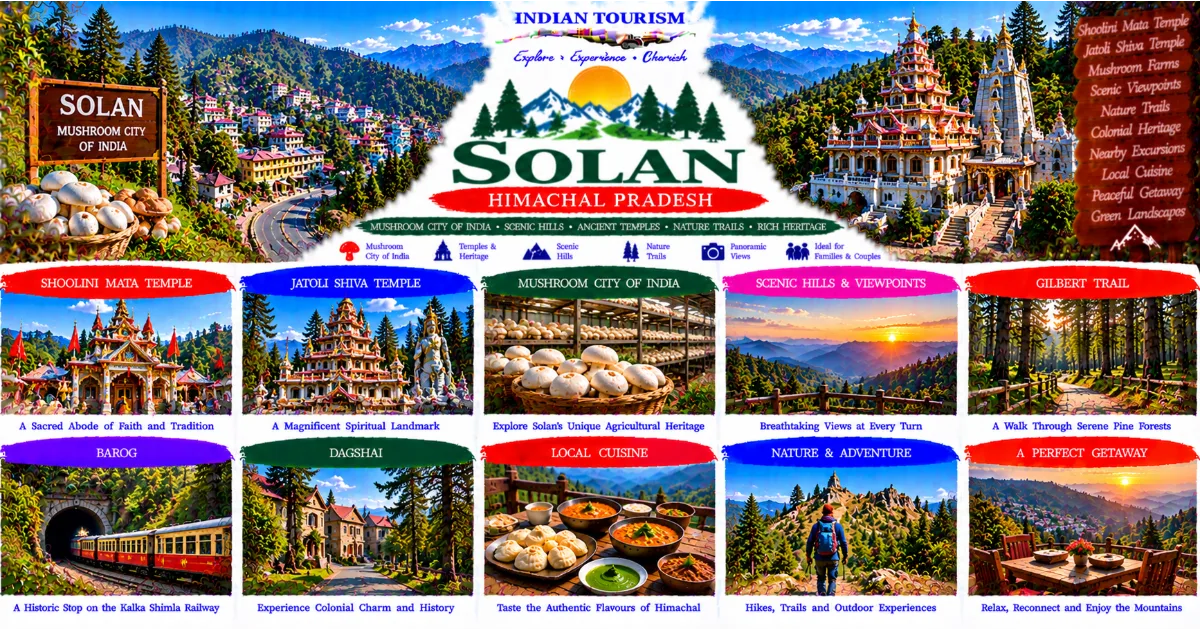
The Shoolini Mata Temple is among Solan's well-known religious landmarks. The town is also associated with mushroom cultivation and is frequently described as the Mushroom City of India. These features give Solan a character distinct from the quieter, forest-oriented experience of Barog.
A visit to Solan can provide a useful contrast. Barog offers a peaceful mountain retreat, while Solan introduces visitors to a busier local centre with more everyday activity.
Kasauli
Kasauli is another popular destination in the wider region, known for its colonial-era atmosphere, wooded surroundings and walking routes. Travellers who enjoy hill towns can consider combining it with Barog if they have sufficient time.
However, Kasauli should not be treated as a place that can always be reached quickly. Journey times depend on the route, traffic and road conditions. Visitors should check the map and current travel conditions before deciding whether a same-day excursion is practical.
Dagshai
Dagshai is a historic hill settlement in the Solan district. Its older buildings and quiet environment may appeal to travellers interested in local history and the colonial-era development of the Himalayan foothills. A visit can add a historical dimension to a trip that otherwise focuses on scenery and railway heritage.
Visitors should confirm which sites are open to the public and respect residential and institutional boundaries. The value of a visit often lies in understanding the settlement's history rather than expecting a large commercial tourist area.
Parwanoo
Parwanoo lies in the broader foothill region and is known for its surrounding hills and access to outdoor experiences. Depending on the itinerary, it may be considered as part of a wider journey through the Solan and Kalka region. Travellers should assess road distances and avoid overloading a short holiday with too many stops.
Local Food to Try in and Around Barog
Food is an important part of travel in Himachal Pradesh, although Barog itself has a relatively small selection of dining options compared with larger towns. Visitors may find meals at hotels, guesthouses, cafés and local restaurants. Availability varies, so travellers with specific dietary needs should confirm meal options with their accommodation before arrival.
Himachali Dham
Dham is a traditional celebratory meal associated with Himachal Pradesh. Its dishes and preparation methods vary by region and occasion, but it commonly includes rice, lentils and carefully prepared curries served as part of a communal meal. The meal has cultural significance because it is traditionally connected with festivals, weddings and community gatherings.
Visitors may not find a full traditional dham available every day in Barog. Those who want to experience it should ask local hosts or restaurants whether a traditional preparation is offered nearby.
Siddu
Siddu is a well-known Himachali preparation made from fermented wheat dough and commonly served with ghee or accompaniments that vary by household and region. It is particularly associated with the state's traditional food culture. The texture and flavour make it different from many familiar wheat-based snacks.
Travellers should ask about the filling and preparation because recipes can differ. Freshly prepared siddu is worth trying when it is available.
Chana Madra
Chana madra is a traditional Himachali dish commonly prepared with chickpeas in a yoghurt-based gravy and seasoned with regional spices. It is associated with the state's broader culinary heritage and can be a satisfying meal for visitors interested in local food.
The richness of the gravy makes it particularly suitable for a substantial lunch. Recipes differ, so the flavour may vary between restaurants and home kitchens.
Babru
Babru is a traditional Himachali snack often prepared using dough filled with a spiced black gram mixture and then fried. It is sometimes compared with stuffed fried breads found in other parts of northern India, although local preparation gives it its own character.
Visitors may find babru in local eateries or in larger nearby towns. It is a good option for travellers who want to sample regional food beyond standard restaurant menus.
Simple Mountain Meals
Not every meal during a mountain holiday needs to be a regional speciality. Rice, dal, seasonal vegetables, roti, soups and other simple dishes can be comforting after a day outdoors. During cold weather, warm meals and hot beverages can make the stay more enjoyable.
Travellers should choose food from places that maintain good hygiene and handle ingredients safely. If visiting during quieter periods, it may help to confirm meal timings with smaller accommodation properties.
Accommodation in Barog
Barog offers a quieter accommodation experience than major commercial hill stations. Visitors may find hotels, guesthouses, homestays and hillside properties in and around the settlement. The best choice depends on whether the priority is railway access, mountain views, family facilities, privacy or a convenient road connection.
Hotels and Resorts
Hotels and resort-style properties may suit travellers who prefer organised services, on-site dining and help arranging local transport. Some properties are positioned to take advantage of the forested landscape and mountain views. Visitors should verify the actual room view rather than assuming that every room in a hillside property overlooks the valley.
It is also sensible to confirm heating arrangements for winter stays, parking facilities, meal timings and the condition of the approach road. Some accommodation properties may be reached by steep or narrow roads, which can matter for older travellers or families with young children.
Homestays and Guesthouses
Homestays and guesthouses can provide a more personal experience and an opportunity to learn about local life. Hosts may offer advice about walking routes, local transport and nearby attractions. Smaller properties can be especially appealing to travellers who want a quiet environment rather than a large resort.
Facilities vary considerably. Visitors should check room size, bathroom arrangements, hot water, heating, meal availability and accessibility before booking. A lower room rate may not include meals or transport, so comparing the full cost is more useful than comparing the advertised price alone.
How to Choose the Right Stay
Travellers seeking peace should prioritise a property away from busy roads, while railway enthusiasts may prefer convenient access to the station. Families should consider room configuration, safe outdoor space and access to meals. Couples may prefer a property with a balcony or scenic surroundings, while visitors travelling without a private vehicle should confirm taxi availability and walking distances.
Read recent guest feedback where available, check cancellation conditions and confirm the final booking details directly with the accommodation provider. During weekends and popular holiday periods, booking early can provide more choice.
Barog for Different Types of Travellers
Couples
Barog can be a suitable destination for couples who prefer quiet surroundings, nature and unhurried time together. A forest walk, a scenic breakfast and an evening spent enjoying the mountain atmosphere can form the basis of a relaxing holiday. The destination is better suited to couples who value tranquillity than those seeking nightlife or extensive entertainment.
Families
Families can enjoy the railway heritage, scenery and short outdoor excursions. Parents should choose walks suitable for their children's ages and avoid steep paths, railway tracks and exposed roadside areas. A property with reliable meals and convenient transport can make the trip easier, particularly for families travelling with younger children.
Solo Travellers
Solo travellers may appreciate Barog's quiet atmosphere and opportunities for photography, reading and nature walks. It is advisable to plan transport in advance, share the itinerary with someone trusted and avoid isolated routes after dark. Visitors without a private vehicle should confirm how they will travel between accommodation, the station and nearby attractions.
Senior Travellers
The mountain environment can be restorative, but the terrain may include slopes, uneven surfaces and stairways. Senior travellers should select accommodation with convenient access, ask about steps and steep approaches, and plan outings around their comfort level. A relaxed itinerary with fewer transfers is often preferable to a demanding sightseeing schedule.
Railway and History Enthusiasts
Barog is particularly interesting for people who enjoy historic transport, engineering and colonial-era infrastructure. The Kalka to Shimla railway provides a tangible connection with the region's development. Travellers can make the railway a central part of the trip while using nearby towns to explore broader local history.
Photography Guide to Barog
Barog offers opportunities for landscape, railway and nature photography. The forested hills create layers of colour and texture, while the railway provides a distinctive human-made element within the natural landscape. Visitors can photograph trees, mountain views, station surroundings and permitted public areas without entering restricted railway zones.
Early morning can provide soft light and atmospheric mist, although the weather is not predictable. Clear afternoons may be better for distant views, while overcast conditions can create a subdued mood suited to forest photography. A versatile lens or smartphone camera is enough for most visitors, and a small tripod may be useful where permitted and safe.
Safety should take priority over photographs. Do not stand on railway tracks, lean over barriers, block station access or stop vehicles in unsafe places to capture a view. During wet weather, avoid exposed edges and slippery rocks. The most rewarding photographs are those taken without putting the photographer or other people at risk.
Responsible Tourism in Barog
Barog's appeal depends on the condition of its natural surroundings and the character of its local community. Responsible travel helps ensure that future visitors can enjoy the same peaceful landscape. Visitors should carry reusable water bottles where practical, avoid littering and use designated waste bins. Plastic wrappers, bottles and food packaging should never be left in forests or along roads.
Noise should be kept to a reasonable level, particularly near residential properties and accommodation located in wooded areas. Visitors should ask permission before photographing residents or private property. Local customs and religious practices should be respected when visiting temples or other cultural sites.
The railway environment requires particular care. Tracks, tunnels, bridges and railway service areas are operational infrastructure, not general walking spaces. Visitors should remain in permitted areas and follow instructions from railway staff. Wildlife should be observed from a distance, and plants should not be damaged or removed.
During the monsoon, responsible tourism also means respecting weather warnings. Visitors should not insist on reaching a viewpoint or walking route when local authorities advise against travel. Changing plans is a reasonable response to mountain conditions and can prevent unnecessary risks.
Practical Travel Tips for Barog
Before travelling, check the weather forecast, road conditions and railway timetable. Keep some flexibility in the itinerary because fog, rain, traffic or service changes can affect travel times. If the trip is built around the heritage train, confirm the current service and ticket arrangements before booking a non-refundable stay.
Pack clothing in layers. Even when the daytime temperature is comfortable, the mornings and evenings may be cool. A light waterproof jacket is useful in most seasons, while winter visitors should carry warm clothing. Comfortable shoes with good grip are suitable for walking on uneven surfaces.
Carry essential medicines and any personal items that may be difficult to find in a small settlement. Visitors with specific dietary requirements should communicate them to the accommodation provider in advance. Mobile connectivity and internet performance can vary with the exact location, so travellers who need reliable connectivity for work should confirm coverage before booking.
Cash may be useful for small purchases, although payment options vary by business. Do not assume that every small shop or taxi accepts digital payments. If travelling with children or older family members, keep the schedule flexible and plan regular breaks.
Most importantly, treat Barog as a mountain destination rather than a city with predictable travel times. Short distances can take longer than expected on winding roads, and weather may influence outdoor plans. A relaxed itinerary will usually provide a better experience.
Is Barog Worth Visiting?
Barog is worth considering for travellers who want a peaceful hill station with a distinctive railway heritage and a natural setting. It may not offer the extensive commercial attractions of larger destinations, but it provides something that many busy hill towns struggle to preserve: an atmosphere in which the landscape remains central to the experience.
The historic railway, the famous tunnel, forest walks and mountain views give the destination a clear identity. Its location also makes it practical to combine with Solan and selected nearby places when time permits. Visitors can choose a short stop or a longer weekend escape depending on their interests.
The best approach is to travel without expecting every hour to be filled with activities. Barog rewards visitors who enjoy quiet mornings, scenic journeys, simple meals and time outdoors. For those seeking a slower side of Himachal Pradesh, it can be a memorable addition to a regional travel itinerary.
Conclusion: Experience the Peaceful Side of Himachal Pradesh
Barog offers a different perspective on mountain tourism in Himachal Pradesh. Its connection with the Kalka to Shimla railway gives it historical importance, while its forested slopes and quiet surroundings make it suitable for travellers seeking rest and natural beauty. The destination can be explored as a short excursion, a weekend escape or part of a broader journey through the Solan district.
Visitors can make the most of Barog by combining railway heritage with nature walks, local food and a carefully planned visit to nearby destinations. Choosing the right season, confirming transport arrangements and respecting local conditions will help create a smoother journey. Responsible travel is equally important because the destination's appeal depends on its environment, heritage and community.
For travellers who value calm surroundings over crowded attractions, Barog is a reminder that some of the most meaningful journeys are not about covering the greatest number of places. They are about giving a destination enough time to reveal its character.
#IndianTourism #HimachalPradesh #Barog #BarogTourism #ExploreHimachal #HimachalTravel #MountainRailways #KalkaShimlaRailway #HimalayanGetaway #NatureTravel #HillStation #Solan #ResponsibleTourism #TravelIndia #ExploreIndia
