
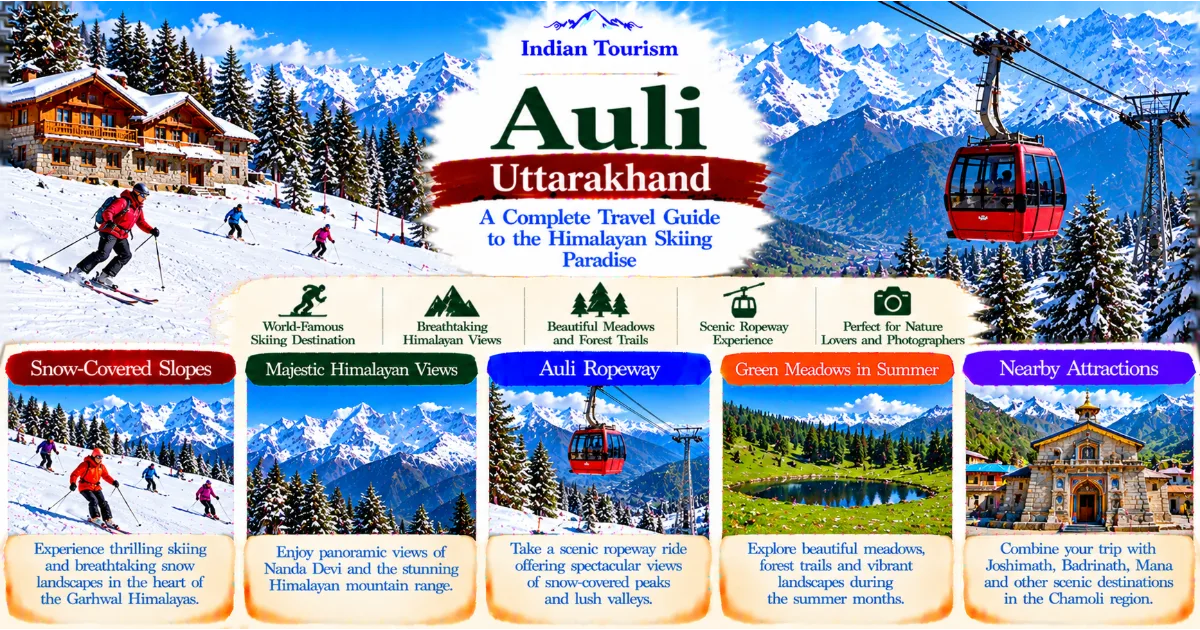
Introduction to Auli, the Himalayan Destination of Snow and Serenity
High in the Garhwal Himalayas of Uttarakhand lies Auli, a mountain destination celebrated for its breathtaking landscapes, snow-covered slopes, peaceful surroundings, and magnificent views of some of India's most impressive Himalayan peaks. Located near Joshimath in the Chamoli district, Auli attracts travellers looking for winter adventures, scenic mountain holidays, nature photography, trekking experiences, and a refreshing escape from the noise of urban life. Unlike crowded hill stations where commercial activity often dominates the experience, Auli offers a remarkable combination of open mountain scenery, alpine meadows, forests, and opportunities to experience the Himalayas at a slower pace.
Auli is particularly famous for skiing. During the winter months, its slopes can transform into a spectacular landscape of snow, drawing skiing enthusiasts, beginners interested in learning winter sports, and travellers who simply want to experience the beauty of a snow-covered Himalayan destination. However, Auli is not exclusively a winter destination. During warmer months, its meadows become green, mountain trails open up, and the surrounding Himalayan landscape offers a different kind of beauty. Clear days may reveal spectacular views of towering peaks, while the changing colours of the seasons create an inviting environment for photographers and nature lovers.
The destination is also closely associated with Joshimath, an important mountain town that serves as a gateway to several places in Uttarakhand. Travellers frequently combine Auli with Joshimath, Badrinath, and other attractions in the Chamoli region, depending on road conditions, available time, and the season. This makes Auli suitable for both short holidays and longer journeys through the Garhwal Himalayas.
What makes Auli special is the way its natural surroundings define the experience. The mountains are not merely a backdrop for sightseeing. They influence the weather, the pace of travel, the activities available, and the daily life of the surrounding communities. A successful visit therefore involves more than reaching a viewpoint or taking photographs. It means understanding the seasons, planning transportation carefully, respecting the mountain environment, and allowing enough time to appreciate the landscape.
Where Is Auli Located?
Auli is situated in the Chamoli district of Uttarakhand in northern India. It lies in the Garhwal Himalayan region, at an elevation that varies across its slopes and surrounding areas. Its mountain setting provides views of several prominent Himalayan peaks, including Nanda Devi, one of India's most celebrated mountains. The landscape includes grassy slopes, forested sections, mountain ridges, and open areas that become especially attractive when covered in snow.
Joshimath is the principal nearby town for most visitors travelling to Auli. It offers access to accommodation, food, transport connections, shops, and services that may be limited in the smaller mountain settlement itself. Depending on the season and operating conditions, travellers can reach Auli by road or use the ropeway system when services are available. The ropeway has traditionally been an important attraction because it offers an elevated journey through the mountain landscape, but visitors should confirm its operating status before building their itinerary around it.
The location of Auli makes it a convenient addition to a wider Uttarakhand journey. Travellers exploring the Chamoli region may combine their visit with Joshimath, Badrinath, Mana, or other destinations when access is permitted and conditions are suitable. However, mountain distances should not be judged only by the number of kilometres involved. Road conditions, weather, traffic, landslides, and seasonal restrictions can significantly influence travel time.
Before travelling, visitors should confirm the latest road conditions, local transport arrangements, and any restrictions that may affect access to Auli. This is particularly important during winter, when snowfall can change the condition of roads and walking routes within a short period.
Why Auli Deserves a Place on Your Travel List
Auli appeals to different types of travellers because it offers several experiences within a relatively compact mountain region. For adventure seekers, the destination is associated with skiing and winter recreation. For couples, it provides romantic mountain scenery and opportunities to enjoy quiet time away from busy cities. Families can experience snow, panoramic views, and gentle outdoor activities when conditions are suitable. Photographers can explore the changing light across the Himalayan peaks, while nature enthusiasts can appreciate the meadows, forests, and mountain ecosystems.
One of Auli's greatest attractions is its visual setting. On a clear day, the surrounding mountain ranges create a dramatic horizon. Snow-covered slopes provide a striking contrast against dark forests, while the distant peaks appear layered across the landscape. During summer, the scenery becomes softer as green meadows replace much of the winter whiteness. The destination therefore offers very different experiences depending on when a visitor arrives.
Auli also provides an opportunity to experience the Garhwal Himalayas without necessarily undertaking a demanding expedition. Many visitors travel primarily for the scenery, spend time at accessible viewpoints, enjoy local food, and explore nearby places. More adventurous travellers may plan skiing lessons or longer walks, depending on their fitness, the weather, and the availability of local guidance.
Another reason to visit is its connection with the wider cultural landscape of Uttarakhand. The region is home to mountain communities whose traditions, food, livelihoods, and religious practices have developed in close relationship with the Himalayan environment. A visit to Auli can become more meaningful when travellers also learn about the surrounding settlements and the challenges of mountain life.
The Best Time to Visit Auli
The best time to visit Auli depends on what you want from your holiday. Winter is generally preferred by travellers hoping to experience snow and skiing, while spring and summer are attractive for mountain views, greenery, and outdoor exploration. The monsoon season requires additional caution because heavy rainfall can affect roads, visibility, and travel plans throughout the Himalayan region.
Winter: December to February
Winter is the season most closely associated with Auli's reputation as a skiing destination. When sufficient snowfall occurs, the slopes become covered in snow and the surrounding landscape takes on a distinctly alpine appearance. Visitors may enjoy snow activities, winter photography, and the experience of staying in a mountain destination surrounded by white slopes.
December can offer a festive winter atmosphere, but snowfall is not guaranteed on a fixed date. Conditions depend on weather patterns, temperatures, and precipitation. January and February may provide favourable opportunities for snow-related activities, although actual skiing conditions vary from year to year.
Travellers should carry warm clothing, insulated jackets, gloves, woollen socks, suitable footwear, and other winter essentials. Temperatures can fall significantly, especially after sunset. Roads may become slippery, and snow or ice can affect movement around the destination. Visitors should avoid walking onto steep or unfamiliar slopes without appropriate equipment and guidance.
Winter travel is best suited to people who are prepared for changing conditions and understand that mountain weather can disrupt even carefully planned itineraries. It is wise to retain flexibility in travel dates and allow additional time for road journeys.
Spring: March to April
Spring brings a gradual transition from winter conditions to a milder mountain environment. Snow may remain in some areas, especially at higher elevations, while lower sections begin to reveal more of their underlying terrain. The scenery can be particularly attractive for travellers who want a mixture of mountain views and the lingering atmosphere of winter without necessarily planning a skiing holiday.
The exact appearance of the landscape depends on the preceding winter and the temperatures experienced during the season. Some years retain snow for longer, while others experience an earlier transition. Visitors should therefore avoid assuming that Auli will be completely snow-covered simply because they arrive in early spring.
Spring can be a good choice for couples, photographers, and travellers interested in peaceful mountain scenery. It is also a useful period for people who prefer to avoid the coldest winter conditions, although nights can remain chilly.
Summer: May to June
Summer is an appealing season for visitors who want to experience Auli's green slopes, mountain air, and panoramic views. As the snow retreats from many accessible areas, the meadows and surrounding landscape become more visible. Clear mornings can offer beautiful views of the Himalayas, while the pleasant daytime environment encourages sightseeing and outdoor exploration.
Summer is also a popular period for travel across Uttarakhand, especially for visitors combining Auli with other destinations. Accommodation and transport may experience higher demand during holiday periods, so advance planning is advisable.
The season is suitable for families, couples, photographers, and nature enthusiasts. However, visitors should remember that mountain weather can change quickly. Even when daytime temperatures are comfortable, evenings can be cold, and clouds may obscure the peaks. A light jacket, comfortable walking shoes, sun protection, and drinking water are useful essentials.
Monsoon: July to September
The monsoon season requires careful consideration. Uttarakhand's mountainous terrain is vulnerable to landslides, road blockages, falling rocks, and travel disruptions during periods of heavy rainfall. The landscape may become lush and green, but visibility can be limited by clouds, and journeys may take considerably longer than expected.
Auli can still be visited during this period when conditions are favourable, but it is not the most reliable season for travellers who have limited time or fixed onward reservations. Anyone considering a monsoon trip should check local weather forecasts, road conditions, and official advisories before departure.
The priority during the monsoon should be safety rather than completing every sightseeing stop. If authorities advise against travel on a particular route, visitors should follow that guidance. Travellers should also avoid riverbanks, unstable slopes, and areas affected by heavy rainfall.
Autumn: October to November
Autumn can be a rewarding season for travellers interested in mountain views and relatively stable sightseeing conditions. Following the monsoon, the landscape may appear refreshed, and clear weather can provide excellent opportunities to photograph distant peaks. The temperature gradually becomes colder as winter approaches.
This period is suitable for people who want to enjoy the scenery without making snowfall the central purpose of their trip. However, snow cannot be assumed during October or November, and visitors should plan according to the actual conditions rather than expecting a winter landscape.
For many travellers, autumn offers a useful balance between outdoor exploration, photography, and comfortable daytime sightseeing. Warm layers remain important because temperatures can drop after sunset.
Top Things to Do in Auli
Experience the Snow-Covered Slopes
Snow is one of the defining attractions of Auli during suitable winter conditions. The slopes create a beautiful setting for outdoor recreation, and even visitors who do not participate in skiing can enjoy watching the changing landscape and photographing the snow.
Snow conditions vary, so travellers should check whether suitable snow is present during their visit. They should also confirm which areas are open to visitors and whether equipment rental or guided activities are available.
It is important to distinguish between enjoying snow in a controlled recreational area and walking independently across steep or unfamiliar terrain. Snow can hide rocks, uneven ground, and sudden drops. Visitors should follow local instructions, wear appropriate footwear, and avoid entering restricted areas.
Try Skiing with Professional Guidance
Auli is one of India's well-known destinations for skiing. Its slopes have attracted winter sports enthusiasts and learners interested in discovering the basics of the sport. For beginners, skiing can be an exciting way to experience the mountain environment, provided the activity is conducted under appropriate supervision.
First-time visitors should look for qualified instructors or authorised local operators. A lesson generally introduces basic balance, movement, stopping techniques, equipment use, and safety practices. Beginners should not attempt difficult slopes merely because they appear accessible.
The availability of skiing lessons, equipment, and suitable slopes depends on snow conditions and local operations. Visitors should confirm these arrangements before travelling, especially if skiing is the main purpose of the holiday.
Appropriate clothing is essential. Waterproof outer layers, gloves, protective eyewear, and suitable boots help make the experience more comfortable. People with medical concerns affecting balance, mobility, or physical exertion should seek appropriate professional advice before attempting strenuous winter sports.
Enjoy the Auli Ropeway Experience
The ropeway connecting the Auli area with Joshimath has been one of the region's most recognised attractions. When operational, it offers a memorable elevated journey through the mountain landscape, providing a different perspective on the slopes, forests, and surrounding valleys.
For visitors, the journey itself can be as appealing as reaching the destination. Looking across the mountains from above helps reveal the shape of the terrain and the relationship between the settlement, forests, and open slopes.
However, travellers must confirm current operating conditions, schedules, ticket arrangements, and any restrictions before making plans. Ropeway services may be suspended for maintenance, weather, technical reasons, or other operational requirements. It is sensible to maintain an alternative transport plan.
Admire the Himalayan Mountain Views
Auli's mountain views are a major reason people visit. The surrounding Himalayan landscape includes prominent peaks, ridgelines, forests, and valleys that create an impressive natural panorama. On clear days, distant mountains appear sharply defined, while changing sunlight creates different colours across the slopes.
Early mornings are often attractive for photography because the light can be softer and the atmosphere clearer. However, weather conditions vary, and no particular view is guaranteed. Travellers should avoid disappointment by allowing more than one opportunity for sightseeing when their schedule permits.
Visitors should also remember that mountain viewpoints can become crowded during busy periods. Moving away from congested areas, while remaining within safe and permitted locations, can provide a more peaceful experience. Carrying out all rubbish and respecting the natural surroundings helps preserve the landscape for future travellers.
Walk Through the Meadows
Auli's open slopes and meadow landscapes provide opportunities for gentle outdoor exploration when paths and weather conditions are suitable. During warmer months, green grass and the surrounding mountain scenery create an inviting environment for photography and leisurely walks.
Visitors should use established routes wherever possible and avoid trampling fragile vegetation. Some grassy areas may be steep, uneven, or exposed to changing weather. Appropriate footwear is important, particularly after rainfall or when patches of snow remain.
Travellers should also be mindful of altitude and physical exertion. Walking at a comfortable pace, drinking enough water, and taking breaks can make the experience more enjoyable. Anyone unfamiliar with the terrain should ask local guides or accommodation providers about suitable routes.
Watch the Sunrise and Sunset
The changing light across the Himalayas is one of the simplest yet most rewarding experiences in Auli. Sunrise can gradually illuminate the peaks and slopes, while sunset creates changing shades across the surrounding landscape. The exact colours and visibility depend on clouds, atmospheric conditions, and the season.
Visitors hoping to photograph these moments should identify a safe viewpoint in advance and check the weather. They should avoid venturing onto isolated or slippery terrain in darkness. Warm clothing, a charged phone, and a torch are useful when moving around early in the morning or after sunset.
Not every morning produces a clear mountain panorama, but even misty conditions can create an atmospheric experience. Travellers who allow themselves time to appreciate the landscape rather than rushing between attractions often find these quiet moments especially memorable.
Explore Local Food and Mountain Hospitality
Food is an important part of experiencing Uttarakhand. Around Auli and Joshimath, travellers may find simple meals, familiar Indian dishes, and regional preparations depending on the establishment. Local cuisine in the broader Garhwal region often includes lentils, rice, seasonal vegetables, grains, and warming dishes suited to mountain conditions.
Traditional foods associated with Uttarakhand include dishes such as chainsoo, phaanu, kafuli, and mandua-based preparations. Their availability varies by restaurant and season, so visitors interested in trying regional cuisine can ask local hosts about freshly prepared options.
Auli itself has a smaller range of services than major urban destinations. Travellers should not assume that every type of restaurant or specialised food option will be available at all times. Those with dietary restrictions should communicate their requirements clearly when arranging accommodation or meals.
Sharing a meal in a local establishment can also provide an opportunity to learn about life in the surrounding mountain communities. Visitors should approach these interactions with respect and avoid treating local residents merely as subjects for photographs.
Important Places to Visit Near Auli
Joshimath
Joshimath is the most important nearby town for visitors to Auli. It functions as a transport connection, accommodation centre, and gateway to several destinations in the Garhwal Himalayas. Travellers can use Joshimath to organise onward journeys, obtain essential supplies, and explore local religious and cultural sites.
The town has religious significance and is associated with the wider pilgrimage traditions of Uttarakhand. Visitors interested in regional history can learn about its spiritual importance and its role in journeys towards Badrinath.
Joshimath is also important from a practical perspective. Because mountain weather and road conditions can change, spending a night in the town may offer greater flexibility than arranging every aspect of a journey around a single property in Auli.
Narsingh Temple
The Narsingh Temple in Joshimath is a notable religious site associated with Hindu traditions. It attracts devotees and visitors interested in the cultural and spiritual history of the region.
A visit to the temple can add a cultural dimension to a mountain holiday, particularly for travellers who want to understand the religious traditions of Garhwal beyond its landscapes. Visitors should observe local customs, dress respectfully, and follow any instructions regarding photography or entry.
The temple can be included in a broader exploration of Joshimath, depending on opening arrangements and the time available. As with any religious site, travellers should approach the visit respectfully, regardless of their personal beliefs.
Badrinath
Badrinath is one of the most important Hindu pilgrimage destinations in India and forms part of the Char Dham pilgrimage circuit. Situated in the Garhwal Himalayas, it is associated with the worship of Lord Vishnu and attracts large numbers of pilgrims during its operating season.
Travellers staying in Auli may consider combining their visit with Badrinath, but the journey requires careful planning. Road travel can take longer than expected, and access depends on seasonal opening dates, traffic, weather, and local conditions.
Visitors should verify whether the temple and connecting roads are open before setting out. It is advisable to avoid attempting a rushed day trip when weather, road conditions, or personal fitness make the schedule impractical. Pilgrimage travel should be planned around the official arrangements and local guidance in effect at the time.
Mana Village
Mana is a well-known village near Badrinath and is frequently included in itineraries exploring the upper Garhwal region. Its setting, traditional settlement character, and cultural associations make it attractive to visitors interested in Himalayan village life.
The surrounding landscape is dramatic, with mountains and valleys shaping the settlement and its daily environment. Visitors can learn about the region's traditions and observe how communities adapt to a high-altitude environment.
Mana is best included when road access and local conditions permit. Travellers should verify current restrictions and access arrangements, especially when approaching sensitive border areas or locations subject to official controls. Respecting local residents, private property, and community customs is essential.
Gorson Bugyal
Gorson Bugyal, also known as Gorson Meadow, is a high-altitude meadow associated with the Auli area. It is known for its open landscape, mountain views, and trekking opportunities when the route is accessible.
The experience changes with the seasons. Snow may cover sections of the trail during winter, while warmer months can reveal grassy slopes and expansive mountain scenery. These changes mean that route conditions, walking time, and difficulty cannot be assumed to remain constant throughout the year.
Visitors should check current trail conditions before attempting the walk. Depending on snow, ice, weather, and personal fitness, a route that seems manageable in summer may become difficult in winter. Hiring a knowledgeable local guide can be helpful, particularly for travellers unfamiliar with high-altitude walking.
The meadow should be treated as a fragile natural environment. Visitors should avoid leaving litter, damaging vegetation, or disturbing wildlife. Camping and open fires should only be undertaken where permitted and with appropriate environmental precautions.
Chenab Lake
Chenab Lake is a small high-altitude lake in the broader Auli region that attracts some visitors interested in quieter natural settings. It is less developed as a mainstream sightseeing destination than Auli's principal slopes and viewpoints.
The journey may involve walking over uneven terrain, and access conditions can vary. Travellers should not assume that a direct vehicle route or a clearly maintained public trail will always be available. Before planning the visit, ask local guides or accommodation providers about the current approach, seasonal accessibility, and the time required.
The attraction is most suitable for travellers who enjoy nature and are comfortable adjusting plans according to local conditions. It should not be treated as an essential stop if weather, visibility, or trail safety is unfavourable.
Auli for Couples and Honeymoon Travellers
Auli can be an appealing choice for couples who enjoy mountains, quiet surroundings, and scenic experiences. During winter, the snow-covered landscape creates a romantic setting, while warmer seasons offer green meadows, mountain walks, and opportunities to enjoy the outdoors together.
Couples can plan their stay around a combination of mountain views, local meals, gentle walks, and time spent relaxing at their accommodation. Those interested in winter sports may also arrange a beginner skiing lesson, provided suitable conditions and professional instruction are available.
The most memorable experiences do not necessarily require a packed itinerary. Watching the mountains in the morning, enjoying a warm drink while the weather changes, or exploring a quiet viewpoint can provide a more personal experience than rushing between numerous attractions.
When choosing accommodation, couples should consider heating, road access, meal arrangements, and the property's distance from the areas they intend to visit. A scenic property may offer beautiful views but limited nearby services. During winter, convenient access can be more important than being far from the main settlement.
Auli can also be combined with other destinations in Uttarakhand, but the journey should remain realistic. Long road transfers, high-altitude conditions, and possible weather disruptions can make an overly ambitious itinerary tiring rather than relaxing.
Auli for Families
Families can enjoy Auli through sightseeing, photography, gentle outdoor activities, and seasonal snow experiences. Children may find the snow particularly exciting, while adults can appreciate the mountain scenery and opportunity to spend time away from busy city routines.
Winter visits require additional attention to safety. Children should be dressed in warm layers and kept away from steep slopes, icy roads, and unguarded edges. Snow play should take place in suitable areas, and families should follow local advice about changing weather and accessible spaces.
Parents travelling with younger children should consider the altitude, travel duration, and availability of medical assistance. A relaxed itinerary with sufficient rest is usually preferable to trying to visit every nearby destination in a short period.
Families should also confirm whether their chosen accommodation provides heating, suitable bedding, meals, and convenient transport. During busy periods, advance reservations can reduce the difficulty of finding appropriate arrangements.
How to Reach Auli
By Air
The nearest commonly used airport for journeys towards Auli is Jolly Grant Airport near Dehradun. From the airport, travellers must continue by road towards the Garhwal region, usually through the Rishikesh and Chamoli route, depending on current road conditions and the chosen itinerary.
The road journey is long and involves mountain driving. Travellers arriving by air should avoid assuming that they can reach Auli quickly after landing, particularly if their flight arrives late in the day. Weather, traffic, roadworks, and landslides can all affect journey times.
For a more comfortable trip, consider arranging a suitable vehicle and allowing enough time for overnight stops if needed. Travellers should also confirm road access to Auli itself before finalising accommodation and transport.
By Train
Rishikesh and Haridwar are commonly used railway gateways for journeys into this part of Uttarakhand, although the most practical station depends on train schedules and the overall itinerary. From either location, travellers generally continue by road through the mountain region towards Joshimath and Auli.
Train availability and travel time vary according to the departure city and date. It is wise to coordinate the train arrival with onward transport rather than leaving a long mountain transfer until the last possible hour.
An overnight stop during the road journey may be sensible for visitors who prefer a slower pace, are travelling with children, or are unfamiliar with mountain roads.
By Road
Auli is accessible through the road network serving Joshimath, subject to current conditions and the availability of local transport. Travellers may hire a taxi, arrange a private vehicle, or use public transport services that connect towns along the route.
Mountain roads can be winding and narrow, and journey times may change significantly during busy periods or adverse weather. Drivers should be experienced in mountain conditions, particularly during winter or the monsoon.
Visitors should avoid night driving on unfamiliar mountain routes whenever possible. It is also important to check fuel availability, road closures, and the latest travel advisories before beginning a long journey.
Local Transport Between Joshimath and Auli
The final stretch between Joshimath and Auli may be completed by road or by ropeway when the relevant service is operating. The practical choice depends on weather, road conditions, transport availability, and the location of the accommodation.
Visitors should verify the current ropeway status rather than relying on old travel information. If the service is unavailable, a road journey may be necessary, but access can also be affected by snow or other conditions.
Confirming the arrival arrangements with the accommodation provider is one of the simplest ways to avoid confusion. Ask whether a vehicle can reach the property, whether walking with luggage is necessary, and what alternatives are available if the usual transport option is disrupted.
Where to Stay in Auli
Accommodation options in and around Auli range from hotels and resorts to guesthouses and properties in nearby Joshimath. The right choice depends on budget, preferred atmosphere, transport needs, and the type of holiday being planned.
Staying closer to the main Auli area may be convenient for visitors who want to spend more time around the slopes and mountain viewpoints. However, the number of available properties and services can be more limited than in a larger town. Travellers should confirm whether their chosen property is accessible during the season of their visit.
Joshimath can provide a wider range of accommodation and practical services. It may be a good option for travellers who prefer easier access to shops, restaurants, transport, and onward routes. The trade-off is that reaching Auli for daily sightseeing may require additional travel.
Before making a reservation, check whether heating is available, whether meals are included, what transport arrangements can be provided, and how the property handles winter weather. Ask about cancellation policies and possible changes to arrival times when road conditions deteriorate.
During peak winter periods and school holidays, booking in advance is advisable. Travellers should compare the total cost of the stay rather than looking only at the nightly rate, particularly if transport, meals, equipment rental, or local transfers are additional expenses.
What to Eat During Your Visit
A trip to Auli offers an opportunity to enjoy familiar Indian meals alongside regional dishes when they are available. In a mountain environment, simple, freshly prepared food can be especially satisfying after a day spent outdoors.
Rice, lentils, vegetables, chapatis, soups, and warming drinks are common practical choices for travellers. Depending on the establishment, visitors may also find dishes associated with Garhwali cuisine. Asking local hosts for seasonal recommendations can help travellers discover preparations that may not appear on every menu.
Chainsoo is a traditional Garhwali dish made using roasted black gram, while phaanu is prepared using lentils and is known for its rich consistency. Kafuli is a regional preparation commonly associated with leafy greens. Mandua, also known as finger millet, is an important traditional grain in Uttarakhand and appears in various local food preparations.
Availability differs between establishments, and travellers should not assume that every regional dish will be served at every property. Visitors with food allergies or dietary restrictions should discuss ingredients and preparation methods directly with the restaurant or accommodation provider.
Carrying a few convenient snacks may be useful for longer excursions, but travellers should take all packaging and waste back with them. The mountain environment should not become a dumping ground for disposable food containers.
Suggested Itinerary for Auli
Two Days in Auli
A two-day visit can provide a satisfying introduction to Auli if the journey to and from the destination is planned separately or travel time is carefully managed. On the first day, arrive in the region, settle into the accommodation, and explore accessible viewpoints or the main slopes according to the season. If the ropeway is operational, a ride may be included after confirming the schedule and availability.
Spend the evening enjoying a local meal and preparing for the next day's activities. During winter, keep the evening relatively relaxed because cold temperatures and slippery surfaces can make unnecessary movement uncomfortable.
On the second day, focus on the experience most important to you. Winter visitors may choose a supervised skiing session or suitable snow activities. During warmer months, a scenic walk or exploration of the meadows may be more rewarding. Leave enough time to return safely and account for weather changes.
Three Days in Auli and Joshimath
A three-day itinerary allows a more relaxed experience. On the first day, travel to the region and settle into the accommodation. Depending on arrival time, explore nearby viewpoints or enjoy the surrounding scenery without attempting a demanding excursion.
On the second day, devote most of the day to Auli. The activities might include skiing, a ropeway journey when available, photography, or a suitable walk. Choose activities according to the season rather than trying to complete everything.
On the third day, explore Joshimath and its cultural attractions before continuing your journey or returning towards your departure point. This approach combines natural scenery with a better understanding of the surrounding region.
Four to Five Days in the Chamoli Region
Travellers with more time can consider extending their visit to include Badrinath or Mana, provided the relevant roads, destinations, and facilities are open. This longer itinerary requires additional planning because mountain journeys can be unpredictable and pilgrimage routes may be affected by seasonal restrictions.
Avoid treating the entire region as a collection of nearby stops that can easily be visited in a single day. Distances, road conditions, and altitude make careful scheduling important. It is better to leave a destination for another trip than to continue when conditions become unsafe.
Estimated Budget for an Auli Trip
The cost of visiting Auli depends on the departure city, season, accommodation category, transport method, and activities selected. A budget-conscious traveller using shared transport and simple accommodation will have different expenses from someone hiring a private vehicle and staying in a premium mountain resort.
For planning purposes, visitors can divide their budget into transport, accommodation, meals, local transfers, sightseeing, equipment rental, and emergency expenses. Winter holidays may become more expensive during periods of high demand, particularly when suitable accommodation and transport are limited.
Travellers should obtain current quotations rather than relying on a fixed estimate from an older itinerary. The price of private taxis, hotel rooms, skiing lessons, equipment, and ropeway tickets may change according to season and operating arrangements.
It is also sensible to keep a financial reserve for an additional night or an unplanned transfer. Weather-related delays can increase costs, and having some flexibility can reduce stress when a journey does not proceed as expected.
Essential Travel Tips for Auli
Prepare for Changing Weather
Mountain weather can change rapidly, even when the day begins with clear skies. Carry warm layers throughout the year, with more substantial winter clothing during the colder months. Waterproof outerwear and appropriate footwear are useful when snow or rain is expected.
Check the forecast before outdoor activities and ask local staff about current conditions. If visibility deteriorates or a route becomes unsafe, postpone the activity rather than taking unnecessary risks.
Respect Altitude and Physical Limits
Auli is located in a high-altitude mountain environment. Some visitors may notice fatigue or discomfort when walking uphill, particularly if they have travelled directly from a lower elevation. Allow time to adjust, maintain a comfortable pace, and avoid overexertion.
Anyone experiencing severe breathlessness, confusion, difficulty walking, or other concerning symptoms should seek prompt medical assistance. Visitors with existing medical concerns should consider professional advice before undertaking strenuous activities at altitude.
Carry Essential Supplies
Keep drinking water, basic personal medicines, a charged phone, identification, and some cash readily available. Mobile connectivity and payment facilities may vary by location and operating conditions, so it is unwise to depend entirely on digital payments.
For longer walks, carry suitable footwear, snacks, weather protection, and a basic light source. Tell someone about your route when undertaking an excursion away from the main settlement.
Check Road and Activity Conditions
Do not assume that every road, trekking route, ropeway service, or winter activity will operate throughout the year. Verify arrangements shortly before departure and again when necessary during the trip.
Official advisories and local information should take priority over outdated travel posts. This is especially important during heavy rainfall, snowfall, and periods of increased landslide risk.
Travel Responsibly
Auli's natural beauty depends on the health of its mountain environment. Avoid littering, disturbing wildlife, damaging vegetation, or entering restricted areas. Use established trails and follow local rules regarding camping, fires, and recreational activities.
Support local businesses when possible, treat residents respectfully, and ask permission before photographing people. Responsible travel helps protect the destination while ensuring that visitors contribute positively to the surrounding communities.
Responsible Tourism and the Future of Auli
Mountain tourism creates economic opportunities, but it also places pressure on fragile environments and local infrastructure. Destinations such as Auli must balance visitor demand with the need to protect slopes, forests, water resources, and the character of nearby settlements.
Visitors can contribute to this balance through relatively simple choices. Staying in locally operated accommodation, hiring authorised guides, purchasing regional products, and avoiding unnecessary waste can help distribute the benefits of tourism more widely.
Water and energy conservation are particularly important in mountain regions, where infrastructure may be limited and weather can complicate the delivery of supplies. Travellers should use resources thoughtfully and understand that comfort in a remote destination may not be identical to the experience offered by a large city hotel.
Responsible tourism also means respecting the limits of the landscape. Not every meadow needs a new road, every quiet area needs a commercial attraction, or every natural site needs to become a crowded viewpoint. Protecting the destination's character is part of preserving the very experience that draws visitors to Auli.
Climate variability also influences winter tourism. Snowfall timing and snow conditions can differ from year to year, affecting expectations around skiing and winter recreation. Travellers should remain flexible and appreciate Auli beyond the presence or absence of snow. Its mountain views, cultural connections, forests, and meadows continue to offer value across different seasons.
Is Auli Worth Visiting?
Auli is worth considering for anyone who wants to experience the beauty of the Garhwal Himalayas in a destination known for open slopes, mountain views, and seasonal winter activities. Its reputation as a skiing destination gives it a distinctive identity, but the landscape offers much more than a single activity.
Winter is especially attractive for travellers hoping to experience snow, while spring, summer, and autumn provide opportunities to appreciate the changing mountain scenery. The surrounding region also offers cultural and religious attractions, including Joshimath and destinations associated with the Badrinath pilgrimage route.
The most important part of planning a successful visit is matching expectations with the season. Snowfall is not guaranteed, ropeway operations may change, and mountain journeys can take longer than expected. Visitors who plan carefully, remain flexible, and prioritise safety are more likely to enjoy their time in the region.
Auli is not simply a place to visit for a photograph of snow-covered mountains. It is a destination where weather, terrain, culture, and local life shape the travel experience. Whether you come for skiing, peaceful mountain scenery, a romantic holiday, or a wider exploration of Uttarakhand, Auli can provide a memorable introduction to the Himalayan landscape.
Conclusion
Auli stands among the memorable mountain destinations of Uttarakhand because it combines Himalayan panoramas with the excitement of winter sports and the peaceful appeal of alpine meadows. Its surroundings offer a refreshing contrast to urban life, inviting visitors to slow down, appreciate nature, and explore the cultural richness of the Garhwal region.
A well-planned trip should include enough time for the journey, accommodation suited to the season, suitable clothing, and a realistic selection of activities. Travellers should confirm current transport arrangements, weather conditions, and local access before departure. These preparations are especially important during winter and the monsoon.
For those seeking snow, skiing, photography, or a scenic escape into the mountains, Auli offers a rewarding destination when approached with realistic expectations and respect for the environment. Its beauty changes with the seasons, giving visitors a reason to appreciate not only the famous winter slopes but also the wider Himalayan landscape.
Hashtags: #IndianTourism #Auli #AuliUttarakhand #UttarakhandTourism #ExploreUttarakhand #GarhwalHimalayas #HimalayanTravel #IndiaTravel #SnowDestination #SkiingInIndia #MountainGetaway #NatureTravel #TravelIndia #HimalayanViews #ResponsibleTourism
