
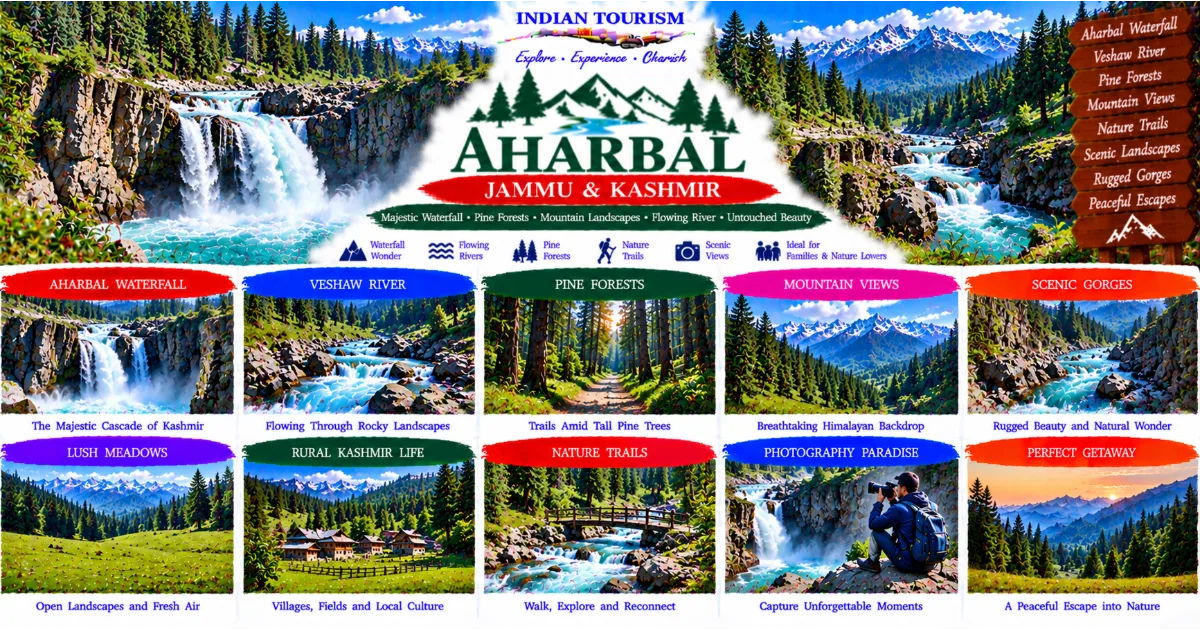
The Majestic Waterfall of Kashmir
Kashmir is famous for its lakes, gardens, green valleys and snow-covered mountains, but some of its most dramatic natural attractions are found where rivers rush through rocky landscapes and plunge into deep gorges. Aharbal Waterfall, situated in the Kulgam district of Jammu and Kashmir, is one of the region’s striking natural wonders. Known for its powerful cascade, forested surroundings and scenic mountain setting, Aharbal offers travellers a different experience from the peaceful meadows and lakes that often define Kashmir tourism.
The waterfall is formed by the Veshaw River, which descends over rocky terrain and creates a spectacular display of moving water. The sound of the cascade can be heard from nearby viewing areas, while the river continues through a rugged landscape shaped by flowing water and surrounding hills. The combination of the waterfall, dark rock formations, greenery and mountain scenery makes Aharbal particularly appealing to photographers, nature enthusiasts and travellers who enjoy exploring places where natural forces are clearly visible.
Aharbal is often described as one of Kashmir’s impressive waterfalls, but its attraction extends beyond the main cascade. The journey through the countryside, the changing scenery along the river and the surrounding natural environment contribute to the overall experience. Visitors can spend time appreciating the waterfall from designated or suitable viewpoints, observing the river landscape and exploring accessible areas around the destination.
The waterfall can be visited as part of a broader journey through southern Kashmir, depending on the season, road conditions and local circumstances. It may appeal to couples looking for a scenic day trip, families who enjoy nature, photographers searching for dramatic landscapes and travellers who want to explore beyond the most familiar tourist centres. However, the environment requires caution. Rocks near waterfalls can be slippery, water levels can change rapidly and the force of the river can make apparently accessible areas dangerous.
A successful visit therefore combines appreciation with preparation. Travellers should confirm current access conditions, follow local instructions, remain behind safety barriers and avoid approaching unstable riverbanks. With responsible planning, Aharbal Waterfall can become a memorable part of a Kashmir itinerary.
Where Is Aharbal Waterfall Located?
Aharbal Waterfall is located in the Kulgam district of Jammu and Kashmir, in the southern part of the Kashmir Valley. It is associated with the Veshaw River and lies within a landscape of hills, forests and mountain-fed waterways. Its setting gives it a distinct character compared with destinations that are primarily known for open meadows or lakeside scenery.
The journey to Aharbal generally involves road travel from a suitable base in the Kashmir Valley. Srinagar is a common starting point for visitors, although the actual journey time depends on the selected route, traffic, weather and current road conditions. Travellers should confirm directions and accessibility before setting out rather than relying exclusively on older itineraries.
The surrounding Kulgam region includes villages, cultivated land and rural roads that reflect the agricultural character of southern Kashmir. As visitors move towards the waterfall, the landscape gradually changes from inhabited countryside to a more dramatic river environment. The sound and movement of the water become central to the experience, creating a strong contrast with the quieter fields and settlements along the route.
Aharbal is also a useful destination for travellers interested in seeing another side of Kashmir's geography. The waterfall demonstrates how rivers flowing from mountainous areas shape the land, cutting through rock and creating steep channels. This natural process is part of the destination's visual appeal and helps explain why the surrounding terrain requires careful movement.
Before travelling, check current weather forecasts, road access and local guidance. Conditions around a waterfall can differ considerably between seasons, and the safest route or viewing location may change after heavy rainfall or other environmental events.
Why Is Aharbal Waterfall Famous?
The Powerful Cascade
The main attraction is the waterfall itself. Water from the Veshaw River rushes over rocky ledges and descends into a rugged channel, creating a powerful visual display. The contrast between white water, dark rock and surrounding greenery makes the cascade striking even from a distance.
The appearance of the waterfall varies according to water flow, weather and season. After periods of substantial rainfall or snowmelt, the river may become stronger and noisier. During other periods, the flow can appear different. Visitors should not assume that the waterfall will look exactly like photographs taken at another time of year.
The force of the water is part of what makes Aharbal impressive, but it also makes the area hazardous. Visitors should never attempt to climb down steep banks, cross the river or approach the edge for a closer photograph. The safest experience comes from viewing the cascade from appropriate locations and respecting barriers or signs.
The Veshaw River
The Veshaw River is central to the landscape around Aharbal. Its flow shapes the rocky surroundings and gives the destination its dramatic character. The river's movement, colour and sound create an experience that is very different from the still waters of Kashmir's lakes.
Observing the river can also help visitors appreciate the relationship between mountains, rainfall, snowmelt and water systems. Mountain-fed rivers are dynamic environments, and their flow may change quickly. Even when the water appears calm in one section, stronger currents may be present nearby.
Visitors should remain cautious along the entire river corridor. Do not assume that shallow water is safe to enter, and never attempt to cross the river without appropriate expertise and authorisation. Photography should be done from stable ground, away from slippery rocks and exposed edges.
Dramatic Rocky Gorges
The rocky landscape around Aharbal contributes to its distinctive appearance. The river has shaped the terrain over time, producing steep banks and irregular rock formations. These features create strong visual contrasts and offer photographers opportunities to capture the relationship between water and stone.
The terrain is not suitable for unrestricted exploration. Loose stones, wet surfaces and steep drops can make movement dangerous, especially after rainfall. Visitors should use established paths and avoid climbing onto rocks that are not intended for public access.
The best photographs often come from observing the landscape from a secure viewpoint. A wide composition can capture the waterfall and surrounding terrain, while a closer view can focus on the patterns created by flowing water. Neither requires taking unnecessary risks.
Forested Mountain Surroundings
The hills and wooded areas around Aharbal add depth to the scenery. Trees and vegetation provide a green backdrop to the river and create a transition between the rugged gorge and the broader countryside. During warmer months, the combination of greenery and flowing water can make the area especially attractive.
The surrounding environment supports a variety of ecological processes, including soil protection and water regulation. Visitors should avoid damaging plants, disturbing wildlife or leaving waste behind. Forested areas should be explored only where access is suitable and current guidance supports the activity.
Travellers interested in longer walks should confirm the route, expected duration and local conditions before proceeding. The presence of a visible path does not automatically mean that it is safe in all weather.
Best Time to Visit Aharbal Waterfall
Spring: March to May
Spring brings seasonal changes to the landscape around Aharbal. As temperatures rise, water from the surrounding mountain environment continues to influence the river, while vegetation begins to develop fresh growth. The waterfall may appear particularly energetic during periods influenced by snowmelt, although the actual flow varies according to weather and hydrological conditions.
Spring can be attractive for visitors who enjoy cooler temperatures and the transition from winter to warmer weather. The surrounding countryside may gradually become greener, and the contrast between the river and emerging vegetation can provide interesting photographic opportunities.
However, spring conditions can be unpredictable. Rain, cold mornings and changing water levels may affect the visit. Travellers should wear suitable footwear, carry a weather-resistant jacket and check road access before departure.
Summer: June to August
Summer is a popular season for exploring Kashmir's outdoor destinations, and Aharbal can be an appealing choice for travellers who want to enjoy a waterfall surrounded by greenery. Daytime temperatures may be more comfortable for sightseeing, and longer daylight hours allow visitors to spend time exploring the accessible surroundings.
Summer is also a busy period across the Kashmir Valley. Visitors should arrange transport in advance and allow extra time for traffic. If visiting during weekends or holidays, expect that popular viewing areas may be busier than usual.
Rain can still occur, and a strong river should never be approached casually. Visitors should follow local guidance, remain within designated areas and avoid attempting to reach the water's edge. The most important consideration is not how close a photograph can be taken, but whether the viewing location is safe.
Autumn: September to November
Autumn brings cooler temperatures and changing colours to the surrounding countryside. The landscape may become more muted, while clear days can provide excellent views of the river corridor and nearby hills. For photographers, this season can offer a different atmosphere from the bright greenery of summer.
The flow of the river will depend on current conditions rather than the calendar alone. Visitors should avoid making assumptions about water levels or safety based on photographs from previous years. Local advice and weather information remain essential.
As the season advances, mornings and evenings can become cold. Carry warm clothing and plan the return journey with sufficient daylight. Autumn can be a rewarding period for travellers who prefer a quieter atmosphere and comfortable conditions for short outdoor visits.
Winter: December to February
Winter can bring cold temperatures, snow or icy conditions to the surrounding region. The waterfall may look dramatically different from its summer appearance, but access can become more difficult. Wet rocks, ice and reduced daylight increase the risks associated with river viewpoints.
A winter visit should be planned only after confirming current road access and local conditions. Visitors should not attempt to walk onto icy rocks or explore areas that are closed or considered unsafe. Appropriate footwear, warm clothing and reliable transport arrangements are essential.
For travellers unfamiliar with winter mountain conditions, a visit during spring, summer or early autumn may be more practical. The safest time depends on the actual conditions on the intended travel date, not simply the name of the season.
Places and Scenic Areas to Explore Around Aharbal
The Main Waterfall Viewing Area
The principal viewing area is the natural focus of a visit. From a suitable viewpoint, visitors can appreciate the scale of the cascade, listen to the sound of the river and observe the rocky landscape. The experience can be memorable without requiring a long walk or difficult route.
Take time to observe the waterfall from the permitted areas. The appearance of the water changes as it moves over the rocks, and different viewing angles may reveal different aspects of the landscape. Visitors should follow barriers and signs even when a closer position appears tempting.
Avoid standing on wet rocks, leaning over exposed edges or attempting to climb down the gorge. The water's force and the instability of the terrain make such actions dangerous. A safe viewpoint is the best place to enjoy the natural spectacle.
The Veshaw River Corridor
The river corridor around Aharbal provides opportunities to appreciate the broader landscape beyond the main waterfall. The combination of moving water, rocks and vegetation creates a setting for photography and quiet observation.
Access varies along the river, and not every stretch is suitable for visitors. Some areas may be steep, unstable or affected by strong currents. Travellers should remain on established routes and ask locally about any additional areas they wish to explore.
The river can look different from one section to another. A calm-looking stretch should not be assumed to be safe for swimming or crossing. Water conditions can change quickly, especially after rainfall or snowmelt.
Countryside Along the Approach Road
The drive towards Aharbal passes through parts of the Kashmir countryside, offering views of settlements, cultivated fields and rolling landscapes. These scenes provide a useful contrast with the waterfall's rugged setting and help visitors appreciate the diversity of the region.
Travellers should make stops only where parking is safe and permitted. Narrow roads may be used by local residents and other vehicles, so stopping for photographs should never block traffic or access to homes and fields.
Visitors interested in local culture can appreciate the agricultural landscape and everyday village life from public areas. Ask permission before photographing people or private property, and avoid entering fields or orchards without consent.
Forested Surroundings
Trees and wooded slopes contribute to the scenery around Aharbal. Where suitable access exists, visitors can appreciate the contrast between the forest and the open river landscape. The changing light among the trees can also provide attractive photographic opportunities.
Do not wander into unfamiliar forest areas without reliable guidance. Paths may be unclear, mobile coverage may vary and weather can change quickly. Visitors who want a longer walk should confirm the route, duration and current accessibility before starting.
Forest environments should be treated with care. Avoid disturbing wildlife, damaging vegetation or leaving rubbish behind. A quiet and respectful visit helps preserve the natural character of the area.
Nearby Rural Settlements
The wider region around Aharbal includes settlements that reflect the everyday life of southern Kashmir. Villages, fields and local roads form part of the destination's broader setting. Visitors can gain a better understanding of the area by paying attention to these landscapes rather than focusing only on the waterfall.
Local communities are not tourist attractions created for visitors. Respect privacy, ask before taking photographs and follow local customs. If purchasing food or other goods, use legitimate local businesses and clarify prices before making arrangements.
A respectful approach helps tourism contribute positively to the region while ensuring that residents can continue their daily routines without unnecessary disturbance.
Things to Do in Aharbal
Observe the Waterfall from Safe Viewpoints
The most important activity is enjoying the waterfall itself. Visitors can spend time observing the cascade, listening to the water and appreciating the surrounding rock formations. There is no need to attempt a difficult descent or move beyond designated areas.
Waterfalls are dynamic environments, and conditions can change rapidly. If the river appears unusually strong, the ground is wet or local staff advise against approaching a particular area, follow that guidance immediately.
Photography can be done from stable ground. A wide photograph captures the waterfall within its landscape, while a closer composition can highlight the water's movement and the texture of the rocks.
Enjoy a Scenic Road Journey
The drive to Aharbal offers a chance to experience the countryside of southern Kashmir. The changing scenery, rural settlements and mountain surroundings create an enjoyable introduction to the destination.
Plan the route with sufficient time for the return journey. Check road conditions before departure and avoid unfamiliar shortcuts. Visitors unfamiliar with the area may benefit from arranging transport with a driver who knows the route and current local conditions.
Stops should be made only in safe locations. Do not park near blind bends or block narrow roads. The journey should remain relaxed, with enough flexibility to accommodate traffic or weather changes.
Photograph the River Landscape
Aharbal offers a range of photographic subjects, from the main cascade to the surrounding rocks, river channels and greenery. Photographers can experiment with wide views, details of moving water and compositions that include the forested slopes.
Weather and light influence the appearance of the waterfall. Overcast conditions may soften contrasts, while brighter conditions can emphasise the surrounding landscape. Visitors should use the conditions available rather than attempting to reach unsafe locations for a particular shot.
Avoid climbing onto slippery rocks, standing near exposed edges or using drones without confirming applicable regulations and local restrictions. A photograph should never take priority over personal safety.
Learn About the River Environment
A visit to Aharbal can encourage an interest in the natural processes that shape mountain landscapes. The waterfall illustrates how moving water interacts with rock, while the surrounding terrain reflects the influence of erosion and changing water flow.
Visitors can learn by observing from safe locations and using reliable educational resources. If travelling with children, explain why rivers can be dangerous even when the water looks clear and why barriers and signs should be respected.
This kind of observation adds educational value to the visit without requiring visitors to enter hazardous areas or disturb the environment.
Enjoy a Quiet Outdoor Break
The surrounding scenery can provide an opportunity to pause and enjoy the outdoors. Visitors may take a break at a suitable public area, observe the landscape and spend time away from busy urban environments.
Any picnic or meal should take place only where permitted. Carry all rubbish away, avoid leaving food scraps and do not light fires unless explicitly allowed in an appropriate designated area.
The waterfall's sound and the surrounding scenery can make a short break memorable, but visitors should remain aware of the weather and allow enough time to return safely.
Local Food and Refreshments
A visit to Aharbal can be combined with an introduction to the broader culinary traditions of Kashmir. The region's food includes rice-based meals, breads, vegetables, aromatic preparations and a variety of meat-based dishes. The specific choices available near the waterfall depend on local businesses, the season and current visitor facilities.
Kahwa, a traditional Kashmiri tea prepared with green tea and aromatic ingredients, is associated with hospitality throughout the region. Visitors may find it available in local settings, although availability and preparation vary.
Travellers should not assume that a large range of restaurants will be available close to the waterfall. If a full meal is important to the itinerary, confirm options before departure. Carry drinking water and suitable snacks, particularly when travelling with children or people who have dietary restrictions.
Food hygiene remains important. Choose clean establishments, drink water from a reliable source and communicate dietary requirements clearly. Visitors with allergies should confirm ingredients rather than relying on assumptions.
Supporting legitimate local businesses, where suitable, can help ensure that tourism contributes to the surrounding community.
Where to Stay Near Aharbal Waterfall
Many travellers visit Aharbal as a day excursion from an established base in the Kashmir Valley. Srinagar may be a practical option for visitors who want access to a wider range of accommodation, restaurants and transport services. Travellers can plan the waterfall visit around their broader itinerary and return to their base later in the day.
Those interested in staying closer to Aharbal should verify current accommodation availability directly. Facilities and services can vary by season, and older travel information may no longer be accurate. Confirm the exact location, road access, heating, hot water, meals, electricity and transport arrangements before booking.
Families and older travellers should ask about walking distances, stairs and other practical considerations. A property that appears close to the destination on a map may still require a difficult approach or additional transport.
If choosing a locally operated guesthouse or homestay, clarify prices and meal arrangements before arrival. Respect household rules and privacy. Rural accommodation may provide a more personal experience, but visitors should not assume that every property offers the same facilities as a large hotel.
For a first visit, a day trip from a well-established base can be a convenient way to experience Aharbal without relying on uncertain accommodation arrangements.
How to Reach Aharbal Waterfall
By Air
Srinagar Airport is the main air gateway commonly used by travellers visiting Kashmir. From the airport, visitors can arrange road transport towards Aharbal. The actual journey depends on the selected route, traffic and current conditions.
Travellers should leave enough flexibility between arrival and the excursion. Flight delays or road traffic can affect the schedule, and a late arrival may make it more practical to stay overnight before visiting the waterfall.
Confirm transport arrangements before departure and ensure that the driver understands the intended destination. If weather conditions are poor, adjust the schedule rather than attempting to complete the journey in unsuitable conditions.
By Road
Road transport is the usual way to reach Aharbal. Visitors can arrange a private taxi or another suitable vehicle from Srinagar or a different base in the Kashmir Valley. The best route and expected journey time should be confirmed shortly before travel.
Drivers should follow current local guidance and avoid unfamiliar shortcuts. Roads may be affected by rain, fog or winter conditions, and navigation applications may not reflect temporary restrictions. Stop only where parking is safe and permitted.
Before leaving, plan the return journey and allow enough time for changing conditions. Visitors should not rush the drive simply to fit in additional sightseeing.
By Rail
Aharbal does not have a railway station of its own. Travellers arriving by train must arrange onward road transport from a suitable railway connection. The most practical combination depends on current services, the arrival point and the rest of the itinerary.
Check train schedules and transfer arrangements before booking. Allow sufficient time for the road journey and possible delays. Visitors travelling with children, older family members or substantial luggage may prefer to arrange an appropriate vehicle in advance.
Suggested Itineraries for Aharbal Waterfall
One-Day Aharbal Excursion
A one-day visit is suitable for travellers based within a practical driving distance. Begin with an early departure and allow time for the journey. On arrival, spend time at the main waterfall viewing area, observing the cascade from safe locations and taking photographs.
Use the middle of the day for refreshments or a meal at a suitable establishment, depending on what is available. If local conditions permit, include a short visit to another accessible area identified through reliable local guidance. Avoid attempting an uncertain river crossing or difficult walk.
Start the return journey with enough daylight and a reasonable time buffer. If weather or traffic changes, shorten the sightseeing portion rather than rushing. A successful visit should be measured by the quality of the experience and a safe return, not by the number of stops.
Two-Day Southern Kashmir Plan
A two-day itinerary allows visitors to combine Aharbal with other suitable destinations in the wider Kashmir Valley. Spend the first day exploring Aharbal and the surrounding countryside, then use the second day for another location selected according to current conditions, transport time and personal interests.
The itinerary should be built around practical driving distances rather than assumptions based on a map. Allow time for meals, rest and possible traffic delays. Before adding another destination, confirm that it is accessible and appropriate for the season.
Visitors who prefer a slower pace may choose to spend more time at one destination rather than rushing between several locations. This approach often creates a more enjoyable travel experience.
Three-Day Kashmir Nature and Culture Itinerary
With three days available, travellers can combine Aharbal with Srinagar and another suitable destination. One day can be devoted to the waterfall, another to the city's cultural and scenic attractions, and the third to a location selected according to the weather and current access conditions.
A flexible itinerary makes room for changing circumstances. If the waterfall route is unsuitable on the intended day, visitors can adjust the order of activities or select an alternative that does not require travelling into difficult conditions.
Avoid trying to cover several distant destinations in a single day. The journey itself, local traffic and weather can consume more time than expected. A balanced plan allows travellers to enjoy each place without unnecessary pressure.
Travel Budget and Expenses
The cost of visiting Aharbal depends on transport, group size, meals, accommodation and the length of the trip. A traveller sharing a vehicle with companions will have a different budget from a family hiring a private taxi. Prices can also vary by season and local demand.
Transport is often a major part of the expense. Before hiring a vehicle, confirm the total price and whether it includes fuel, waiting time, parking and additional stops. A clear agreement helps avoid confusion during the journey.
Food expenses depend on available facilities and personal preferences. Carrying drinking water and suitable snacks can be useful, but travellers should still support legitimate local businesses when appropriate options exist. Accommodation costs vary according to location, facilities and season.
Keep contingency funds for unexpected changes, including transport adjustments or an additional overnight stay. Visitors should also carry a practical payment option for places where digital payments may not be available. A realistic budget makes it easier to respond safely if the weather or route changes.
Essential Travel Tips for Aharbal Waterfall
Check Weather and River Conditions
Before departure, confirm the forecast, road accessibility and any local advisories. River conditions can change rapidly after rainfall or snowmelt. If the water is unusually strong or the weather is unsuitable, follow local guidance and avoid exposed viewing areas.
Stay Behind Safety Barriers
Never cross barriers or climb onto unstable rocks to obtain a closer view. The river's force, slippery surfaces and steep banks create serious hazards. Use designated or otherwise suitable viewing locations and follow instructions from local authorities or responsible staff.
Wear Suitable Footwear
Choose shoes with a good grip because paths and rocks may be wet or uneven. Avoid footwear that makes walking difficult. During cold or wet conditions, appropriate clothing and protection against the elements are essential.
Carry Essential Supplies
Bring drinking water, snacks, a charged phone, a power bank, identification and any essential medicines. Mobile coverage may vary, so do not depend entirely on online maps or constant connectivity. Share your itinerary and expected return time with someone who is not travelling with you.
Supervise Children Carefully
Children should remain within close adult supervision throughout the visit, particularly near the river and viewing areas. Do not allow them to climb on rocks, approach barriers or play near the water.
Respect Local Communities
Follow local instructions, ask permission before photographing people or private property, and avoid entering fields or orchards without consent. Treat surrounding villages as living communities rather than attractions designed exclusively for tourists.
Protect the Environment
Take all rubbish away, avoid damaging plants and do not disturb wildlife. Do not leave food packaging or plastic near the river. A clean landscape benefits both residents and future visitors.
Keep the Schedule Flexible
Rain, traffic and river conditions can affect the day's plans. Do not attempt a difficult route simply because it appears in an itinerary. Enjoy the main waterfall from safe locations and choose alternatives when necessary.
Is Aharbal Waterfall Suitable for Families and Couples?
Aharbal can be a rewarding destination for families who enjoy nature and scenic road trips. The waterfall provides an opportunity to learn about rivers and landscapes, while the surrounding countryside offers views that can be enjoyed by visitors of different ages. Families should plan around safe viewing locations, carry essential supplies and supervise children carefully.
For couples, the destination offers dramatic scenery and a memorable outdoor experience. The sound of the waterfall, the rugged river landscape and the surrounding hills can make the excursion appealing to people who enjoy photography and nature-focused travel.
However, Aharbal is not a conventional recreational swimming destination. The force of the water and the steep, slippery terrain mean that visitors should avoid entering the river or approaching hazardous edges. Travellers seeking a relaxed visit should prioritise observation, photography and safe exploration.
The destination is best suited to people who appreciate natural scenery and are comfortable following safety guidance. Visitors who prefer extensive shopping, nightlife or a wide range of organised entertainment may wish to combine the excursion with a stay in Srinagar or another established tourist centre.
Responsible Tourism and the Future of Aharbal
Aharbal's appeal depends on the natural environment that surrounds the waterfall. The river, rock formations, vegetation and forested slopes form a landscape that can be affected by careless tourism. Litter, unsafe crowding, damage to plants and disturbance of local activities can reduce the quality of the destination for residents and visitors alike.
Responsible tourism begins with simple choices. Visitors should use suitable routes, follow barriers, carry all rubbish away and avoid entering sensitive areas. They should not disturb wildlife or remove natural objects. Respecting local guidance is particularly important around a waterfall, where conditions can change quickly and safety restrictions may be necessary.
Tourism can also support local livelihoods when visitors use legitimate transport services and purchase food or other goods from local businesses where suitable. Such contributions should be made respectfully and without treating local communities as part of a staged tourist experience.
Aharbal does not need to become a heavily commercialised attraction to be valuable. Its natural power and rugged landscape are central to its identity. Careful visitor behaviour and sensible management can help preserve those qualities while allowing people to experience the waterfall safely.
Conclusion: Why Aharbal Waterfall Deserves a Place on Your Kashmir Itinerary
Aharbal Waterfall offers a dramatic experience of Kashmir's natural landscape. The powerful cascade, the Veshaw River, the rocky gorge and the surrounding greenery create a setting that differs from the region's famous lakes and meadows. For travellers who appreciate waterfalls, photography and mountain scenery, Aharbal can be a memorable addition to a journey through Jammu and Kashmir.
A successful visit requires thoughtful preparation. Check current road and weather conditions, arrange reliable transport, carry suitable footwear and follow all safety instructions near the river. Avoid climbing onto unstable rocks or approaching the water for photographs, and leave the surrounding environment clean.
Whether you are planning a family excursion, a couple's day trip or a broader exploration of southern Kashmir, Aharbal provides an opportunity to appreciate the force and beauty of flowing water within a mountain landscape. Travel responsibly, remain flexible and allow the waterfall to be enjoyed from a safe distance.
#AharbalWaterfall #Aharbal #IndianTourism #KashmirTourism #ExploreKashmir #Kulgam #VeshawRiver #WaterfallTravel #NatureTravel #MountainLandscapes #TravelIndia #ResponsibleTourism #KashmirValley
