
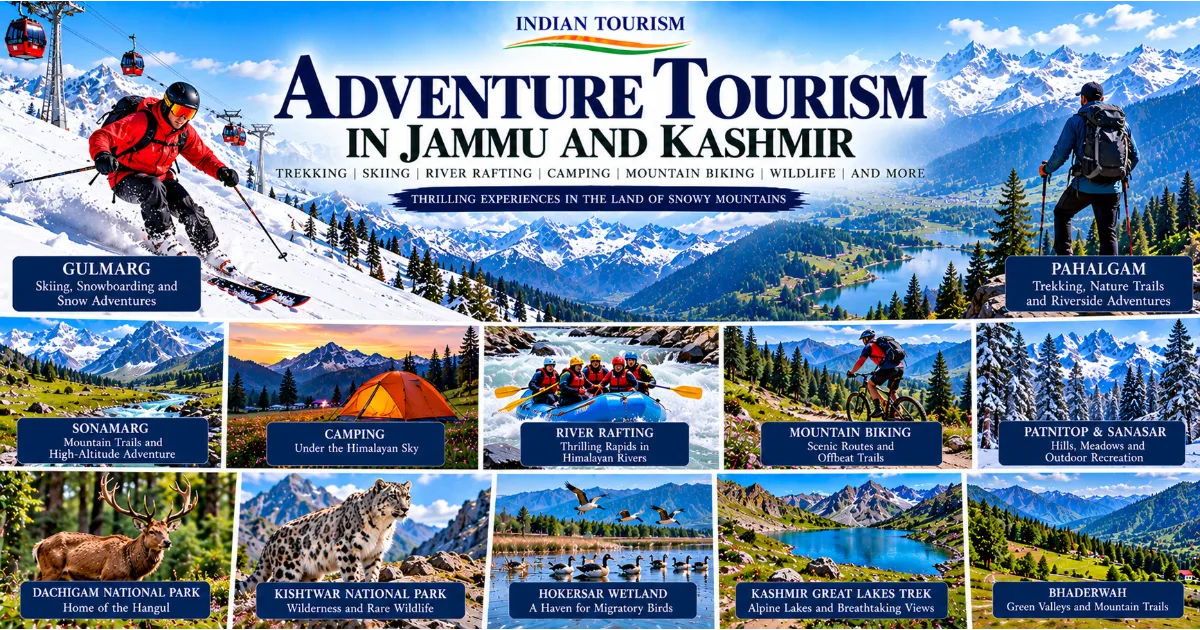
Where Every Journey Becomes an Adventure
Jammu and Kashmir is one of India's most exciting destinations for adventure tourism. Its towering Himalayan peaks, alpine meadows, winding mountain roads, fast-flowing rivers and snow-covered slopes create opportunities for travellers who want more than conventional sightseeing. Whether someone dreams of trekking through remote valleys, skiing on snowy mountain slopes, riding through dramatic landscapes or exploring mountain trails, the region offers experiences that combine excitement with extraordinary natural beauty.
Adventure tourism here is closely connected with geography. The Kashmir Valley provides access to destinations such as Gulmarg, Pahalgam and Sonamarg, where mountains, forests and meadows create settings for outdoor recreation. The Jammu region offers its own range of experiences, including trekking, camping and exploration around Patnitop, Bhaderwah and other mountain destinations. Higher elevations introduce more demanding challenges, requiring careful planning, suitable equipment and respect for changing weather.
The appeal of adventure tourism is not limited to physical activity. A trek can reveal remote villages and traditional ways of life. A skiing holiday can introduce visitors to mountain safety and winter landscapes. A river journey can demonstrate the power of Himalayan water, while a long drive through a mountain valley can provide a sense of the scale and diversity of the region.
Adventure tourism can also support local communities. Guides, instructors, transport providers, accommodation businesses and equipment operators may benefit when visitors choose responsible local services. At the same time, outdoor recreation must be managed carefully to protect fragile ecosystems and ensure visitor safety.
The mountains are beautiful, but they are not always predictable. Weather can change quickly, rivers can become dangerous after rainfall, snow conditions can shift and remote trails may offer limited communication or emergency support. A successful adventure therefore begins with realistic expectations and preparation.
This guide explores the major adventure activities available in Jammu and Kashmir, including trekking, skiing, snowboarding, river rafting, mountain biking, camping, fishing, photography and winter exploration. It also examines destinations, seasonal considerations, safety practices and responsible travel.
Whether you are planning your first mountain holiday or looking for a more challenging outdoor experience, Jammu and Kashmir offers opportunities to discover the Himalayas through movement, exploration and respect for nature.
1. Gulmarg: The Centre of Winter Adventure
Gulmarg is one of the best-known destinations for winter adventure in Jammu and Kashmir. Located in the Pir Panjal range, it is famous for snow-covered landscapes, mountain views and skiing opportunities. During winter, the destination attracts visitors who want to experience the Himalayan snow environment, from beginners trying snow activities for the first time to experienced skiers seeking more demanding terrain.
The surrounding landscape changes dramatically with the seasons. During warmer months, Gulmarg is known for green meadows and open mountain scenery. In winter, snow transforms the slopes and forests, creating a setting associated with skiing and snowboarding.
The Gulmarg Gondola is a major attraction, providing access to higher elevations and wide views of the surrounding mountains. It is important to understand that reaching a high altitude does not automatically mean that a particular ski route is suitable. Weather, snow stability, visibility and current operating arrangements determine what activities are safe.
Beginners should consider lessons from qualified instructors and use appropriate equipment. Skiing involves balance, speed and the ability to respond to changing terrain. A supervised learning area is a better starting point than attempting steep slopes without experience.
Snowboarding is another popular winter activity, but it requires its own skills and equipment. Visitors should select instruction suited to their ability and avoid routes beyond their level.
Experienced skiers may be interested in more challenging terrain, but off-piste skiing and high-mountain travel require specialised knowledge. Avalanche conditions can change quickly, and a route that appears attractive may still be dangerous. Anyone considering advanced terrain should use qualified local professionals, appropriate avalanche equipment and current expert guidance.
Gulmarg also offers winter scenery for visitors who do not ski. Walking in permitted areas, photographing snow-covered trees and enjoying the mountain views can be rewarding alternatives.
Winter conditions require warm layered clothing, waterproof outerwear, gloves, suitable footwear and sun protection. Snow reflects sunlight, and cold temperatures can affect people who are not properly equipped.
Gulmarg's appeal lies in the combination of accessible winter experiences and dramatic mountain scenery. Visitors should choose activities based on their actual skill and the conditions on the day rather than trying to complete every available experience.
2. Pahalgam: Trekking, Riverside Adventures and Mountain Exploration
Pahalgam is one of the most attractive destinations in Kashmir for travellers who enjoy outdoor activities. Surrounded by forested slopes, meadows and mountain scenery, it provides access to walking routes, trekking areas and river landscapes.
The Lidder River is one of Pahalgam's defining natural features. Its flowing water and surrounding scenery create opportunities for photography and riverside walks, while authorised operators may offer selected seasonal recreational activities. River conditions can change rapidly, so visitors should follow local safety instructions and never enter fast-moving water without appropriate professional arrangements.
Trekking is among the major attractions around Pahalgam. Some routes are suitable for visitors seeking relatively gentle walks, while others involve longer journeys, significant elevation changes and more demanding mountain conditions. The route should always be chosen according to fitness, experience, weather and available support.
The wider Pahalgam area is also associated with routes towards alpine meadows and high-altitude lakes. These journeys can involve several hours of walking or longer multi-day itineraries, depending on the destination. Trekkers should research current access arrangements, trail conditions and any permit requirements before departure.
A guided trek can be particularly valuable for visitors unfamiliar with Himalayan terrain. Local guides may provide information about routes, weather, cultural practices and practical considerations that are difficult to assess from maps alone.
Horse rides may be offered through local operators on certain routes, subject to current rules and conditions. Visitors should confirm the route and charges in advance, check that the animal appears well cared for and avoid activities that involve unsafe handling or excessive loads.
Pahalgam is also an excellent place for nature photography. Forests, river bends, meadows and distant peaks offer different compositions throughout the day. Visitors should remain on safe ground and avoid approaching unstable riverbanks for a photograph.
The best experience is often a balanced one. A traveller can combine a short walk, time beside the river and a guided outdoor activity without rushing through the landscape. Pahalgam rewards those who allow time to appreciate its natural surroundings.
3. Sonamarg: The Gateway to High-Mountain Adventure
Sonamarg, whose name is commonly translated as the Meadow of Gold, is known for its dramatic mountain scenery and access to high-altitude landscapes. Its wide valley, flowing rivers, surrounding peaks and seasonal snow make it an important destination for travellers interested in mountain adventure.
The Sind River runs through the area, adding movement to the landscape and providing a striking contrast with the surrounding slopes. Visitors can enjoy the scenery from safe public areas, take photographs and explore suitable walking routes according to local conditions.
Sonamarg is also associated with trekking and access towards mountain destinations. Some journeys involve difficult terrain, significant altitude changes and exposure to rapidly changing weather. Travellers should never assume that a route is safe simply because it is visible from a road or appears manageable in photographs.
Seasonal access is particularly important. Snow can affect mountain roads and walking routes, while rain and changing temperatures can influence trail conditions. Visitors should confirm the current situation before travelling and be prepared to change their plans.
For experienced trekkers, the wider region offers opportunities to explore high mountain environments, but these trips require suitable equipment and careful preparation. A guide may be necessary, particularly for routes that cross remote terrain or involve overnight stays.
Camping should take place only where permitted and where conditions are appropriate. Campers must understand temperature changes, water availability, waste disposal and the possibility of severe weather. A pleasant afternoon can be followed by a very cold night at altitude.
Sonamarg is also rewarding for travellers who prefer less strenuous experiences. Short walks, roadside viewpoints and photography can provide a memorable introduction to the mountain landscape.
The region's beauty should not encourage unnecessary risk. Stay away from unstable slopes, avoid crossing fast-flowing streams and follow all instructions from local authorities.
Sonamarg demonstrates why adventure tourism in Jammu and Kashmir requires both enthusiasm and judgement. The mountains offer extraordinary experiences, but careful preparation is essential to enjoy them safely.
4. Trekking in Jammu and Kashmir: Trails for Different Levels
Trekking is one of the most rewarding ways to experience the landscapes of Jammu and Kashmir. Unlike a road journey, a trek allows visitors to move gradually through changing environments, from forests and villages to open meadows, rocky slopes and high-altitude lakes.
The region offers a wide variety of trekking experiences, but difficulty depends on several factors. Distance alone does not determine how demanding a route will be. Elevation gain, altitude, weather, trail surface, river crossings and the availability of support can all affect the challenge.
Easy Walks and Short Hikes
Travellers new to trekking can begin with short walks on established paths near accessible destinations. These outings provide an opportunity to learn about footwear, pacing and hydration without committing to a long journey.
Even easy walks require preparation. Trails may be uneven, rain can make surfaces slippery and temperatures can change quickly. Visitors should carry water, wear suitable shoes and return before conditions deteriorate.
Moderate Mountain Treks
Moderate routes may involve several hours of walking, longer climbs and more varied terrain. These journeys are better suited to people with reasonable fitness and some experience walking outdoors.
A planned route should include realistic walking times, breaks and an understanding of where water and shelter may be available. Trekkers should also check whether local guides or permits are required.
High-Altitude and Multi-Day Treks
High-altitude journeys require more extensive preparation. Trekkers may need to carry camping equipment, food, navigation tools and emergency supplies. Weather can become severe, and mobile connectivity may be unreliable.
Altitude affects people differently. Headache, nausea, dizziness and unusual fatigue can be warning signs of altitude-related illness. Travellers should not continue climbing when symptoms develop and should seek appropriate help.
A responsible multi-day trek includes a realistic itinerary, suitable equipment, a plan for changing weather and a clear understanding of how to return safely.
Respecting Trails and Local Communities
Trekking routes may pass through grazing areas, villages and fragile natural habitats. Visitors should remain on established trails, ask before photographing residents and avoid damaging plants.
Carry waste back rather than leaving it beside the path. Avoid loud music and respect the needs of other trekkers and local communities.
The most rewarding trek is not necessarily the longest or most difficult. Choosing a route that matches your ability allows you to appreciate the landscape while reducing the likelihood of avoidable problems.
5. The Kashmir Great Lakes Trek: A Journey Through Alpine Scenery
The Kashmir Great Lakes Trek is one of the region's best-known trekking experiences. It is associated with a sequence of alpine lakes, mountain passes, meadows and high-altitude campsites that reveal the dramatic variety of the Kashmir Himalayas.
The route is generally undertaken as a multi-day trek and can involve substantial walking, steep ascents and descents, high elevations and changing weather. It should not be treated as a casual day excursion.
The landscape is one of the trek's main attractions. Alpine lakes reflect surrounding peaks, while open meadows provide a contrast with rocky mountain slopes. The scenery changes as trekkers move between valleys and passes, creating a sense of progression through the landscape.
Conditions are seasonal. Snow may remain on high sections at some times of year, while rainfall can affect trail surfaces and stream crossings. The exact opening period and safe conditions depend on the season and current local guidance.
Trekkers should book through responsible operators or arrange appropriate support if they lack experience in remote mountain environments. Before committing, confirm the itinerary, included services, emergency arrangements and equipment requirements.
Fitness preparation is important. Walking regularly, practising on uneven terrain and building stamina before the trip can make the experience more comfortable. Suitable footwear and clothing are essential, as temperatures can fall sharply after sunset.
Altitude should be taken seriously. A person who feels comfortable at lower elevations may experience symptoms at higher camps. A sensible itinerary allows time to adapt and includes clear procedures for responding to illness.
Environmental responsibility is particularly important around alpine lakes. These ecosystems are sensitive to waste, pollution and trampling. Camp only in permitted locations, use established routes and carry all rubbish out.
The Kashmir Great Lakes Trek can be a memorable experience for well-prepared trekkers. Its beauty is best appreciated when the journey is planned carefully and the landscape is treated with respect.
6. Patnitop and Sanasar: Outdoor Recreation in the Jammu Region
Patnitop and nearby Sanasar provide a different kind of adventure experience from the high-altitude trekking destinations of the Kashmir Valley. Located in the Jammu region, these areas combine forested hills, open landscapes and mountain views with opportunities for outdoor recreation.
Patnitop is known for its elevated setting and scenic surroundings. Visitors can enjoy walks, viewpoints and seasonal activities offered through local operators. The atmosphere is particularly appealing to travellers who want to spend time outdoors without necessarily undertaking a demanding expedition.
Sanasar is associated with open meadows and a quieter mountain setting. Depending on current arrangements, visitors may find opportunities for activities such as trekking, camping and other organised recreation.
The suitability of any activity depends on the season, weather, operator standards and the participant's experience. Before booking, ask what the activity involves, what equipment is provided and what safety measures are in place.
These destinations can be attractive for families and groups with different interests. Some visitors may prefer a short walk and scenic drive, while others may want to explore more active pursuits. Planning a flexible itinerary helps accommodate different fitness levels.
Visitors should also consider road conditions and travel times. Mountain journeys can take longer than expected, especially during busy periods or adverse weather.
Camping should be undertaken only in approved areas with appropriate arrangements for sanitation, waste disposal and fire safety. Open fires may be restricted or unsuitable, particularly in forested areas.
Patnitop and Sanasar show that adventure tourism does not always require extreme conditions. A well-planned walk, a night in suitable accommodation or a guided outdoor activity can provide a rewarding connection with the landscape.
7. Bhaderwah: Green Valleys and Mountain Trails
Bhaderwah, in the Jammu region, is known for its green landscapes, forests, mountain views and scenic valleys. It is often associated with outdoor travel and offers a different atmosphere from the more familiar tourist centres of the Kashmir Valley.
The surrounding landscape provides opportunities for walking, nature photography and exploration of forested areas. Depending on the location and season, visitors may encounter meadows, streams and mountain viewpoints that make the region appealing to nature enthusiasts.
Bhaderwah is also associated with routes towards higher terrain and nearby scenic areas. Travellers should distinguish between accessible viewpoints and longer trekking routes that require preparation and local guidance.
Weather can change quickly in mountain environments. Rain may make paths slippery, while cooler temperatures can affect comfort even during warmer months. Anyone planning a longer walk should carry appropriate clothing and confirm the current state of the route.
The area's natural beauty is also connected with local communities and rural livelihoods. Visitors should respect private land, ask permission before entering restricted areas and avoid disturbing livestock or agricultural activity.
Nature photography is a rewarding activity here, but it should not come at the expense of safety. Avoid approaching unstable slopes or stream edges and stop vehicles only in safe, permitted locations.
Responsible visitors can support local businesses by using reputable guides, accommodation providers and transport services. Asking about local customs and following community guidance helps create a more positive travel experience.
Bhaderwah offers an opportunity to discover another side of Jammu and Kashmir's mountain environment. It rewards travellers who enjoy scenic landscapes and outdoor exploration without needing to seek the most extreme adventure available.
8. River Rafting: Understanding the Power of Himalayan Water
River rafting can be an exciting way to experience the flowing waters of Jammu and Kashmir, but it is an activity that demands respect for natural conditions. The region's rivers are influenced by snowmelt, rainfall and mountain geography, which means that water levels and currents can change significantly.
The Lidder River around Pahalgam is associated with seasonal recreational activities, including rafting offered by local operators when conditions permit. The availability of rafting depends on the route, water levels, weather and current local rules.
Rafting is not suitable in every condition. High water, strong currents, cold temperatures and obstacles can create serious hazards. Visitors should never attempt to organise a river trip independently without the required training, equipment and safety support.
Choose an operator that provides suitable life jackets, helmets, trained guides and a clear safety briefing. Ask about the route, expected duration, participant requirements and what happens if conditions change.
Listen carefully to instructions before entering the water. Participants should understand basic commands and know how to respond if they fall into the river or the raft encounters difficult conditions.
Children and inexperienced swimmers may have additional requirements or restrictions. The operator should explain these clearly rather than encouraging everyone to participate regardless of ability.
Avoid rafting during severe weather or when authorities advise against river activities. Water can become dangerous after rainfall, and conditions upstream may affect a route even when the weather appears calm at the starting point.
Visitors should also respect the river environment. Do not throw waste into the water or leave rubbish on the banks. Choose operators who follow responsible practices and respect local restrictions.
Rafting can be memorable when conducted under appropriate conditions. The goal is to enjoy the river while recognising that Himalayan water is powerful and unpredictable.
9. Mountain Biking and Cycling Through Scenic Landscapes
Mountain biking offers a way to explore the varied terrain of Jammu and Kashmir at a different pace. Forest roads, selected mountain routes and suitable local trails can provide opportunities for cycling, although not every road or path is appropriate for recreational riders.
The region's scenery makes cycling appealing. Riders may pass through wooded areas, open meadows, villages and mountain viewpoints, gaining a closer appreciation of the landscape than they might from a vehicle.
However, mountain roads can be steep, narrow and exposed to traffic. Road cycling requires attention to visibility, road surface, weather and the behaviour of other road users. Riders should never assume that a scenic route is safe simply because traffic appears light.
Mountain biking on unpaved trails requires appropriate skills and equipment. Loose stones, roots, sudden drops and wet surfaces can increase the risk of falls. Beginners should choose easier routes and avoid steep terrain beyond their ability.
A suitable bicycle should be checked before departure, including brakes, tyres, gears and frame condition. Riders should carry water, a basic repair kit, a helmet and weather-appropriate clothing.
Group rides should remain organised, with participants aware of the route and a plan for dealing with mechanical problems or changing conditions. Solo riders should share their route and expected return time with someone reliable.
Environmental responsibility is also important. Stay on permitted trails, avoid damaging vegetation and do not create new tracks through sensitive areas. Yield appropriately to walkers and respect local access rules.
Mountain biking can combine exercise, exploration and scenic travel, but it requires sensible route selection and attention to road safety.
10. Camping Under the Himalayan Sky
Camping offers an opportunity to experience Jammu and Kashmir's landscapes beyond daytime sightseeing. A night in a suitable mountain setting can reveal changing light, quiet surroundings and a closer relationship with the natural environment.
However, camping requires more preparation than simply carrying a tent. Weather, temperature, water availability, terrain and access to emergency support all influence where and when camping is appropriate.
Visitors should camp only in permitted locations. Some protected areas, forests and alpine environments may have restrictions intended to protect wildlife and fragile vegetation. Local rules should always take priority over online suggestions or informal advice.
A suitable campsite should be selected with attention to drainage, wind exposure, nearby water hazards and the risk of falling branches or unstable ground. Avoid camping beside fast-flowing rivers or in places that could flood after rain.
Equipment should match the expected conditions. A tent, sleeping bag, sleeping mat and clothing suitable for nighttime temperatures are essential. At higher elevations, temperatures can fall sharply even when the daytime weather feels comfortable.
Food and waste need careful management. Store food securely, never feed wildlife and carry rubbish out. Leftover food can attract animals and create conflict with people.
Fire safety is especially important in forested areas. Open fires may be prohibited or dangerous, and visitors should follow all restrictions. Use approved cooking equipment only where permitted and never leave a flame unattended.
Campers should understand basic navigation and emergency planning. Mobile connectivity may be limited, so a trip should not depend entirely on a phone signal.
A responsible camping trip allows visitors to enjoy the landscape without leaving a visible impact. The best campsite is one that remains clean and undisturbed after the visitors have departed.
11. Horse Riding and Traditional Mountain Travel
Horse riding is offered in selected tourist areas of Jammu and Kashmir, often providing access to meadows, viewpoints or routes where walking may take longer. For some visitors, it is a convenient way to explore a landscape, while for others it is an introduction to a traditional form of mountain transport.
The experience depends heavily on the operator, route and condition of the animal. Visitors should ask about the expected duration, terrain, charges and whether the ride is suitable for their experience level.
Animal welfare should be a priority. Look for animals that appear healthy, are not visibly injured and are not being overloaded. Avoid operators who use forceful handling or continue working animals that appear exhausted.
Riders should follow instructions about mounting, controlling the horse and maintaining distance from other animals. Helmets and other safety measures should be used where available and appropriate.
Some routes may cross uneven ground, narrow paths or slopes. Visitors who feel uncomfortable on horseback should not be pressured into participating. Walking with a guide may be a better alternative.
Weather and trail conditions also matter. Mud, snow and loose stones can increase the risk of slipping, while crowded routes can create additional hazards.
Before setting out, confirm the route and return point. Do not assume that a quoted price includes every service, and agree on costs before beginning the activity.
Horse riding can provide a useful connection with local travel traditions when managed responsibly. It should support both visitor safety and the welfare of the animals involved.
12. Fishing and Angling: A Quiet Form of Adventure
Fishing and angling offer a slower form of outdoor recreation for travellers who enjoy patience, observation and time beside the water. Rivers and streams across parts of Jammu and Kashmir are associated with freshwater fishing, but access and regulations vary by location.
Visitors should not assume that fishing is allowed wherever water is present. Licences, permits, seasons, equipment restrictions and catch rules may apply. These should be checked through the relevant authorities before planning an outing.
Responsible fishing is important for protecting freshwater ecosystems. Fish populations depend on suitable habitat, water quality and appropriate management. Excessive harvesting, pollution and habitat changes can affect their long-term health.
Anglers should use only permitted methods and avoid damaging riverbanks or vegetation. All waste, including fishing line and packaging, should be removed because it can injure wildlife and contaminate the environment.
Cold mountain water can also be dangerous. Slippery stones, strong currents and sudden changes in water level create risks even when a river looks calm. Stay away from unstable edges and follow local guidance.
For visitors new to the activity, a knowledgeable local guide can explain regulations, suitable locations and environmental considerations. They can also help distinguish legal fishing opportunities from restricted areas.
Fishing can complement a broader nature-focused trip, offering time to observe birds, plants and changing weather. The experience should be based on respect for the waterway and the wildlife it supports.
13. Photography, Nature Walks and Gentle Outdoor Adventures
Not every adventure in Jammu and Kashmir needs to involve speed, steep climbs or demanding physical effort. Nature walks, photography and short excursions provide rewarding ways to explore the region while accommodating different fitness levels.
The landscape offers many subjects, including forests, rivers, meadows, mountain silhouettes and changing weather. Photographers can spend time studying light, reflections and the way clouds move across the peaks.
A nature walk can be as simple as following an established path near a meadow or forest edge. Visitors should remain on suitable routes and avoid entering restricted areas in search of a better view.
Birdwatching is another gentle outdoor activity. Binoculars and a field guide can help visitors observe species without approaching them closely. Quiet observation often provides a richer experience than trying to photograph every animal.
Families should select routes that match the abilities of all participants. Children need supervision near rivers, slopes and uneven terrain, while older visitors may prefer routes with frequent rest points.
Weather preparation remains important even for short outings. Carry drinking water, suitable footwear and clothing that can accommodate changing temperatures.
Photography should never compromise safety. Do not stand on unstable rocks, approach dangerous water or stop vehicles in unsafe locations for a picture.
Gentle adventures can create lasting memories because they leave time for observation. They also make the region's natural beauty accessible to travellers who do not want a physically demanding itinerary.
14. Winter Adventures Beyond Skiing
Winter in Jammu and Kashmir offers more than skiing and snowboarding. Snow-covered forests, mountain viewpoints and quiet landscapes can provide rewarding experiences for visitors who want to appreciate the season without undertaking high-risk activities.
Depending on local conditions, visitors may enjoy short walks in permitted areas, winter photography and guided excursions that do not require specialised mountaineering skills. The availability of activities varies with snowfall, road access and local safety advice.
Snow can hide uneven ground, rocks and drainage channels, making apparently simple walks more difficult than expected. Suitable footwear and warm clothing are essential, and visitors should avoid unfamiliar terrain.
Cold weather can also affect health and equipment. Wet clothing, wind exposure and long periods outdoors can increase the risk of cold-related illness. Travellers should take breaks in suitable shelters and return before conditions worsen.
Winter driving requires particular caution. Snow and ice can make roads slippery, and mountain routes may be affected by closures or delays. Check road conditions and allow extra time.
Snow-related activities should be undertaken only where permitted and with suitable supervision. Visitors should not enter avalanche-prone areas or attempt off-piste routes without the necessary expertise and equipment.
For many travellers, the most rewarding winter experience is simply observing the landscape. Snow changes the appearance of forests, rooftops and mountain slopes, creating an atmosphere that differs completely from the summer scenery.
Winter adventures are most enjoyable when the itinerary remains flexible and safety takes priority over completing a planned activity.
15. Safety in the Mountains: Essential Rules for Every Traveller
Mountain environments can change quickly, and safe travel depends on preparation, judgement and the willingness to change plans. Even experienced outdoor enthusiasts need to consider the conditions of each individual journey.
Check the Weather
Review current forecasts and local guidance before leaving. Mountain weather may differ from conditions in nearby towns, and rain, snow, wind or fog can develop rapidly.
Choose Activities That Match Your Ability
Do not attempt a difficult trek, ski route or river activity simply because other visitors are doing it. Choose an activity appropriate to your training, fitness and experience.
Use Qualified Professionals
For activities involving significant risk, use reputable guides and operators. Confirm what training, safety equipment and emergency procedures are provided.
Carry Essential Equipment
Suitable footwear, layered clothing, water, food, a charged phone and basic emergency supplies can make a substantial difference. More demanding trips may require specialised equipment and navigation tools.
Respect Altitude
High elevation can affect people differently. Ascend gradually when required, recognise symptoms of altitude-related illness and seek help rather than continuing when symptoms develop.
Stay Away From Dangerous Water
Do not enter fast-flowing rivers or cross streams without reliable guidance. Water levels may change quickly, and cold currents can be powerful.
Tell Someone Your Plan
For longer or remote journeys, share your route and expected return time with someone reliable. Understand that mobile coverage may be limited.
Turn Back When Necessary
A route is not worth completing if conditions become unsafe. Turning back is a sensible decision, not a failure.
These rules apply to beginners and experienced travellers alike. Responsible adventure tourism begins with recognising the limits of both people and the environment.
16. Responsible Adventure Tourism and Environmental Protection
The natural landscapes that make Jammu and Kashmir attractive for adventure tourism are also vulnerable to careless behaviour. Mountain trails, alpine meadows, forests and riverbanks can be damaged by waste, excessive vehicle movement and poorly managed visitor activity.
Plastic packaging and discarded bottles are especially problematic in remote locations, where waste collection may be limited. Visitors should carry waste back and avoid assuming that someone else will remove it.
Stay on established trails wherever possible. Creating new tracks can damage vegetation, increase erosion and disturb wildlife. Shortcuts across slopes may also be dangerous.
Respect local communities and private land. Some routes pass through grazing areas or near homes, and visitors should follow local guidance rather than treating every open space as unrestricted public land.
Avoid disturbing wildlife. Loud music, feeding animals and approaching birds or mammals can affect their behaviour. Keep a respectful distance and never use bait to obtain a photograph.
Choose operators who take safety and environmental management seriously. A responsible business should explain the activity clearly, follow applicable rules and manage waste appropriately.
Camp only in permitted locations and follow restrictions on fires. Use water carefully and avoid contaminating streams or lakes with soap, detergents or food waste.
Adventure tourism can support conservation when visitors understand that natural landscapes are not disposable recreational spaces. Protecting them ensures that future travellers and local communities can continue to benefit from their beauty.
17. Supporting Local Guides and Outdoor Businesses
Local guides and outdoor businesses can make an adventure trip more informative and better organised. Their knowledge of routes, weather patterns, local customs and seasonal conditions may be especially valuable in mountainous environments.
Visitors should choose providers carefully. Ask about relevant experience, safety equipment, group sizes, route difficulty and emergency arrangements. Be cautious of operators who make unrealistic promises or dismiss concerns about weather and safety.
Agree on prices and services before beginning an activity. Confirm whether transport, equipment, meals, accommodation and permits are included.
Using local services can support livelihoods in mountain communities. Guides, drivers, instructors, accommodation providers and food businesses may all benefit when tourism is managed responsibly.
Respect for local culture is equally important. Ask before photographing residents, follow customs at religious sites and avoid creating noise or disruption in villages.
Animal-based activities require additional care. If horses are used for transport, consider their condition and the way they are handled. Do not support practices that appear harmful or unsafe.
A knowledgeable guide can also help visitors understand conservation challenges and the importance of protecting the local environment. This turns an outdoor activity into an opportunity for learning.
Supporting responsible local businesses helps make adventure tourism more sustainable, benefiting both visitors and the communities that welcome them.
18. Planning a Multi-Day Adventure Trip
A multi-day adventure holiday in Jammu and Kashmir should be planned around a clear set of priorities. The best itinerary depends on the time available, the season, the activities desired and the physical abilities of the travellers.
A winter trip may focus on Gulmarg and suitable snow activities, while a summer holiday might combine Pahalgam, Sonamarg and shorter walks. Travellers interested in trekking may need to dedicate several days to one route rather than moving between many distant destinations.
Avoid scheduling demanding activities on every day. Rest periods allow travellers to recover, adapt to altitude and respond to weather changes.
Transport should be planned realistically. Mountain roads can be slow, and delays may occur because of traffic, weather or local restrictions. Leave enough time between activities and avoid committing to a difficult excursion immediately after a long journey.
Accommodation should be selected according to the route and expected conditions. For remote treks, confirm the arrangements for camps, food, water and emergency support.
Travel insurance should be reviewed carefully where adventure activities are planned. Check whether the policy covers the specific activity, altitude and type of trip, as exclusions may apply.
Keep essential information accessible, including emergency contacts, operator details and the planned route. In remote areas, do not rely solely on digital documents stored on a phone.
Finally, build flexibility into the itinerary. If weather or safety conditions change, be prepared to replace a demanding activity with a safer alternative.
A successful adventure holiday is not measured by the number of activities completed. It is measured by the quality of the experience, the care taken with safety and the respect shown to the environment.
Conclusion: Discover the Adventurous Side of Jammu and Kashmir
Jammu and Kashmir offers a remarkable range of outdoor experiences, from skiing in Gulmarg and trekking around Pahalgam to exploring Sonamarg's mountain scenery, enjoying selected river activities and discovering the forested landscapes of Patnitop, Sanasar and Bhaderwah.
For some visitors, adventure means climbing a mountain trail or spending several days beside alpine lakes. For others, it means cycling through a scenic landscape, observing birds, camping in an approved location or photographing the changing light over a valley.
The region's diversity makes it possible to design trips for different interests and abilities. However, every activity requires an honest assessment of conditions and preparation. Mountain weather, high altitude, strong rivers and remote routes can create serious risks when visitors underestimate them.
Plan according to the season, choose reputable operators, carry suitable equipment and follow local safety instructions. Do not attempt difficult routes beyond your ability, and never allow the desire for a photograph or a memorable story to override safety.
Responsible adventure tourism also means protecting the landscapes that make these experiences possible. Carry waste back, respect wildlife, remain on permitted trails and support local businesses that follow good environmental and safety practices.
The mountains of Jammu and Kashmir offer far more than dramatic scenery. They provide opportunities to build confidence, learn new skills, appreciate local culture and develop a deeper connection with nature.
Whether your ideal journey involves snow-covered slopes, a peaceful forest walk, a challenging trek or a carefully guided river adventure, the key is to explore with curiosity and respect.
Discover the adventurous side of Jammu and Kashmir, where Himalayan landscapes invite exploration and every journey begins with preparation, courage and respect for nature.
#IndianTourism #JammuAndKashmir #AdventureTourism #Gulmarg #Pahalgam #Sonamarg #Patnitop #Sanasar #Bhaderwah #HimalayanTrekking #SkiingInKashmir #Snowboarding #RiverRafting #MountainBiking #Camping #NaturePhotography #OutdoorAdventure #ResponsibleTourism #ExploreKashmir #ExploreIndia #Himalayas

