
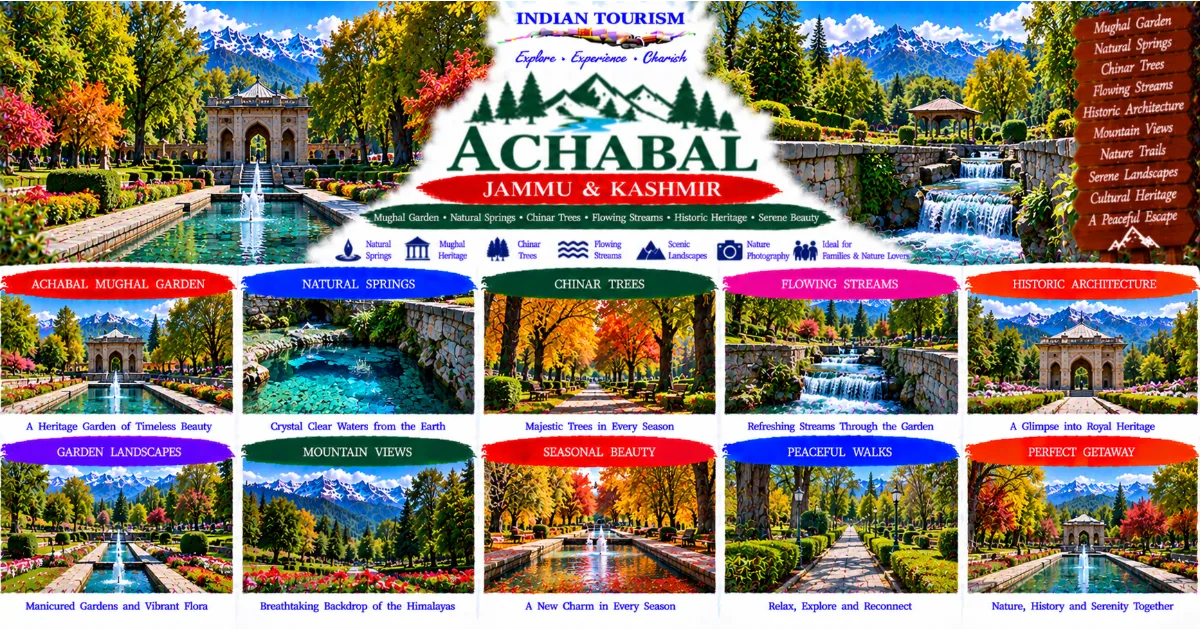
A Peaceful Garden in the Heart of Kashmir
Kashmir is celebrated for its snow-covered mountains, beautiful lakes, green meadows and historic gardens that reflect centuries of cultural exchange. Among the Valley’s most fascinating heritage destinations is Achabal Mughal Garden, located in the Anantnag district of Jammu and Kashmir. Known for its natural springs, carefully arranged garden spaces, mature chinar trees and connection with the Mughal period, Achabal offers visitors an experience that combines history, architecture, nature and the slower rhythm of traditional Kashmiri life.
Unlike destinations that depend primarily on dramatic mountain views or adventure activities, Achabal invites visitors to appreciate beauty through water, greenery, symmetry and quiet surroundings. Its appeal lies in the relationship between the landscape and the garden design. Water flows through the garden, trees provide shade, and the surrounding countryside creates a peaceful setting for a leisurely visit. The result is a destination where the natural environment and historic landscaping complement one another.
Achabal is particularly rewarding for travellers who want to explore beyond the most familiar tourist locations in Kashmir. While Srinagar’s gardens and lakes attract large numbers of visitors, Achabal provides an opportunity to discover another important part of the region’s garden heritage. It can be included in a broader journey through South Kashmir, especially for travellers interested in historical monuments, traditional landscapes, local culture and scenic countryside.
This guide explores the history of Achabal Mughal Garden, its springs and landscape, the best time to visit, travel planning, photography opportunities, nearby attractions, local experiences and practical considerations for making the most of a trip.
The Historical Background of Achabal Mughal Garden
The Mughal Interest in Kashmir
The Mughal emperors developed a strong appreciation for Kashmir’s natural environment. The Valley’s cool climate, mountain scenery, flowing water and fertile land made it an attractive retreat from the heat of the northern Indian plains. Gardens became an important expression of royal taste and cultural identity. They offered places for rest, reflection, social gatherings and the enjoyment of carefully designed landscapes.
Mughal garden design drew upon Persian traditions while adapting them to local terrain, climate and water sources. Geometric layouts, flowing channels, terraces, planted avenues and shaded resting places were used to create an ordered relationship between architecture and nature. In Kashmir, the natural availability of water and the dramatic landscape allowed these ideas to develop in distinctive ways.
Achabal became part of this wider tradition of royal garden making. Its natural springs provided a valuable foundation for the garden, allowing water to become one of its central features. Rather than creating an artificial landscape entirely dependent on constructed water supplies, the garden could build upon the existing natural environment.
Nur Jahan and the Garden Tradition
Achabal is widely associated with the Mughal empress Nur Jahan, who is credited with developing the garden in the early seventeenth century. Nur Jahan was an influential figure in Mughal court life and had a strong interest in architecture, gardens and artistic patronage. Her association with Achabal reflects the importance of Kashmir as a place of retreat and the role of royal women in the cultural landscape of the Mughal Empire.
The garden’s historical identity is connected with a period when Kashmir’s natural beauty attracted imperial attention. Royal gardens were not simply decorative spaces. They represented power, refinement and the ability to shape a landscape according to aesthetic principles. They also provided a setting for leisure and courtly life.
Visitors today should understand Achabal as part of this larger historical tradition rather than viewing it only as a scenic park. Its value lies in the combination of natural springs, historic garden planning and the cultural history of Kashmir.
A Living Heritage Landscape
Historic gardens are different from monuments that can be understood through a single building or inscription. Their character emerges from the relationship between water, vegetation, paths, levels and open spaces. Trees grow, planting changes and maintenance practices evolve over time. A garden may therefore preserve its historical identity while also reflecting centuries of adaptation.
Achabal’s springs remain central to its appeal. The movement of water creates sound and visual interest, while the surrounding greenery offers shade and contrast. These features help visitors understand why flowing water was so important in traditional garden design.
The garden should be appreciated as a living heritage landscape that requires regular care. Protecting its water channels, mature trees, paths and historic features helps maintain the experience for future generations.
Understanding the Landscape and Garden Design
The Importance of Natural Springs
Water is the defining feature of Achabal Mughal Garden. The natural springs provide the foundation for the garden’s atmosphere and distinguish it from landscapes where water is introduced primarily through artificial fountains or ornamental ponds.
In Kashmir, springs have long been valued for their practical and cultural importance. They provide water, support vegetation and influence the character of settlements and agricultural landscapes. In a formal garden, a spring can become both a functional resource and an aesthetic centrepiece.
At Achabal, the relationship between the spring water and the garden creates a sense of continuity. Visitors can observe how water moves through the landscape and how the garden’s planted areas benefit from its presence. The sound of flowing water also contributes to the feeling of tranquillity that many people associate with the destination.
When visiting, take time to notice the water itself rather than treating it only as a background for photographs. Observe the way light reflects on the surface, how the channels interact with the planted spaces and how the sound changes as you move around the garden.
Terraces, Paths and Visual Order
Mughal gardens frequently use levels and carefully arranged pathways to guide movement through the landscape. Terraces can create a sense of progression, while water channels and planted avenues establish visual connections between different parts of the garden.
These principles encourage visitors to experience a garden gradually. A path may lead towards a water feature, a shaded area may offer a pause, and an opening between trees may reveal another section of the landscape. The experience is shaped by movement as much as by the view from any single point.
At Achabal, the overall atmosphere is one of structured greenery balanced with the natural character of the site. The garden’s design provides a framework through which visitors can appreciate the surrounding trees, water and open spaces.
Chinar Trees and the Character of Kashmir
Chinar trees are among the most recognisable elements of Kashmir’s cultural landscape. Their broad canopies create generous shade, and their leaves change dramatically with the seasons. During summer, the trees provide a cool green setting. In autumn, their foliage can turn shades of yellow, orange, copper and red, giving the landscape a distinctive appearance.
In a historic garden, mature trees contribute more than beauty. They create a sense of age and continuity, linking the present landscape with generations of visitors who have experienced the same shaded spaces. Their scale also gives the garden a human dimension, making it a comfortable place to walk and pause.
Visitors should avoid damaging tree roots, climbing on old trees or attaching objects to branches. Protecting mature vegetation is an important part of preserving the garden’s character.
What to See and Experience at Achabal
The Spring and Water Channels
Begin your visit by spending time near the spring and observing the water features. These elements help explain the garden’s historical appeal and provide a natural starting point for understanding its design.
Look at the relationship between the water and the planted areas. Notice how the garden uses flowing water to create movement within a relatively calm landscape. Depending on the season and the condition of the site, the appearance and sound of the water may vary.
The spring area can be a rewarding place for photography, especially when natural light falls across the water and surrounding greenery. Visitors should follow local instructions and avoid entering restricted water areas. Do not treat the spring as a swimming or bathing facility unless a clearly designated and officially permitted area exists.
Shaded Walkways and Garden Views
One of the simplest pleasures of Achabal is walking through its shaded areas. The garden encourages a relaxed pace, allowing visitors to appreciate the changing relationship between sunlight, trees and water.
Rather than rushing through the grounds, allow time for several short pauses. A shaded bench, a view across a planted terrace or a quiet section beside a water channel can become a memorable part of the visit. The destination is best enjoyed through observation rather than a packed schedule.
Comfortable footwear is useful because paths and surfaces can vary. After rain, some sections may be slippery, so move carefully and follow any instructions from garden staff.
Historic Architecture and Landscape Features
The garden’s historic identity is expressed through its overall layout as well as its individual features. Depending on access and maintenance conditions, visitors may notice built elements, retaining structures, water channels and other details that reflect the relationship between architecture and the natural setting.
Take time to observe the construction materials and the way built features fit into the landscape. Historic gardens often reveal their design principles through small details that are easy to miss when visitors focus only on the main spring or the largest trees.
Respect any closed or protected sections. Barriers and restrictions help safeguard vulnerable features and should not be crossed for photography.
Quiet Moments and Slow Travel
Achabal is especially suitable for slow travel. This approach focuses on spending meaningful time in a place instead of attempting to visit as many attractions as possible in one day. A garden can be a particularly rewarding setting for this style of travel because its beauty is revealed gradually.
Visitors may enjoy a quiet walk, observe birds, photograph the water, study the trees or simply rest in the shade where permitted. Families can use the visit as an opportunity to introduce children to garden history and the importance of preserving historic landscapes.
The garden may also appeal to travellers who have spent several days visiting crowded viewpoints or undertaking longer road journeys. A peaceful garden stop provides a different rhythm and helps balance a wider itinerary.
Best Time to Visit Achabal Mughal Garden
Spring: Fresh Greenery and New Growth
Spring is an attractive season for visiting Kashmir’s gardens. As temperatures rise after winter, the landscape begins to regain its greenery, and flowering plants may add colour to the garden. The surrounding countryside can also look fresh and inviting.
Spring conditions vary from year to year. Early spring may remain cool, while later weeks generally bring milder daytime temperatures. Visitors should carry a light jacket and check the weather before travelling, especially if their journey includes higher or more exposed roads.
This season suits travellers who enjoy gardens, landscape photography and comfortable walks without the heat associated with summer in many parts of India.
Summer: A Comfortable Garden Escape
Summer is a popular time to explore Kashmir because the Valley offers relief from the intense heat experienced in many other regions. Achabal’s trees and flowing water make the garden particularly appealing during warm afternoons, although direct sunlight can still be strong.
For a comfortable visit, consider arriving in the morning or later in the afternoon. These periods may provide softer light for photography and a more pleasant environment for walking. Carry drinking water and protect yourself from the sun.
Summer can also be suitable for combining Achabal with other destinations in South Kashmir. However, travel times should be planned realistically, since road conditions and local traffic can affect the schedule.
Autumn: The Beauty of Changing Leaves
Autumn is one of the most visually distinctive seasons in Kashmir. Chinar leaves may change from green to shades of gold, amber, orange and red, creating a rich palette across the landscape. The exact timing and intensity of the colour change depend on weather conditions and the health of individual trees.
For photographers and travellers interested in seasonal landscapes, autumn can be an excellent choice. The contrast between colourful foliage, historic garden features and flowing water can create memorable compositions.
Temperatures gradually become cooler, particularly in the morning and evening. Pack warm layers and allow enough time to enjoy the garden without rushing.
Winter: A Different and Quieter Atmosphere
Winter brings colder weather to Kashmir, and the garden’s appearance may change considerably. Some plants become dormant, while the trees lose their leaves. Snow or frost may occur depending on local conditions, but visitors should not assume that the garden will be snow-covered on a particular date.
The quieter winter atmosphere can appeal to travellers interested in the seasonal character of historic landscapes. However, cold temperatures, wet paths and changing road conditions require additional preparation.
Before travelling in winter, confirm that the garden is open and that access is practical. Wear suitable footwear and warm clothing, and avoid walking on icy surfaces.
How to Reach Achabal Mughal Garden
Reaching the Garden from Srinagar
Srinagar is a major entry point for travellers exploring Kashmir. Visitors arriving by air can use Srinagar as the starting point for a road journey towards South Kashmir. The route to Achabal passes through the wider Kashmir Valley, with journey duration depending on traffic, road conditions, weather and the precise starting point.
Travellers should plan the journey with a reliable local driver or transport provider familiar with the region. It is sensible to check current road conditions before departure and avoid building an itinerary around an unrealistically short travel estimate.
A private vehicle provides flexibility for visitors who want to stop at viewpoints, local markets or other attractions along the way. Travellers using public transport should confirm the current routes and onward connections locally, since services and schedules can change.
Reaching Achabal from Anantnag
Anantnag is an important regional centre for exploring South Kashmir. Its location makes it a useful base for travellers visiting Achabal and other nearby destinations.
A road journey from Anantnag can be combined with a visit to local markets or additional heritage sites, depending on the available time. Travellers staying in the area may find it easier to visit Achabal without the pressure of returning to Srinagar on the same day.
Local transport arrangements should be confirmed before setting out, particularly during holidays, adverse weather or periods of increased visitor activity.
Choosing the Right Transport
The most convenient transport option depends on the length of the trip, budget and number of destinations included in the itinerary. A private taxi or hired car is often practical for visitors planning several stops in one day. It offers flexibility and reduces the need to coordinate multiple connections.
Travellers relying on public transport should allow additional time for transfers and the final approach to the garden. If travelling with older family members or young children, consider comfort, walking distance and the availability of rest stops.
Do not assume that every local attraction will have immediate transport available at closing time. Confirm the return journey before visiting remote or less frequently served locations.
Nearby Attractions to Include in Your Trip
Kokernag
Kokernag is known for its springs, landscaped surroundings and botanical garden setting. It is a natural companion to Achabal for visitors interested in water, greenery and peaceful outdoor environments.
The two destinations offer related but distinct experiences. Achabal is especially associated with Mughal garden heritage, while Kokernag is widely appreciated for its spring landscape and botanical character. Visiting both can help travellers understand the variety of garden and water landscapes found in South Kashmir.
Allow sufficient time for the road journey and for enjoying each site. Check current access conditions and avoid trying to fit too many destinations into a single day.
Verinag
Verinag is another important destination for travellers interested in springs and Mughal-era heritage. Its setting and historical associations make it a rewarding addition to a South Kashmir itinerary.
A visit to Verinag can complement Achabal by providing another perspective on how natural water sources influenced garden design and settlement landscapes in Kashmir. The two sites are especially appealing to visitors who enjoy history, architecture and nature rather than only scenic viewpoints.
Because road conditions and travel times can vary, plan the route according to the season and the number of hours available.
Aharbal Waterfall
Aharbal Waterfall offers a different kind of landscape experience. Known for its dramatic falling water and rugged surroundings, it contrasts with the more ordered and carefully landscaped environment of Achabal.
Visitors interested in combining garden heritage with natural scenery may find Aharbal a valuable addition to a longer South Kashmir journey. However, waterfall visits require attention to safety, particularly after rainfall or when water levels are high.
Stay behind designated barriers, follow local instructions and avoid approaching slippery edges for photographs.
Pahalgam
Pahalgam is one of Kashmir’s best-known tourist destinations, offering river scenery, mountain views and access to outdoor experiences. It can serve as a longer extension to a journey through South Kashmir.
Unlike Achabal’s relatively compact garden setting, Pahalgam usually requires more time if visitors want to explore its surroundings properly. Travellers can plan a separate day or an overnight stay rather than treating it as a brief stop on an already crowded itinerary.
Seasonal access, local transport arrangements and the availability of particular activities should be checked before travelling.
A Suggested One-Day Itinerary
Morning: Begin with Achabal
Start the day early enough to reach Achabal during the cooler hours. Spend time exploring the garden, observing the spring water, walking beneath the trees and appreciating the layout. Allow roughly one to two hours, adjusting the duration according to the garden’s current condition and your interest in photography or history.
Move slowly through the site and avoid rushing from one feature to another. The garden’s atmosphere is a major part of its appeal, and a relaxed visit will generally be more rewarding than a hurried stop.
Midday: Explore Local Food and the Countryside
After visiting the garden, consider taking a break in a nearby town or arranging lunch at a suitable local establishment. Kashmiri cuisine includes a wide range of traditional dishes, breads, rice preparations and tea. The options available will depend on the location and season, so it is helpful to ask locally about reliable places to eat.
Respect local customs and avoid littering. If you purchase food or refreshments, dispose of packaging responsibly rather than leaving waste in the countryside.
Afternoon: Add One Nearby Destination
Choose one additional attraction based on your interests and the available time. Kokernag or Verinag may suit travellers interested in springs and gardens, while a longer excursion to another destination may require a more carefully planned route.
Avoid attempting to visit every nearby attraction in one afternoon. Road travel, stops for meals and changing conditions can take longer than expected. A realistic itinerary creates more time for enjoying each destination.
Evening: Return Without Rushing
Begin the return journey with enough daylight and flexibility to accommodate traffic or weather changes. If staying in South Kashmir, consider an unhurried evening in the local area rather than driving a long distance after a full day of sightseeing.
Keep your phone charged, carry essential contact details and confirm transport arrangements before leaving the garden or the final attraction.
A Two-Day South Kashmir Garden and Heritage Itinerary
Travellers with two days can explore Achabal at a more relaxed pace and include additional destinations without turning the trip into a series of rushed stops.
On the first day, focus on Achabal and Kokernag. Begin with Achabal’s historic garden and springs, then continue to Kokernag if road and access conditions permit. This creates a day centred on garden landscapes, flowing water and the natural environment.
On the second day, consider visiting Verinag and adding another attraction only if the route is practical. Visitors who prefer dramatic natural scenery may select a waterfall or mountain destination, while those interested in heritage can devote more time to historical sites and local settlements.
The exact order should be adjusted to the starting point, season and current travel conditions. Check opening arrangements before departure and allow additional time for meals, rest stops and unexpected delays.
Local Culture and Food Experiences
Understanding Everyday Life in South Kashmir
A visit to Achabal provides an opportunity to appreciate the relationship between tourism and everyday life in Kashmir. The garden is not separate from its regional setting. It belongs to a wider landscape of settlements, agricultural land, local markets and traditional practices.
Visitors can learn about the area by observing respectfully and speaking with local people when appropriate. Small conversations with shopkeepers, drivers and guides may provide useful insight into local food, seasonal changes and nearby attractions.
Always ask permission before photographing individuals, especially in situations where a photograph might feel intrusive. Dress comfortably and respectfully, and follow local guidance around religious or culturally sensitive places.
Kashmiri Cuisine
Food is an important part of a journey through Kashmir. Depending on the establishment, visitors may encounter traditional rice dishes, breads, vegetable preparations, meat dishes and regional teas. The cuisine reflects the Valley’s agricultural resources, climate and long history of cultural exchange.
Rather than assuming that every restaurant serves the same menu, ask about the dishes available that day. Travellers with dietary restrictions should communicate them clearly before ordering. Those seeking a more comprehensive food experience can arrange a meal in a larger town where a wider range of restaurants may be available.
Eating locally can support small businesses and provide a richer understanding of the region. Choose clean, reputable establishments and carry drinking water during longer road journeys.
Shopping for Local Products
Local markets may offer traditional handicrafts, textiles, household goods and seasonal produce. Availability varies by town and season, so visitors should not expect every item to be sold near the garden itself.
When purchasing handicrafts, ask about the material, production method and origin of the product. Fair bargaining can be part of market culture, but it should remain respectful. Buying directly from local makers or reputable sellers can help support traditional skills and livelihoods.
Avoid purchasing products made from protected wildlife or materials whose origin cannot be established. Responsible shopping should contribute positively to the local economy without encouraging environmental harm.
Photography Guide for Achabal Mughal Garden
Photographing Water and Reflections
Water is one of the garden’s strongest photographic subjects. Reflections can create balanced compositions, while flowing channels provide lines that guide the viewer’s eye through the frame.
Morning and late afternoon light may produce softer shadows and more balanced colours than the harsh light of midday. However, the best conditions depend on the weather, tree cover and the direction of the sun.
Try both wide compositions that show the relationship between water and greenery and closer photographs that focus on textures, ripples and reflections. Keep your equipment secure around water and follow any photography restrictions.
Capturing Chinar Trees
The scale of mature chinar trees can be difficult to communicate in a single photograph. Including a path, bench or person at a respectful distance can help convey their size, provided the person has consented where necessary.
In autumn, look for contrasting leaf colours and patterns on the ground. In summer, focus on the relationship between the tree canopy and the light filtering through it. During spring, fresh leaves and new growth may become the main subjects.
Avoid stepping into planted areas or damaging vegetation to create a better angle.
Creating a Complete Travel Story
A useful photographic collection should show more than the most famous feature. Include the entrance or general setting where permitted, the water system, the trees, the pathways, nearby landscape details and the atmosphere of the visit.
These images help communicate the destination to people who have never visited it. They also preserve a record of the garden’s condition during a particular season.
If you are creating travel content for social media, use accurate descriptions and avoid exaggerating the garden’s size, facilities or accessibility. Responsible travel storytelling helps visitors form realistic expectations and encourages respect for the destination.
Practical Travel Tips
Entry Fees and Opening Hours
Entry fees, opening hours, maintenance arrangements and access rules can change. Confirm the current details through an appropriate local or official source before travelling. Do not rely on old travel information for decisions about a particular visit.
Arriving earlier in the day may provide more time to explore, but opening arrangements should always be verified. If the garden is undergoing maintenance or parts of the grounds are closed, follow the instructions of the staff.
Clothing and Footwear
Choose clothing according to the season. Spring and autumn can bring cool mornings and evenings, summer may require sun protection, and winter calls for warm layers. Comfortable shoes with reliable grip are preferable to footwear designed only for appearance.
If rain is forecast, carry a light waterproof layer and take extra care on stone or paved surfaces. Conditions can change quickly in Kashmir, particularly during seasonal transitions.
Accessibility and Family Travel
Travellers with mobility needs should check the current condition of paths, steps, entrances and seating facilities before visiting. Historic gardens may contain uneven surfaces or level changes that can make movement difficult for some visitors.
Families with young children should supervise them around water channels and any areas with restricted access. Plan rest breaks and carry essentials such as water, snacks and any personal items needed during the journey.
Do not assume that every section is suitable for wheelchairs or strollers without confirming local conditions in advance.
Safety and Responsible Behaviour
Follow local advisories and any instructions from authorities or garden staff. Avoid entering restricted areas, climbing historic structures or approaching water features where access is prohibited.
Weather, road conditions and local circumstances can change. Check reliable updates before departure, particularly during winter and periods of heavy rain. If travelling through unfamiliar areas, use dependable transport arrangements and share your general itinerary with someone you trust.
Carry waste back to an appropriate disposal point, avoid disturbing wildlife and respect other visitors who come to enjoy the garden’s peaceful atmosphere.
Why Achabal Deserves a Place on Your Kashmir Itinerary
Achabal Mughal Garden offers a different perspective on Kashmir. It is not defined by a single mountain peak or a large lake, but by the relationship between water, trees, historical design and a landscape shaped over generations. This combination makes it particularly rewarding for visitors who appreciate places where natural beauty and cultural heritage meet.
The garden also encourages a broader understanding of tourism in Kashmir. The Valley’s attractions extend beyond its most widely publicised destinations. Smaller historic sites, springs, gardens and local landscapes can offer equally meaningful experiences when approached with curiosity and respect.
For history enthusiasts, Achabal provides a connection with Mughal garden traditions and the cultural importance of Kashmir as a place of retreat. For nature lovers, its springs and trees create a setting for quiet observation. For photographers, changing seasons offer opportunities to capture water, foliage and historic landscape features. For families, it can become an educational outing that combines outdoor exploration with an introduction to regional heritage.
The destination works especially well as part of a South Kashmir journey that includes other gardens and natural attractions. By allowing enough time for each stop, travellers can enjoy the differences between the region’s historic landscapes rather than treating them as interchangeable points on a map.
Conclusion: Experience the Timeless Beauty of Achabal
Achabal Mughal Garden is a reminder that some of Kashmir’s most memorable destinations are places that reward patience and attention. Its natural springs, mature chinar trees, historic landscape design and peaceful atmosphere provide a window into the region’s rich cultural past and enduring relationship with nature.
The garden is best explored without unnecessary haste. Walk through its shaded spaces, observe the water, appreciate the trees and consider how the landscape brings together natural resources and human design. Combine the visit with carefully chosen attractions in South Kashmir, learn about local traditions and support responsible tourism practices.
Whether you visit during the fresh greenery of spring, the comfortable days of summer, the colourful arrival of autumn or the quieter winter season, Achabal offers a distinctive way to experience Kashmir beyond the usual tourist circuit. Its enduring appeal lies in a simple but powerful combination of water, history and landscape, making it a valuable addition to any thoughtful journey through the Valley.
#IndianTourism #AchabalMughalGarden #KashmirTourism #JammuAndKashmir #SouthKashmir #MughalGardens #KashmirTravel #HeritageTourism #NatureTravel #IndiaTravelGuide #ExploreKashmir #ResponsibleTourism
