
Discovering the Valleys, Lakes, Mountains and Heritage of Jammu and Kashmir
Jammu and Kashmir is one of India's most captivating travel destinations, offering a remarkable combination of mountain scenery, peaceful lakes, historic gardens, traditional architecture, spiritual landmarks and distinctive regional cuisine. From the houseboats and colourful markets of Srinagar to the green meadows of Pahalgam and the dramatic mountain landscapes of Gulmarg, the region offers experiences that appeal to families, couples, photographers, nature lovers and travellers seeking a memorable Himalayan holiday.
For first-time visitors, however, planning a trip can feel challenging. The region has several attractive destinations, but travelling between them requires careful scheduling. Mountain roads, changing weather, seasonal snowfall and sightseeing distances can influence how much you can comfortably explore in a single day. Trying to visit every famous location during a short holiday may leave you spending more time in a vehicle than enjoying the destination itself.
A well-planned seven-day itinerary provides a practical introduction to Kashmir Valley. By using Srinagar as a starting point, travellers can explore its lakes and heritage attractions, take a day trip to Gulmarg, spend time in Pahalgam and return to Srinagar for departure. The route combines natural beauty with local culture while allowing enough flexibility for weather changes.
This itinerary focuses primarily on the Kashmir Valley rather than attempting to cover the entire Jammu and Kashmir region. Jammu city, Vaishno Devi, Patnitop, Kishtwar and other destinations deserve separate trips because they involve different routes, travel times and experiences.
Understanding the Best Route for a Seven-Day Holiday
The most practical route for many first-time visitors is Srinagar, Gulmarg, Pahalgam and back to Srinagar. Srinagar has the Valley's principal airport and a wide choice of accommodation, restaurants, transport services and sightseeing opportunities. It also works well as a base for exploring nearby attractions.
Gulmarg lies west of Srinagar and is known for its meadows, mountain scenery, winter sports and gondola experience when operating. Pahalgam, situated in the Lidder Valley, offers riverside landscapes, pine forests, mountain views and access to several well-known natural attractions. The journey between Srinagar and Pahalgam passes through changing landscapes and can include views of orchards, villages and agricultural areas.
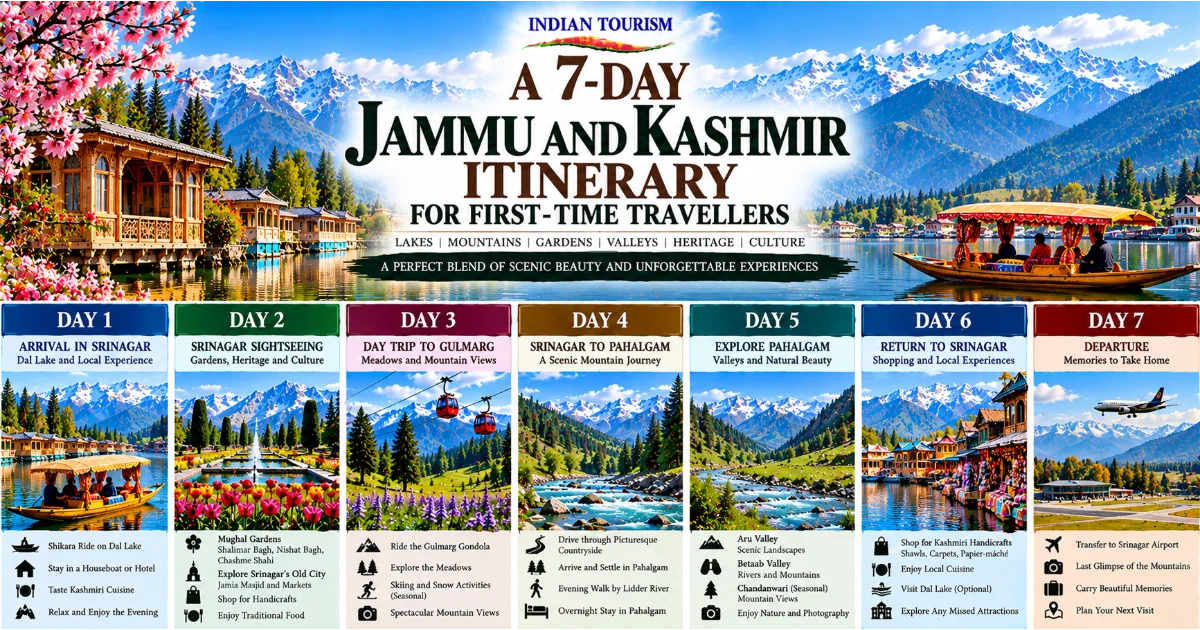
A useful approach is to spend the first two days exploring Srinagar, visit Gulmarg on the third day, travel to Pahalgam on the fourth day, explore the Pahalgam area on the fifth day, return to Srinagar on the sixth day and reserve the seventh day for departure or additional sightseeing.
This schedule assumes that the first day begins with an arrival in Srinagar and the seventh day ends with departure. Travellers arriving late at night or leaving early in the morning should adjust the itinerary accordingly. If your flight times differ significantly, reducing the number of destinations is better than rushing through the entire route.
Day 1: Arrival in Srinagar and a Gentle Introduction to Kashmir
Arriving in the Valley
Begin your holiday by arriving at Srinagar Airport and transferring to your accommodation. Depending on traffic, the location of your hotel and the time of day, the transfer may take a varying amount of time. Allow additional time for airport formalities, luggage collection and road traffic.
The first day should be deliberately relaxed. Travellers often underestimate how tiring even a short journey can feel after an early flight or a long connection. Rather than immediately arranging a demanding sightseeing programme, settle into your accommodation, enjoy a meal and begin exploring the city at an unhurried pace.
If you are staying near Dal Lake, take some time to appreciate the surroundings. The lake is closely associated with Srinagar's identity, and its changing appearance throughout the day is one of the city's most memorable features. Mountain reflections, traditional wooden houseboats, small floating gardens and boats moving across the water create a distinctive atmosphere.
Exploring Dal Lake
Dal Lake is an excellent introduction to Kashmir's landscape and everyday life. Its shores are lined with hotels, gardens, neighbourhoods and places where visitors can arrange boat rides. The lake is not simply a sightseeing attraction. It also supports communities whose lives are connected with fishing, tourism, vegetable cultivation and water transport.
A shikara ride is among the best-known experiences in Srinagar. These traditional wooden boats allow visitors to explore parts of the lake at a relaxed pace while observing houseboats, floating gardens and activity along the water. Depending on the route, a ride may also pass vendors selling flowers, refreshments or souvenirs from their boats.
Before starting, agree on the duration, route and price with the boat operator. Visitors should understand that different rides cover different areas and that the experience depends on weather, water conditions and the time of day. Morning and evening can both be rewarding, although the atmosphere varies with the season.
A boat ride should be treated as an opportunity to appreciate the surroundings rather than a race to photograph every landmark. Keep cameras and mobile phones secure, follow the operator's safety instructions and avoid throwing waste into the lake.
An Evening Walk and Local Food
Spend the remainder of the evening exploring an accessible part of Srinagar. Depending on your accommodation and available time, you may visit a nearby market, browse shops selling Kashmiri handicrafts or simply enjoy a walk in a suitable public area.
Kashmiri cuisine deserves a place in your itinerary from the first day. You might try a traditional tea, sample freshly prepared bread or enjoy a regional meal at a reputable local restaurant. Kahwa, a fragrant tea traditionally prepared with spices, is especially associated with Kashmir. Recipes vary, and some versions include saffron, almonds or other ingredients.
Srinagar is also known for its bakeries and traditional breads. A visit to a local bakery can provide an insight into the region's food culture, particularly when combined with an early morning walk on another day.
Keep the first evening flexible. Confirm the next day's transport arrangements, check the weather forecast and prepare suitable clothing before going to bed.
Day 2: Srinagar's Mughal Gardens, Old City and Cultural Heritage
Shalimar Bagh and Nishat Bagh
Dedicate the second day to Srinagar's gardens and historic character. The Mughal gardens are among the city's most recognisable attractions, reflecting the importance of landscape design, water channels, terraces and carefully arranged greenery in the region's cultural history.
Shalimar Bagh and Nishat Bagh are two prominent gardens associated with the Mughal period. Their terraces, trees, pathways and water features create a setting that changes considerably with the seasons. Spring brings blossoms and fresh greenery, summer offers shade and extensive foliage, autumn introduces warm colours, and winter can create a quieter landscape.
Nishat Bagh is particularly known for its terraced layout and views towards Dal Lake. Shalimar Bagh offers a different garden experience through its historical structures and carefully arranged spaces. The two gardens can be included in the same day, although the time spent at each will depend on your interest in architecture, photography and landscape design.
Visitors should check current opening arrangements, entry requirements and any seasonal restrictions before travelling. Garden conditions can also change with maintenance and weather.
Chashme Shahi and Pari Mahal
If time permits, continue towards Chashme Shahi, another historic garden associated with the Mughal landscape tradition. Its setting and relatively compact layout make it a useful addition to a day focused on Srinagar's gardens.
Pari Mahal, located on a hillside overlooking the city and Dal Lake, offers another perspective on the region's history and scenery. Its terraced structures and elevated position make it particularly appealing to visitors interested in architecture and panoramic views.
The order of visits should depend on road conditions, opening hours and the location of your accommodation. It is better to explore three or four places comfortably than to add every attraction to the schedule and spend the day rushing between them.
Discovering Srinagar's Old City
In the afternoon, consider exploring parts of Srinagar's historic centre. The Old City contains traditional neighbourhoods, religious landmarks, markets, timber architecture and streets that reflect centuries of cultural exchange.
The Jamia Masjid in Nowhatta is one of Srinagar's significant religious and architectural landmarks. Its spacious courtyard and distinctive wooden construction make it an important place to understand the city's heritage. Visitors should respect worshippers, follow local dress and conduct expectations, and confirm access arrangements before visiting.
The old neighbourhoods also offer opportunities to observe traditional buildings and local commercial life. Some streets are narrow and busy, so walking is often more practical than travelling by car directly between every point. A knowledgeable local guide can help explain architectural details and historical context that might otherwise be overlooked.
If you prefer a more relaxed afternoon, spend time browsing a market for Kashmiri handicrafts, papier-mache objects, embroidered textiles or locally produced goods. Ask about the origin and production methods of items before purchasing them, particularly if you are interested in supporting traditional craftspeople.
Evening on the Boulevard
Return to the Dal Lake area for the evening. The Boulevard Road surroundings are popular for lake views, restaurants and relaxed walks where conditions permit. You may choose another shikara ride if you enjoyed the first day's experience, but it is not essential to repeat it.
Use the evening to prepare for the following day's excursion to Gulmarg. Check whether any mountain transport or attraction tickets need advance arrangements, and confirm the expected road conditions. Winter visits may require additional planning for snow, while summer visits still require suitable clothing for changing mountain temperatures.
Day 3: Gulmarg and the Landscapes of the Pir Panjal Mountains
Travelling from Srinagar to Gulmarg
Begin the third day with an early departure from Srinagar. Gulmarg is a well-known mountain destination in the Pir Panjal range and can be visited as a day trip, although an overnight stay offers more time to enjoy the surroundings.
The drive generally takes a few hours, depending on the starting point, traffic, weather and road conditions. The route passes through settlements and landscapes that gradually change as the road climbs towards the higher areas. During the journey, you may see orchards, open countryside and mountain views.
The experience varies greatly by season. Summer and early autumn often provide access to green meadows and broad mountain vistas. Winter brings snow and a different atmosphere, but it can also create road delays, restricted access and additional transport requirements. During periods of heavy snowfall or poor weather, local authorities may impose restrictions for safety reasons.
Carry warm clothing even if Srinagar feels comfortable. Mountain weather can change quickly, and conditions near the higher viewpoints may be considerably colder than those in the city.
Enjoying Gulmarg's Meadow Landscapes
Gulmarg is known for its open meadows, surrounding forests and views of the mountains. In suitable weather, visitors can spend time walking in accessible areas, photographing the landscape and enjoying the contrast between open grassland and forested slopes.
The destination has different attractions in different seasons. During warmer months, it appeals to walkers, families and visitors who want to enjoy the natural scenery. In winter, it becomes associated with snow activities and skiing, subject to weather, snow conditions and the availability of facilities.
Do not assume that every activity will be available on the day of your visit. Check local conditions and use authorised operators for activities that require specialist equipment or instruction. Visitors unfamiliar with snow should avoid venturing onto steep or unfamiliar terrain without appropriate guidance.
The Gulmarg Gondola Experience
The Gulmarg Gondola is one of the destination's best-known attractions. It provides access to elevated mountain areas and is particularly popular with visitors seeking panoramic views.
The gondola operates in phases, and access to higher areas depends on operating schedules, weather and safety conditions. Tickets, capacity and access arrangements may change, so confirm current information before planning your day around a particular ride.
Higher elevations can bring lower temperatures, stronger winds and rapidly changing weather. Wear appropriate clothing, keep water available and allow enough time for the return journey. If visibility is poor or operations are suspended, enjoy the accessible areas around Gulmarg rather than treating the gondola ride as essential to the entire trip.
Some visitors may experience discomfort at higher elevations. Move at a comfortable pace and seek assistance if you feel unwell. Families travelling with children should pay particular attention to warmth, hydration and the amount of walking involved.
Lunch and the Return Journey
Enjoy lunch at a suitable local restaurant or an authorised food outlet. Choose a place that fits your schedule and allows enough time for the return drive.
Avoid filling the afternoon with too many separate activities. Gulmarg's weather and transport conditions can make schedules unpredictable, especially during winter. Leave the area with sufficient daylight whenever possible and follow local advice about road conditions.
Return to Srinagar in the evening. After a day in the mountains, a relaxed dinner and an early night will help you prepare for the journey to Pahalgam the next day.
Day 4: Srinagar to Pahalgam Through Kashmir's Countryside
Starting the Journey
Leave Srinagar in the morning for Pahalgam, a destination known for the Lidder River, pine-covered slopes, mountain scenery and access to several popular natural attractions.
The journey commonly takes several hours, depending on traffic, the exact route and the season. Treat the drive as part of the holiday rather than simply a transfer between hotels. The countryside along the way can include cultivated fields, orchards, villages and views of the surrounding mountains.
Travellers may pass through the wider Anantnag area and agricultural landscapes associated with Kashmir's horticulture. Apples and other fruits play an important role in the regional economy, although the appearance of orchards depends on the season. During blossom periods, the landscape can look very different from the harvest season.
If you want to stop for photographs or refreshments, arrange this with your driver and use safe, permitted stopping places. Avoid stopping on narrow roads or in locations where vehicles could obstruct traffic.
Arrival in Pahalgam
Pahalgam is an appealing place to slow down after the previous days of sightseeing. Its natural setting differs from Srinagar's urban environment and Gulmarg's open mountain meadows. The Lidder River, wooded hills and mountain views give the area a distinctive character.
Check into your accommodation and take some time to settle in. Depending on your arrival time, you can explore accessible areas near the river, enjoy a short walk or simply relax while appreciating the surrounding landscape.
Accommodation choices range from hotels and guesthouses to other forms of visitor lodging. When selecting a property, consider its location, road access, heating arrangements in colder months, meal options and the distance from the places you intend to visit.
Travellers should remember that mountain destinations can have different conditions from major towns. During colder periods, confirm heating and hot-water arrangements before booking. In warmer months, check whether the property offers convenient transport access and whether the location suits your walking preferences.
An Evening beside the Lidder River
The Lidder River is one of Pahalgam's defining natural features. In accessible areas, visitors can enjoy the sound of flowing water, views of the surrounding slopes and opportunities for photography.
Water levels and currents vary by season and weather. Stay away from unstable riverbanks, avoid entering fast-flowing water and follow local safety instructions. A scenic riverside location is best enjoyed from a safe distance.
Spend the evening exploring the local market or enjoying a meal at your accommodation. Pahalgam is also a suitable place to sample regional dishes and warm beverages after a day on the road.
If you plan to visit specific valleys or attractions on the following day, confirm the available transport arrangements in advance. Certain places around Pahalgam may require local vehicles, authorised operators or access arrangements that differ from those used for ordinary town sightseeing.
Day 5: Exploring Pahalgam, Valleys and Mountain Scenery
Aru Valley
Begin the day with an excursion to Aru Valley, a scenic area near Pahalgam known for its mountain landscapes, open spaces and access to trekking routes. It attracts visitors who appreciate quieter surroundings, natural scenery and opportunities to photograph the Himalayas.
The journey from Pahalgam takes additional time, and actual travel conditions depend on traffic, weather and road access. Ask local authorities or your accommodation about current arrangements before setting out.
Aru is particularly attractive to travellers who prefer spending time outdoors rather than visiting a long list of built attractions. Depending on conditions, you may enjoy a short walk, take photographs or simply appreciate the open landscape.
Longer treks should be treated as separate activities requiring suitable preparation. Do not assume that a short sightseeing visit provides enough time to complete a mountain trek. Check route conditions, local guidance, equipment requirements and the experience level needed before undertaking a demanding walk.
Betaab Valley
Betaab Valley is another well-known attraction associated with the Pahalgam area. Its landscapes include greenery, river scenery and mountain views that change with the season.
The valley is popular for photography and leisurely exploration. Visitors can spend time enjoying the surroundings without needing to follow a strenuous walking route. During peak tourist periods, however, the area can become busy, and parking or access arrangements may affect the time available.
If travelling with children or older family members, plan enough time for breaks and avoid rushing from one attraction to another. Comfortable footwear, drinking water and weather-appropriate clothing will make the day easier.
Chandanwari and Other Accessible Areas
Chandanwari is associated with the wider Pahalgam region and the route towards the Amarnath pilgrimage area. Access conditions and transport arrangements may vary according to season, security requirements, road conditions and pilgrimage-related restrictions.
Do not assume that every destination in the area is accessible throughout the year. Before leaving Pahalgam, confirm which locations are open to ordinary visitors and whether special transport or local permissions are required.
A sensible itinerary should remain flexible. If weather, traffic or access restrictions make one location impractical, spend more time in accessible parts of Pahalgam or Aru Valley instead of attempting to force the original schedule.
Choosing the Right Excursions
The attractions around Pahalgam are spread across different areas, and local transport arrangements can influence the day's cost and duration. Ask about the complete price before accepting a vehicle or activity package, including waiting time, return transport and any applicable entry charges.
Choose activities according to your interests and physical comfort. Families may prefer short walks and scenic stops, while experienced hikers may wish to arrange longer excursions with qualified local guidance. Travellers mainly interested in photography can benefit from spending longer at fewer locations rather than moving constantly.
Return to your accommodation in Pahalgam by evening. Enjoy a relaxed dinner and prepare for the journey back to Srinagar the next day.
Day 6: Return to Srinagar and Enjoy a Flexible Day
The Journey Back
After breakfast, leave Pahalgam for Srinagar. The return journey usually requires several hours, so avoid scheduling too many major activities before departure.
If you have already seen Srinagar's main gardens and heritage landmarks, the sixth day can be used to explore places you missed, revisit an area you particularly enjoyed or spend time shopping for regional products.
Travellers should not assume that a return journey will always take the same amount of time as the outward journey. Traffic, roadwork, weather and temporary restrictions can affect travel. Keep your schedule flexible, especially if you have an important departure the following day.
Handicrafts and Traditional Shopping
Srinagar offers a range of traditional products associated with Kashmiri craftsmanship. These include embroidered textiles, papier-mache objects, carved woodwork, carpets, shawls and other locally made items.
If you are purchasing handicrafts, take time to understand what you are buying. Ask about the material, production method, origin and care requirements. Prices can vary considerably depending on craftsmanship, materials, authenticity and the seller's business model.
Avoid making a purchase simply because a seller describes an item as rare or offers an apparently urgent discount. Compare products, request a receipt where appropriate and make sure the item meets your expectations.
Travellers interested in supporting local producers can look for opportunities to purchase directly from established craftspeople or reputable businesses that explain their sourcing and production methods. This can make shopping a more meaningful part of the cultural experience.
Discovering Local Food
Use part of the day to explore more of Kashmir's culinary traditions. Kashmiri food reflects regional ingredients, historical influences and established cooking practices. The range of dishes available varies by restaurant, season and community.
Wazwan is one of the region's best-known culinary traditions. It is associated with elaborate multi-course meals, particularly in celebratory settings. Visitors may also encounter dishes prepared with rice, meat, vegetables and aromatic spices, alongside breads and traditional beverages.
Not every restaurant serves a complete Wazwan meal, and the style of preparation varies. If you wish to try it, ask about portion sizes, menu arrangements and advance booking requirements.
Vegetarian travellers can also find suitable options, but it is useful to ask about ingredients and cooking methods. People with allergies or dietary restrictions should explain their needs clearly to restaurant staff rather than relying only on dish names.
A Relaxed Evening by the Lake
If time and weather allow, spend your final evening near Dal Lake. You might enjoy a quiet walk, a final shikara ride or a meal overlooking the water.
Avoid scheduling a late-night excursion that could interfere with your departure preparations. Confirm your airport transfer, check your flight details and organise your luggage before the end of the evening.
For travellers who prefer a slower holiday, this day can be one of the most rewarding parts of the trip. It offers time to appreciate Srinagar without the pressure of covering another long list of attractions.
Day 7: Departure or Additional Sightseeing
Planning the Final Morning
The seventh day is primarily intended for departure. Have breakfast, check out of your accommodation and travel to Srinagar Airport with sufficient time for traffic and airport procedures.
The exact departure schedule will determine whether there is time for additional sightseeing. If your flight is early, it is better to avoid making sightseeing plans. If you have a later departure, you may be able to enjoy a short walk, visit a nearby market or spend some time in an accessible part of the city.
Do not plan a distant excursion on the morning of an important flight. A delay caused by weather, traffic or road restrictions could create unnecessary stress. Keep the final day simple and use the time to prepare for your journey home.
If You Have an Extra Day
Travellers with an additional day may choose to extend their stay in Srinagar, spend another night in Pahalgam or explore a nearby destination depending on the season and available transport.
The best choice depends on what you enjoyed most. Visitors interested in heritage may prefer more time in Srinagar. Nature lovers may wish to spend longer in the mountains, while families may appreciate a slower schedule with fewer hotel changes.
An extra day can also provide a buffer against bad weather or transport disruptions. In a mountain destination, flexibility is often more valuable than adding one more attraction to the itinerary.
Best Time to Follow This Seven-Day Itinerary
Spring: Blossoms and Fresh Landscapes
Spring is an attractive period for visitors interested in flowering gardens, fresh greenery and changing landscapes. Srinagar's gardens and surrounding countryside gradually take on new colours as temperatures rise.
Conditions can still be cool, especially in the mornings and evenings, and higher areas may retain snow. Travellers should bring layers and check whether the activities they want are operating during their travel dates.
Spring is also a useful time for garden visits and photography, although the exact flowering period changes from year to year according to weather.
Summer: Green Valleys and Outdoor Exploration
Summer is a popular period for exploring the Kashmir Valley. Srinagar, Gulmarg and Pahalgam can offer comfortable conditions for sightseeing, scenic drives and outdoor activities, although temperatures and weather vary by elevation.
Demand for accommodation and transport can be high during holiday periods. Booking suitable accommodation in advance can help, especially for families and larger groups.
Summer does not guarantee that every mountain road or attraction will be accessible. Always confirm current conditions rather than relying only on seasonal expectations.
Autumn: Golden Landscapes and Harvest Season
Autumn brings changes in foliage and a different atmosphere to the valley. The landscape around gardens, lakes and countryside areas can become especially attractive for photography.
Visitors interested in regional agriculture may also find this season rewarding, although the timing of orchard activity varies. Temperatures gradually become cooler, so warm clothing is useful for early mornings and evenings.
Autumn can be an excellent choice for travellers seeking scenery and cultural experiences without focusing primarily on snow activities.
Winter: Snow and Cold-Weather Experiences
Winter transforms parts of Kashmir into a colder mountain destination, and snowfall can create memorable scenery around Gulmarg and other higher areas. However, winter also introduces greater uncertainty in road access, activity schedules and travel times.
Carry suitable winter clothing and confirm heating arrangements at your accommodation. Ask local operators about snow conditions and whether special vehicles or additional transport arrangements are necessary.
Do not treat snowfall as guaranteed on a specific date or at a particular location. Weather patterns vary, and some attractions may be inaccessible during severe conditions.
Approximate Travel Times and Daily Planning
Travel times in Kashmir depend on the exact accommodation, road conditions, traffic, weather and local transport arrangements. The following figures are broad planning estimates rather than guaranteed journey durations.
| Journey | Approximate driving time |
|---|---|
| Srinagar Airport to central Srinagar | Around 30 to 60 minutes |
| Srinagar to Gulmarg | Around 2 to 3 hours |
| Srinagar to Pahalgam | Around 2.5 to 4 hours |
| Pahalgam to Aru Valley | Around 30 to 60 minutes |
| Pahalgam to Betaab Valley | Often around 20 to 40 minutes |
| Pahalgam to Srinagar | Around 2.5 to 4 hours |
Actual travel times may be longer, particularly during peak periods, bad weather, snowfall, road restrictions or local traffic congestion. Confirm the expected journey duration with your driver or accommodation shortly before travelling.
Budget Planning for a Seven-Day Holiday
The cost of a week in Kashmir depends on the number of travellers, accommodation category, season, transport choices, meals and paid activities. A solo traveller hiring a private vehicle may pay considerably more per person than a family sharing transport costs.
Accommodation is often one of the largest expenses. Srinagar offers a range of hotels, guesthouses and houseboats, while Pahalgam and Gulmarg have different choices depending on location and season. Compare the complete price rather than the headline room rate, and check whether meals, taxes, heating and transport are included.
Transport costs also deserve careful attention. A private vehicle can provide flexibility, but the cost should be agreed upon in advance. Ask whether the quotation includes fuel, driver charges, parking, waiting time and return journeys. For mountain excursions, check whether a separate local vehicle is required.
Food expenses vary with dining preferences. Local restaurants and ordinary eateries may be more economical than premium hotel dining, while elaborate traditional meals can cost more. Visitors can manage expenses by balancing restaurant meals with simpler local food options.
Paid attractions and activities should be included in the budget, but avoid paying for activities before confirming availability and weather conditions. Keep a reserve for unexpected transport changes, additional accommodation or other travel disruptions.
The most effective way to control costs is to plan the route carefully, avoid unnecessary hotel changes, compare accommodation options and leave some flexibility in the daily schedule.
Where Should You Stay?
Srinagar
Srinagar is a convenient base for the beginning and end of the itinerary. Staying near Dal Lake can offer attractive views and easy access to some popular sightseeing areas. Other neighbourhoods may be more suitable for travellers who prioritise road access, quieter surroundings or proximity to particular attractions.
Houseboats offer a distinctive accommodation experience, but facilities vary. Confirm the location, bathroom arrangements, heating, meal services and transfer arrangements before booking.
Gulmarg
An overnight stay in Gulmarg can be worthwhile for visitors who want more time in the mountains or who plan to participate in seasonal activities. However, this seven-day itinerary treats Gulmarg as a day trip to reduce hotel changes and simplify logistics.
If you decide to stay overnight, adjust the surrounding days rather than attempting to preserve every attraction in the original plan.
Pahalgam
Pahalgam is suitable for travellers who want to spend time in the Lidder Valley and explore the surrounding countryside. Staying for two nights allows a more relaxed visit and reduces the pressure of returning to Srinagar immediately after sightseeing.
Choose accommodation according to your mobility needs, preferred facilities and planned excursions. During colder periods, confirm heating arrangements and access conditions before finalising your booking.
Essential Travel Tips for First-Time Visitors
Pack for Changing Weather
Weather can differ significantly between Srinagar and higher mountain areas. Pack layers, comfortable walking shoes, a light waterproof outer layer and warmer clothing appropriate to the season. During winter, suitable insulated clothing and footwear become particularly important.
Even during warmer months, mornings and evenings can be cool. If you plan to visit elevated viewpoints, check the forecast and carry clothing appropriate for the expected conditions.
Keep Your Itinerary Flexible
The itinerary should serve as a guide rather than a rigid timetable. Mountain weather, road conditions and attraction access may change with little notice. If a road is closed or a gondola service is suspended, choose a safe alternative rather than attempting to continue against local advice.
Keep important travel documents accessible and maintain enough time between long road journeys and flights.
Choose Transport Carefully
Agree on the route, price and expected duration with your transport provider before starting a journey. For local excursions, ask whether the destination requires a separate authorised vehicle or has seasonal access restrictions.
Use reputable operators for adventure activities and follow instructions provided by qualified local guides. Do not undertake unfamiliar mountain routes without appropriate preparation.
Respect Local Customs
Jammu and Kashmir has a rich cultural and religious heritage. Visitors should dress respectfully when entering religious places, follow local instructions and ask permission before photographing people in situations where privacy may be important.
Markets, neighbourhoods and religious landmarks are part of everyday life for residents. Travel with consideration for local communities, avoid blocking narrow streets and dispose of waste responsibly.
Protect the Natural Environment
Kashmir's lakes, rivers, meadows and mountain landscapes are among the region's most important attractions. Visitors can help protect them by avoiding litter, using designated paths, respecting wildlife and following local restrictions.
Do not throw plastic, food waste or other rubbish into rivers or lakes. Carry reusable water bottles where practical and use waste bins or take rubbish back to appropriate disposal points.
Check Current Conditions Before Departure
Before travelling, confirm the status of your flights, accommodation, road routes and planned activities. Check current weather and any official travel advisories or local restrictions, especially if your itinerary includes higher mountain areas.
Conditions can change, and access to particular places may depend on safety arrangements, seasonal operations or local regulations. Reliable current information should take priority over a fixed sightseeing schedule.
Who Is This Itinerary Best For?
This seven-day route is well suited to first-time visitors who want a balanced introduction to Kashmir Valley. It combines city sightseeing, historic gardens, lake experiences, mountain scenery and time in a peaceful valley setting.
Families can adapt the schedule by reducing walking distances and allowing more rest between excursions. Couples may prefer an additional evening near Dal Lake or a longer stay in Pahalgam. Photographers may want to spend extra time in gardens, meadows and riverside areas, while travellers interested in culture can devote more time to Srinagar's Old City and traditional crafts.
Visitors who prefer demanding treks, remote mountain routes or extensive exploration across the wider Jammu region may need a longer holiday. Seven days is enough to experience several highlights, but it is not enough to explore every destination in Jammu and Kashmir.
Final Thoughts: Make Your First Kashmir Trip Memorable
A seven-day holiday in Jammu and Kashmir can offer an excellent introduction to one of India's most distinctive mountain regions. Srinagar provides the cultural and historical foundation of the journey, Gulmarg adds dramatic mountain scenery, and Pahalgam offers time to appreciate rivers, forests and the quieter landscapes of the Lidder Valley.
The secret to a rewarding trip is not the number of places visited. It is the quality of the time spent in each destination. A relaxed shikara ride, an afternoon among historic gardens, a clear mountain view in Gulmarg or a quiet walk beside the Lidder River can become the moments that define the holiday.
Plan your route according to the season, choose accommodation that suits your needs, confirm local transport arrangements and allow enough time for unexpected changes. Most importantly, approach the journey with curiosity and respect for the communities and natural environments that make Kashmir special.
For first-time travellers, this itinerary offers a practical starting point. With thoughtful preparation and a flexible schedule, seven days can provide a rich introduction to Kashmir's scenery, heritage, food and hospitality while leaving plenty of reasons to return.
#IndianTourism #JammuAndKashmir #KashmirTravelGuide #Srinagar #DalLake #Gulmarg #Pahalgam #KashmirValley #IndiaTravel #ExploreIndia #MountainTravel #FamilyHoliday #HimalayanTravel #TravelItinerary #ResponsibleTourism
