
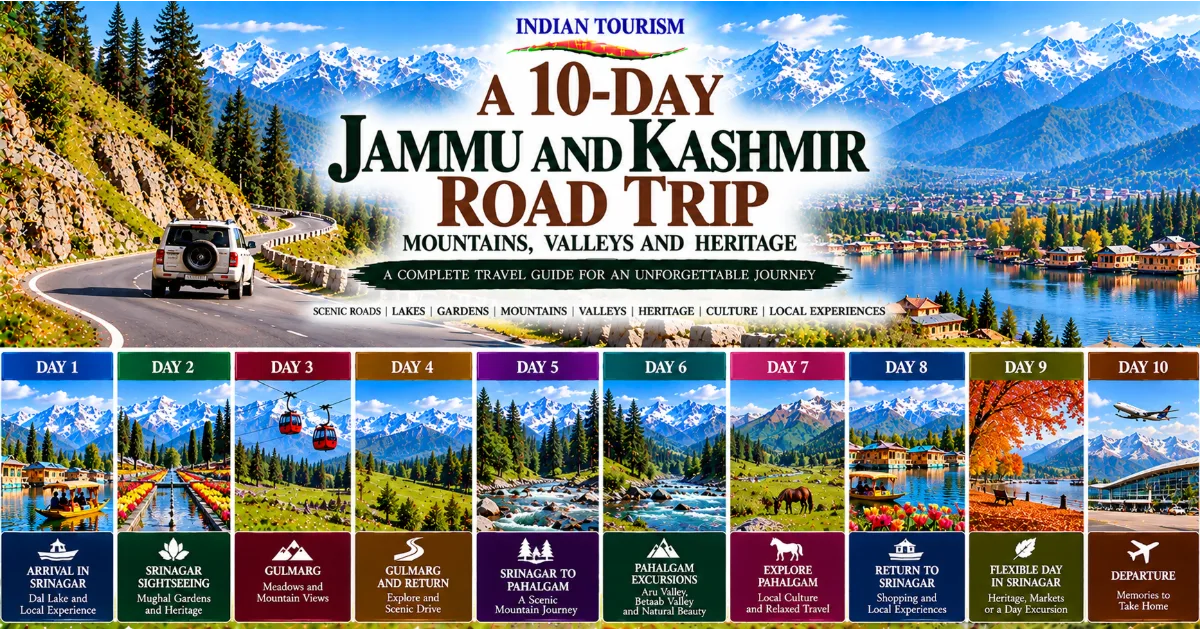
A Complete Travel Guide to Exploring Kashmir's Scenic Roads, Historic Places and Himalayan Landscapes
Jammu and Kashmir offers one of India's most memorable road travel experiences, where mountain ranges, winding valleys, traditional settlements, rivers, lakes and historic landmarks create a journey that is as rewarding as the destinations themselves. A road trip through the Kashmir Valley allows travellers to experience the region at a comfortable pace, stopping to admire landscapes, discover local food, explore historic gardens and understand the cultural traditions that make this Himalayan destination distinctive.
A ten-day road trip is particularly suitable for travellers who want to experience more than the usual highlights of Srinagar, Gulmarg and Pahalgam. With careful planning, the journey can include the heritage of Srinagar, the mountain scenery of Gulmarg, the peaceful landscapes of Pahalgam and selected destinations in the wider valley. It also allows time for spontaneous stops, local markets, village scenery and relaxing evenings beside the water.
The most important part of planning such a journey is understanding the distances involved. Mountain roads do not always allow the same travel speeds as highways in the plains. Weather, road maintenance, traffic, seasonal access restrictions and local transport arrangements can affect journey times. The best road trips leave room for these uncertainties instead of trying to visit every attraction in a single day.
This guide presents a ten-day itinerary focused primarily on Kashmir Valley, beginning and ending in Srinagar. It is intended for travellers who want a combination of scenery, heritage, local culture and manageable driving days. The route can be adapted according to the season, travel budget, accommodation preferences and the interests of individual travellers.
Understanding the Route Before You Begin
The itinerary begins in Srinagar, the principal urban centre of Kashmir Valley and a convenient starting point for visitors arriving by air. From Srinagar, travellers explore the city's lakes, gardens, heritage areas and traditional markets before continuing towards Gulmarg.
After Gulmarg, the route returns towards Srinagar and continues to Pahalgam, where the Lidder River, wooded slopes and surrounding valleys provide a different Himalayan landscape. The itinerary then allows additional time for exploring the wider region, subject to local road conditions and access arrangements, before returning to Srinagar.
The proposed route is designed to avoid unnecessary backtracking where practical, although some return journeys are unavoidable because Srinagar is the starting and ending point. It also avoids treating every mountain attraction as a guaranteed stop. Some locations have seasonal access restrictions, and certain excursions may require authorised local transport.
Travellers who want to include destinations in the Jammu region, such as Jammu city, Patnitop or Kishtwar, should consider a separate itinerary or add more days. Those places involve different routes and travel requirements, and combining them with every major destination in Kashmir Valley can make a ten-day holiday unnecessarily rushed.
Day 1: Arrival in Srinagar and the First Views of Dal Lake
Begin the Journey Slowly
Arrive in Srinagar and transfer to your accommodation. The first day should be reserved for settling in, recovering from the journey and enjoying an introduction to the city rather than attempting an extensive sightseeing programme.
Srinagar offers accommodation across several neighbourhoods, including areas around Dal Lake and other parts of the city with convenient road access. Choose your stay according to your budget, transport arrangements and the type of experience you want. A lakeside hotel or houseboat may provide a memorable setting, while a conventional hotel can be practical for travellers who prioritise easy vehicle access.
If you are considering a houseboat, confirm the facilities before booking. Heating, hot water, bathroom arrangements, meal services and transfer arrangements can vary between properties, particularly during colder months.
Explore Dal Lake
Spend the afternoon around Dal Lake, one of the most recognisable landscapes in Kashmir. The lake is associated with traditional houseboats, shikara rides, floating gardens and communities whose livelihoods are connected with fishing, tourism and water-based activities.
A shikara ride is an excellent way to appreciate the lake from a different perspective. The experience is not limited to scenic photography. Depending on the route, visitors may observe everyday activity on the water, floating gardens and the distinctive architecture of houseboats.
Agree on the route, duration and price before departing. Water conditions, weather and the time of day can influence the experience, so avoid treating a particular view or location as guaranteed.
An Evening of Kashmiri Hospitality
Use the evening to sample local cuisine. Kashmiri food includes traditional breads, aromatic teas, rice dishes and preparations influenced by the region's history and cultural traditions.
Kahwa is a popular choice for visitors interested in regional beverages. Recipes differ, but the tea is commonly associated with fragrant spices and may include saffron or nuts. Ask about ingredients if you have allergies or dietary restrictions.
Finish the day with a relaxed walk in an appropriate public area or enjoy the views near your accommodation. Confirm your transport arrangements for the next morning and check the weather forecast before sleeping.
Day 2: Srinagar's Mughal Gardens and Architectural Heritage
Discover the Historic Gardens
Dedicate the second day to Srinagar's gardens and historic landscapes. The city is home to several gardens associated with the Mughal period, reflecting a tradition of landscape design that combines terraces, water channels, trees and views of the surrounding environment.
Begin with Nishat Bagh, known for its terraced layout and views towards Dal Lake. Continue to Shalimar Bagh, another important garden associated with Mughal heritage. Both offer opportunities to appreciate the relationship between architecture, water and landscape.
If time permits, include Chashme Shahi. Its smaller scale and hillside setting make it a useful addition to a day focused on gardens.
The appearance of these places varies with the season. Spring brings fresh growth and flowering plants, summer offers extensive greenery, autumn introduces changing foliage, and winter creates a quieter atmosphere. Check opening arrangements and current conditions before travelling.
Visit Pari Mahal
Pari Mahal provides another perspective on Srinagar's heritage. Its terraced structures occupy an elevated position overlooking the city and Dal Lake. The location can be particularly appealing to travellers interested in photography, historic architecture and panoramic views.
Allow sufficient time to explore rather than rushing between every garden. Road traffic, parking and visitor numbers may influence how much you can comfortably see in one day.
Explore Srinagar's Old City
In the afternoon, explore parts of Srinagar's Old City, where historic neighbourhoods, religious landmarks, traditional buildings and markets reveal a different side of the city.
Jamia Masjid in Nowhatta is one of the area's notable religious and architectural landmarks. Visitors should respect local customs, dress appropriately and follow instructions about access and photography.
The Old City is also a place to learn about traditional woodwork, building styles and the commercial life of established neighbourhoods. Walking through suitable streets can provide a more immediate experience of local culture than travelling between landmarks exclusively by car.
If you wish to purchase handicrafts, take time to understand the products, their materials and their origins. Carpets, embroidered textiles, papier-mache objects and carved woodwork are among the traditional items associated with Kashmiri craftsmanship.
Return to your accommodation in the evening and prepare for the drive to Gulmarg.
Day 3: Srinagar to Gulmarg and the Beauty of the Mountains
Enjoy the Drive to Gulmarg
Begin the third day with an early departure for Gulmarg. The drive commonly takes around two to three hours, but actual travel time depends on traffic, weather, the starting point and road conditions.
The route passes through settlements and countryside before climbing towards the mountain destination. Take time to observe the changing landscape, but arrange stops only at safe and permitted locations.
Gulmarg is known for its open meadows, forests and views of the Pir Panjal mountains. Its atmosphere changes dramatically with the seasons. During warmer months, the landscape can be green and open, while winter brings snow and opportunities for seasonal activities.
Explore Gulmarg's Meadow Landscapes
Spend time exploring accessible parts of Gulmarg. Visitors can enjoy the mountain scenery, photograph the surrounding slopes and take relaxed walks where conditions permit.
The destination attracts different types of travellers. Families may prefer scenic viewpoints and gentle walks, while outdoor enthusiasts may be interested in seasonal activities. Winter sports require suitable equipment, appropriate experience and guidance from qualified operators.
Avoid assuming that all activities will be available on your travel date. Weather and snow conditions can affect access, and local authorities may impose restrictions for safety reasons.
Consider the Gulmarg Gondola
The Gulmarg Gondola is one of the region's most popular attractions. It provides access to higher mountain areas and can offer impressive views when conditions allow.
The service operates in phases, and operations depend on weather, safety requirements and current schedules. Confirm ticket availability and operating conditions before planning the day around a ride.
Higher elevations can be considerably colder than Srinagar. Carry warm clothing, remain aware of changing conditions and follow staff instructions. If visibility is poor or services are suspended, enjoy the accessible parts of Gulmarg rather than attempting unsafe alternatives.
Stay Overnight or Return to Srinagar
For this ten-day road trip, an overnight stay in Gulmarg can be rewarding if your budget allows. It provides additional time to enjoy the destination without making the experience feel like a hurried excursion.
If you prefer to reduce accommodation changes, you can return to Srinagar in the evening. Either option works, but the following day's schedule should be adjusted according to your choice.
Day 4: A Flexible Day for Mountain Scenery and Return Travel
Make the Most of the Morning
If you stayed overnight in Gulmarg, use the morning for a relaxed walk, additional photography or an activity that was unavailable the previous day. Mountain weather may be clearer at one time than another, but conditions cannot be guaranteed.
Visitors travelling during winter should check the road situation before leaving. Snowfall, ice and other weather-related conditions can affect driving and transport access.
If you returned to Srinagar on Day 3, use Day 4 for additional city sightseeing or a slower morning before continuing the itinerary.
Return Towards Srinagar
Travel back to Srinagar when convenient, allowing enough time for the journey. Do not plan several distant attractions around the same transfer, particularly during winter or busy holiday periods.
Once back in the city, spend the afternoon exploring a market, visiting a cultural attraction or enjoying local food. Travellers who are particularly interested in handicrafts can use this time to compare products and learn about traditional techniques.
This flexible day is an important part of the road trip. It provides a buffer for weather disruptions, changes in activity schedules and personal preferences. A good itinerary should accommodate real travel conditions instead of requiring every day to follow a rigid timetable.
Day 5: Srinagar to Pahalgam Through the Kashmir Countryside
Begin the Journey South
After breakfast, leave Srinagar for Pahalgam. The drive often takes around two and a half to four hours, although the duration varies with traffic, weather and road conditions.
The route passes through countryside and settlements associated with Kashmir's agricultural economy. Depending on the season, visitors may see cultivated fields, orchards and changing views of the surrounding mountains.
Apple cultivation is an important part of the regional economy. The appearance of orchards depends on the season, with blossom periods, growing months and harvest time creating different landscapes.
If you want to stop for photographs or refreshments, coordinate with your driver and use safe locations. Avoid stopping on narrow roads or obstructing local traffic.
Arrive in Pahalgam
Pahalgam is known for its mountain setting, the Lidder River and the surrounding forests and valleys. Compared with Srinagar, it offers a more nature-focused experience and can be an excellent place to spend several nights.
Check into your accommodation and allow time to settle in. A property with convenient access to the town and your planned excursions can reduce unnecessary driving.
Accommodation options vary from hotels and guesthouses to other forms of visitor lodging. During colder months, confirm heating and hot-water facilities. In all seasons, check the property's location, access arrangements and available meal services.
Enjoy an Evening Beside the Lidder River
Spend the evening exploring accessible riverside areas or taking a gentle walk around the town. The sound of flowing water and the surrounding mountain scenery create a relaxing setting after the road journey.
Water currents and river levels vary with weather and season. Stay away from unstable banks and fast-flowing sections, and follow local safety instructions.
Enjoy dinner at a suitable restaurant or your accommodation. If you plan to visit specific valleys the next day, confirm the transport arrangements and any current access restrictions in advance.
Day 6: Aru Valley, Betaab Valley and Pahalgam's Natural Attractions
Explore Aru Valley
Aru Valley is one of the well-known natural attractions near Pahalgam. Its scenery includes open landscapes, forested slopes and views of the surrounding mountains.
The journey from Pahalgam requires additional time, and access depends on current road and weather conditions. Before setting out, ask local authorities or your accommodation about the latest arrangements.
Aru is particularly suitable for travellers who want to spend time outdoors without following a demanding sightseeing schedule. Depending on conditions, you can enjoy short walks, take photographs or simply appreciate the landscape.
Longer treks require separate preparation. Check route difficulty, equipment requirements and the availability of qualified local guidance before attempting a mountain walk.
Visit Betaab Valley
Betaab Valley is another popular destination in the Pahalgam area. Its combination of greenery, river scenery and mountain views makes it appealing to photographers and families.
Spend time exploring accessible areas at a comfortable pace. During busy periods, parking and visitor numbers may affect the time available, so avoid scheduling too many other activities around this visit.
Families travelling with children or older relatives should allow for breaks and comfortable walking distances. Carry drinking water and suitable clothing, and follow local instructions around riverbanks and restricted areas.
Consider Chandanwari if Accessible
Chandanwari is associated with the wider Pahalgam region and the route towards the Amarnath pilgrimage area. Access arrangements can vary according to season, road conditions, security requirements and pilgrimage-related restrictions.
Confirm whether the location is open to ordinary visitors before including it in your plans. If access is restricted, spend more time exploring the areas that are safely accessible rather than trying to force the original itinerary.
Return to Pahalgam in the evening. A second night in the area makes the road trip more comfortable and allows you to appreciate the landscape without immediately preparing for another long drive.
Day 7: Discovering Pahalgam's Local Culture and Slower Side
Spend More Time in the Valley
The seventh day is designed to be flexible. Rather than immediately travelling to another destination, use the morning to explore Pahalgam at a slower pace.
You might revisit a scenic area, enjoy a short walk or spend time observing local life. The town and its surroundings offer a different experience from the formal gardens and busy markets of Srinagar.
Travellers interested in photography may want to return to a viewpoint under different lighting conditions. Families may prefer a relaxed morning with minimal driving, while nature lovers can arrange an additional excursion if current conditions and their experience permit.
Explore Local Markets and Food
Pahalgam offers opportunities to browse local shops and sample regional food. Ask about the origin of products and choose reputable sellers when purchasing souvenirs.
Food options vary by establishment. Visitors may find traditional Kashmiri dishes alongside familiar Indian meals. If you have dietary restrictions, communicate them clearly to restaurant staff.
A relaxed meal can be a valuable part of the road trip. Rather than viewing food only as a break between sightseeing stops, use it as an opportunity to learn about regional ingredients and local dining traditions.
Prepare for the Next Journey
In the afternoon, confirm the following day's route and expected driving time. Check the weather, road conditions and any access requirements for your next destination.
Travellers who want to include an additional valley or mountain area should do so only after confirming that the journey is practical. If the route would require excessive driving, consider returning to Srinagar directly and using the remaining time for city sightseeing.
Day 8: Return to Srinagar and Explore More of the City
Enjoy the Countryside on the Return Journey
Leave Pahalgam after breakfast and travel back towards Srinagar. The journey may take several hours, so allow enough time for traffic and road conditions.
The return drive offers another opportunity to appreciate the countryside. However, do not assume that every roadside location is suitable for stopping. Use safe pull-offs and follow your driver's advice about traffic and local conditions.
After arriving in Srinagar, check into your accommodation and take a break before beginning any additional sightseeing.
Discover Traditional Crafts
Use the afternoon to explore Srinagar's craft traditions. The region is associated with carpet weaving, embroidery, papier-mache work, wood carving and other forms of craftsmanship.
If you are interested in learning about these traditions, look for reputable shops or experiences that explain the materials, techniques and people involved in producing the items. Ask questions and compare products rather than purchasing immediately.
Craft shopping can be particularly rewarding when travellers understand the difference between products made with different materials or techniques. Request clear information about the item you intend to buy and retain receipts for significant purchases.
Enjoy a Final Evening by Dal Lake
Spend the evening near Dal Lake or another convenient part of Srinagar. Depending on the time available, you might enjoy a walk, a meal or a final boat ride.
Keep the evening relaxed. A road trip is more enjoyable when the schedule includes time to reflect on the journey rather than constantly preparing for the next attraction.
Day 9: Choose an Additional Excursion or a Heritage Day
The ninth day provides room to personalise the road trip. Rather than adding a destination automatically, choose an excursion that matches your interests and the current conditions.
Option One: Spend More Time in Srinagar
Travellers interested in history, architecture and culture can devote the day to Srinagar. Revisit a favourite garden, explore additional neighbourhoods or spend more time learning about the city's historic buildings and local markets.
A deeper exploration can be more rewarding than a long drive to another destination. It also reduces transport costs and leaves more time for food, shopping and cultural experiences.
Option Two: Explore a Nearby Destination
Depending on current conditions, available transport and your interests, you may choose a suitable nearby destination for a day excursion. Confirm road access, travel time and local requirements before departure.
Do not assume that every destination described in travel promotions is accessible throughout the year. Some locations have seasonal restrictions, and others require additional local transport arrangements.
Option Three: Enjoy a Slow Travel Day
Travellers who prefer a more relaxed holiday can spend the day enjoying Srinagar's markets, food and lake surroundings. You may choose to visit a local bakery, learn about regional crafts or simply spend more time in a neighbourhood that interested you earlier in the trip.
Slow travel can be particularly valuable after several days of mountain driving. It offers flexibility and allows the holiday to conclude without unnecessary pressure.
Day 10: Final Experiences and Departure from Srinagar
Keep the Morning Simple
The final day should focus on departure preparations. Enjoy breakfast, check out of your accommodation and travel to Srinagar Airport with sufficient time for traffic and airport procedures.
If your flight is scheduled later in the day, a short walk or visit to a nearby market may be possible. However, avoid planning a distant excursion on the morning of an important flight.
Weather, traffic and road restrictions can affect travel, so keep the final schedule simple and flexible.
Review Your Journey
A ten-day road trip through Kashmir Valley can offer a varied introduction to the region. Srinagar provides the historic and cultural foundation, Gulmarg introduces dramatic mountain scenery, and Pahalgam offers time among rivers, forests and valleys.
The most memorable parts of a road trip are often not the longest list of attractions. They may be an unexpected mountain view, a conversation with a local craftsperson, a traditional meal or a peaceful evening beside the lake.
Leave time for these experiences, and the journey will feel more personal and rewarding.
Best Time for a Jammu and Kashmir Road Trip
Spring: March to May
Spring can be attractive for garden visits, flowering landscapes and changing countryside. Temperatures vary, and higher mountain areas may remain cold or snowy.
Travellers should bring layers and check the availability of mountain activities before departure. Flowering periods vary from year to year, so a particular bloom should not be treated as guaranteed.
Summer: June to August
Summer is popular for exploring the Kashmir Valley, with many visitors choosing this period for gardens, mountain scenery and outdoor activities.
Accommodation demand can be high during holiday periods. Book suitable accommodation in advance and allow extra time for road journeys, particularly around popular destinations.
Autumn: September to November
Autumn offers changing foliage, cooler temperatures and opportunities to appreciate the countryside. The exact appearance of the landscape varies with weather and elevation.
Warm clothing is useful for early mornings and evenings, and travellers should check local conditions before planning excursions into higher areas.
Winter: December to February
Winter can bring snow and cold-weather experiences, particularly in higher mountain destinations such as Gulmarg. However, road access, visibility and activity schedules can change quickly.
Use suitable winter clothing, confirm heating arrangements and check current road conditions before travelling. If conditions are severe, follow local advice and postpone excursions when necessary.
Estimated Driving Times and Practical Planning
Travel times vary with road conditions, traffic, weather and the exact location of accommodation. These figures are broad planning estimates, not guaranteed journey durations.
| Route | Approximate driving time |
|---|---|
| Srinagar Airport to central Srinagar | 30 to 60 minutes |
| Srinagar to Gulmarg | 2 to 3 hours |
| Gulmarg to Srinagar | 2 to 3 hours |
| Srinagar to Pahalgam | 2.5 to 4 hours |
| Pahalgam to Aru Valley | 30 to 60 minutes |
| Pahalgam to Betaab Valley | 20 to 40 minutes |
| Pahalgam to Srinagar | 2.5 to 4 hours |
Actual travel times may be longer during peak tourist periods, adverse weather, snowfall, roadwork or temporary restrictions. Confirm current estimates with your driver or accommodation before leaving.
Budgeting for a Ten-Day Road Trip
The total cost depends on the number of travellers, accommodation choices, season, transport arrangements, meals and activities. A couple sharing a vehicle may have a different per-person cost from a solo traveller, while a family may benefit from sharing accommodation and transport expenses.
Accommodation is often a major part of the budget. Srinagar, Gulmarg and Pahalgam offer different types of properties, with prices influenced by location, season and facilities. Compare the complete cost, including taxes, meals, heating and any transfer charges.
Transport should be planned carefully. Before hiring a vehicle, agree on the route, duration and inclusions. Ask whether fuel, driver charges, parking, waiting time and return journeys are covered. Some mountain excursions may require separate local vehicles or authorised operators.
Food expenses can be managed by combining local eateries with occasional higher-end dining. Paid attractions and seasonal activities should be included in the budget, but confirm availability and prices before committing.
Keep an emergency reserve for unexpected accommodation, transport changes or delays. A practical budget is not simply the lowest possible price. It is one that allows you to travel comfortably and respond to changing conditions.
Essential Road Trip Safety Tips
Choose Experienced Drivers
Mountain roads require attention and appropriate driving experience. If you are unfamiliar with the region, hiring a reputable local driver can make the journey easier and reduce the stress of navigating unfamiliar routes.
Avoid pressuring drivers to exceed safe speeds or continue in dangerous weather. If a road is closed or conditions are unsafe, follow official instructions.
Check Road and Weather Conditions
Check the forecast and road situation before every major journey. Mountain weather can change quickly, and snow, rain, fog or other conditions can affect visibility and access.
Keep enough time in the schedule for delays. Do not plan a long mountain excursion immediately before a flight or another time-sensitive commitment.
Carry Essential Items
Carry drinking water, snacks, suitable clothing, personal medication, identification and a charged mobile phone. A power bank can be useful on long travel days, especially when you use your phone for navigation or photography.
Keep important documents accessible and share your itinerary with someone you trust. Travellers planning longer walks should carry appropriate equipment and seek local guidance.
Respect Nature and Local Communities
Avoid littering in meadows, forests, riversides and lakeside areas. Use designated paths where available and follow instructions at restricted or environmentally sensitive locations.
Be respectful when photographing people and religious places. Ask permission when appropriate, follow local customs and remember that villages and markets are working communities, not simply tourist attractions.
Final Thoughts: Experience Kashmir Beyond the Checklist
A ten-day Jammu and Kashmir road trip offers an opportunity to explore the region at a pace that balances sightseeing with meaningful travel experiences. Srinagar introduces visitors to lakes, gardens, historic architecture and traditional crafts. Gulmarg provides access to dramatic mountain scenery, while Pahalgam allows travellers to spend time among rivers, forests and valleys.
The key to a successful journey is flexibility. Build your itinerary around realistic driving times, choose accommodation carefully and check local conditions before setting out. Avoid trying to cover every attraction at the expense of enjoying the destinations themselves.
Whether you travel as a couple, with family or with friends, leave room for unplanned moments. A quiet breakfast overlooking the mountains, a conversation in a local market or an evening beside Dal Lake can become the most memorable parts of the holiday.
With thoughtful preparation, respect for local communities and an open approach to discovery, a ten-day road trip through Kashmir Valley can become a rich introduction to the landscapes, heritage and hospitality of Jammu and Kashmir.
#IndianTourism #JammuAndKashmir #KashmirRoadTrip #KashmirTravelGuide #Srinagar #Gulmarg #Pahalgam #DalLake #KashmirValley #ExploreIndia #IndiaRoadTrip #HimalayanTravel #MountainDestinations #ResponsibleTourism #TravelIndia
